
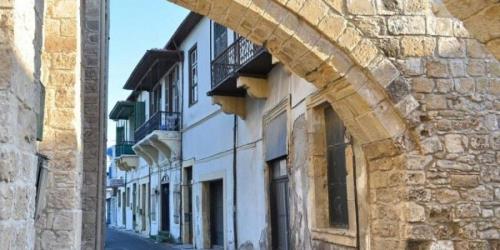

Financial management by the Cypriot state of abandoned Turkish Cypriot property is a complex and sensitive issue, directly linked to the rights of displaced refugees. Recent legislative activity attempts to meet the challenges and weaknesses of current management by introducing new measures aimed at transparency and justice. In the context of this effort, the House is discussing an amending bill, which provides for the implementation of objective criteria for the allocation of property and scoring that will enhance the management of property management.
However, a crucial issue that arises concerns the management of revenue from Turkish Cypriot property and their performance to refugees. Incidentally, although amounts such as € 50 million a year by the equitable weight distribution agency are intended for their support, delays in property estimates from the Land Registry are preventing their disbursement, resulting in this money returning to state funds. In addition, the 0.4% fee on real estate transfers has raised 55 million euros, but have not yet been allocated to the beneficiaries, causing discontent in the refugee community. Also, new legislation has been passed recently that tightens the penalties for the usurpation of Greek Cypriot property in the occupied territories. However, the fines received in state funds, without being attributed to displaced owners.
For the most effective management of Turkish Cypriot property, it is proposed to accelerate real estate estimates, the creation of an independent management body, the release of concentrated contributions to refugees and the establishment of a special rehabilitation fund, which will be funded by significant heads by the state by the state, by the state. usurpation and other relevant state revenue. Despite any legislative improvements, the management of Turkish Cypriot property remains controversial, as revenue results in general state spending, without benefiting refugees who have been the biggest victims of the Turkish invasion.
The present financial management of the abandoned Turkish Cypriot property leaves room for questioning its justice and effectiveness. Displaced refugees, who have lost their possessions due to the Turkish invasion, do not enjoy the benefits of this management as much as possible, as revenue is directed to general government spending. The state must ensure that the refugee owners, who have been the biggest victims of the invasion and occupation, will receive the economic and social support they have. This requires stricter transparency mechanisms, a fair distribution of resources and a more effective framework for revenue and additional funds to refugee owners and beneficiaries of occupied property.
*Professor-Anthropologist at Philips University, former Rector