

Has been ejected by about 500 basis points from Imoglou’s arrest day on March 19
It exceeded 31% of Turkey’s 10 -year borrowing costs, reaching the highest level since 2010, following the imprisonment of the popular Mayor of Constantinople Ekrem Imamoglou on charges of corruption.
Specifically, Turkey’s 10 -year state -of -the -year yield on Monday afternoon, with a further 37 basis points, to 31.44%, and has been ejected by about 500 basis points from Imoglou’s arrest day on March 19th.
The yield on the 2 -year state bond, which is particularly vulnerable to the turmoil, records an increase of 621 base points and is 51.45%, when Imamoglou was 35.36%before arresting Imoglou.
On the other hand, the Turkish currency fell further today, by 1.6%, against the US currency and stands at £ 37.99 per dollar. It also declines against the common European currency and is at 41.09 pounds per euro.
In an effort to tackle the turmoil, Turkey’s central bank increased last week the basic interest rate of one day by 200 basis points to 46%, while working with large international banks in an effort to stabilize markets.
According to the US television network CNBC, it is extremely uncertain about what is to come for Turkey, but analysts expect a prolonged period of instability for the Turkish pound and the exchange stocks that Turkey’s central bank will need to spend.
Central bank officials spent $ 12 billion on exchange stocks last week to support the pound, the Financial Times reported on March 21, after the Turkish currency fell to a historic low, exceeding 40 Turkish pounds.
In addition, the Turkish Stock Exchange is currently up to 3% after a dive over 16% last week.
Turkey authorities on Sunday banned open selling and relaxing the rules of the same shares in an effort to support the Turkish stock market.
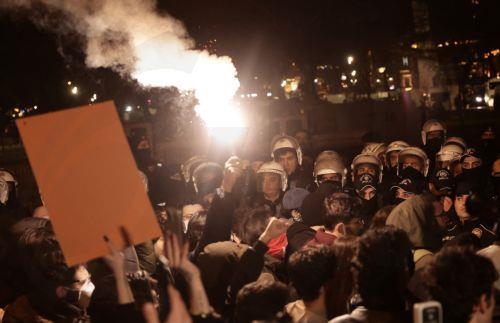
“The demonstrations have been marking the most important and widespread public reaction for more than a decade, making it difficult to predict the course of events,” wrote Wolfango Piccoli, a co -chair of Teneo Counseling, in a note issued on Monday, according to CNBC.
“What is obvious, even at this early stage, is that political uncertainty is far from ending,” he added. “Once again, President Erdogan’s political agenda has caused serious damage to Turkey’s economic prospects.”
Arda Tunca, an independent economist and consultant based in Istanbul, told CNBC that the country is approaching a non -return point.
“Turkey is on the verge of turning it into dictatorship. The people’s reaction to what is happening since March 18 will determine the fate of the country’s future, “said Tunca. “No leader, democratic or not, can silence the will of the people sooner or later,” he added.
Erdogan, for his part, according to CNBC, has accused the protesters, saying the weekend that his government will not be “surrendered” to “vandalism” or “road terrorism” in view of more scheduled protests, according to Reuters.
It is worth noting that the western allies of the country were less dynamic.
In addition, according to the US financial network Bloomberg, the Turkish president and commander of NATO’s second largest army bets that the international community needs him more than he needs to participate in a struggle for democracy in his country.
With the US and Europe busy with their security challenges, Erdogan has placed his country as a key mediator from Ukraine to the Middle Eastern and African conflict zones, he adds.
Source: KYPE