
Baku, Azerbaijan, March 26. Regional Working Group will be established for the trans-Caspian Corridor, A Source in the German Society for International Cooperation (GIZ) GmbH (German International Cooperation Society) Told Trend.
“The Deutsche Gesellschaft für Internationale Zusammenarbeit
(GIZ) GmbH is a service provider in the field of international
cooperation for sustainable development and international education
work. The main commissioning party of GIZ is the German Federal
Ministry for Economic Cooperation and Development (BMZ).
At the present GIZ is implementing two long-term trade and
transport facilitation projects in Central Asia and Eastern
Partnership countries.
1. Strengthening Sustainable and Digital Trade Routes and
Logistics Concepts Between Eastern Partnership Countries and with
the EU – EasTnT (= Eastern Partnership for Trade and Transport)
2. Trade Facilitation Central Asia – TFCA,” said the source.
GIZ noted that the objective of the aforementioned projects is
built on enhancing digital and sustainable practices within the
trade, transport, and logistics sectors, aligning with EU standards
and fostering regional collaboration.
“Through the EasTnT and TFCA project initiatives, GIZ
facilitates the exchange of EU best practices in digital solutions
for customs, railway, port management, and maritime operations,
aimed at reducing cargo transit times along the Trans-Caspian
Corridor (= Middle Corridor). Digitalization of transport, trade,
and logistics is a broad concept with varying levels of development
and priorities across Central Asia and Eastern Partnership
Countries. However, the success of logistics digitalization relies
heavily on political and operational cooperation among the
Trans-Caspian Corridor countries.
For example, several trade and transport facilitation digital
platforms have been developed and successfully implemented based on
the EU Common Transit Convention (CTC) in the EU economic zone.
These solutions significantly improved the flow of transport
information and streamlining the cargo handling process and transit
among EU countries and considering one of the insightful transport
practices. The mentioned platforms include:
* New Computerized Transit System (NCTS)
* Authorized Economic Operator (AEO)
* EU Trade Control and Expert System (TCAES)
* EU Import Control System 2 (ICS2),” noted the source.
GIZ said it supports Trans-Caspian Corridor countries’ transport
agencies in implementing these digital tools through best practice
sharing, capacity building, and facilitating regional dialogue.
“Notably, Georgia, as the first Trans-Caspian Corridor country,
has already implemented NCTS and, starting in April 2025, will
handle cargo transit through this platform. Among the Eastern
Partnership countries, Ukraine and Moldova have also implemented
NCTS, enabling them to enhance trade and transport communications
with the EU.
Currently, GIZ EasTnT and TFCA Projects are preparing to
establish a Regional Working Group Trans-Caspian Corridor (RWG:TCC)
to enhance regional cooperation, advance digitalization, and
address legislative and procedural barriers along the Trans-Caspian
International Transport Route (TITR). The RWG:TCC will focus to
improve communication and coordination among transport and
logistics associations, companies, and key stakeholders from
Georgia, Azerbaijan, and Central Asian countries. Its primary
objective is to create a unified dialogue platform for aligning
efforts, sharing best practices, and driving innovation in
transport and trade facilitation along the TITR. Additionally, the
RWG:TCC will support the development of sustainable and efficient
transport systems while ensuring industry perspectives are
effectively integrated into legislative processes,” said GIZ.
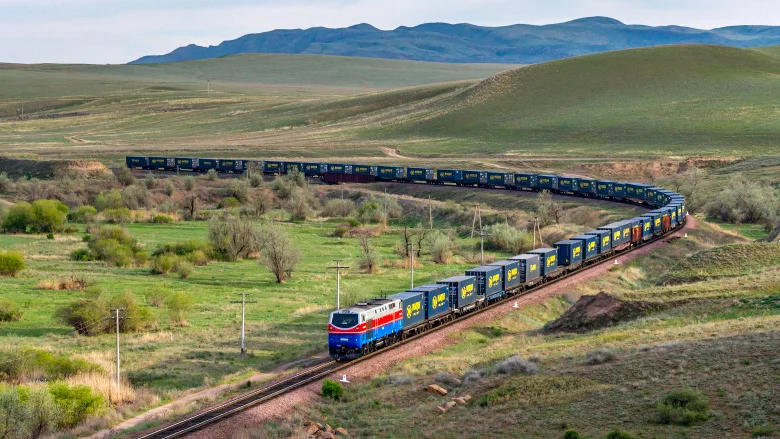
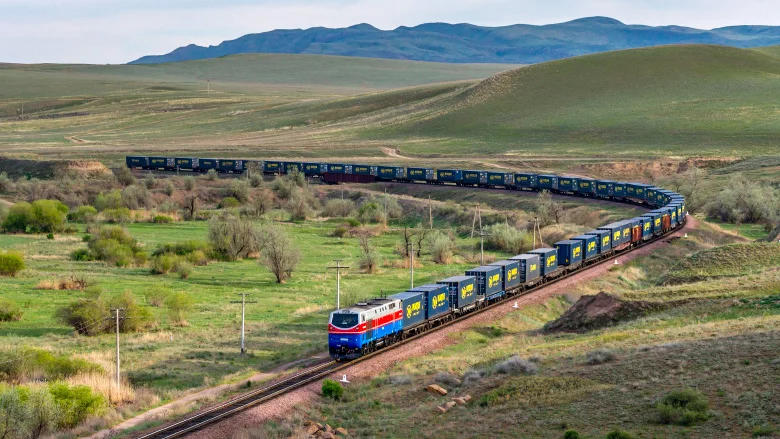
The Middle Corridor is a transportation and trade route that
connects Asia and Europe, passing through several countries in the
region. It is an alternative route to the traditional Northern
Corridor and Southern Corridor.
The route starts in China and crosses Central Asian countries
such as Kazakhstan, Uzbekistan, and Turkmenistan. It then passes
through the Caspian Sea, Azerbaijan, Georgia, and Türkiye before
reaching Europe. The Middle Corridor offers a land route that
connects the eastern parts of Asia, including China, with Europe,
bypassing the longer maritime routes.