
This study adds another piece to the puzzle of human evolution in Asia.
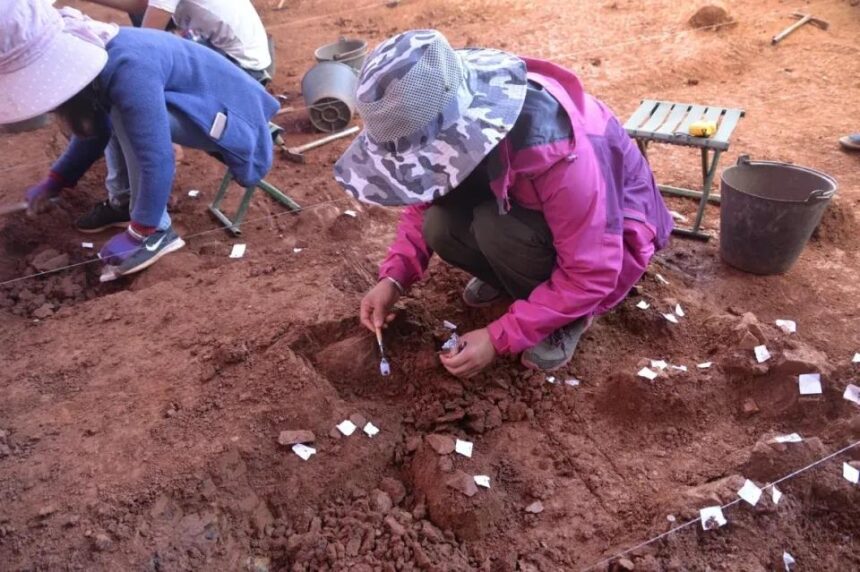
In the remote province of Yunnan, southwestern China, archaeologists have brought to light stone tools aged 60,000 years, shedding new light in the presence of ancient human species in the area.
The tools, made in a unique style that has been attributed to Neanderthals to date, raise questions about who created them and what this means for the evolutionary history of mankind.
The discovery at the Longtan site is remarkable, as the style of tools – known as “quina” – is usually found in Western Europe and had never been found in East Asia before.

Qi-Jun Ruan/Hao Li
The resemblance of these tools to those of the Neanderthals of Europe creates two possible scenarios: either the Neanderthals traveled much further east than we have considered to date, or another ancient human species, such as Denisovan, developed similar technological strategies independently.
Researchers point out that the tools were found in an environment that is very similar to that of the cold Europe of the glacier era, which enhances the possibility that the early people living in the area used similar techniques to survive.

Qi-Jun Ruan/Hao Li
However, without the discovery of human fossils in the same area, the origin of these tools remains open to investigation.
This study adds another piece to the puzzle of human evolution in Asia, an area that, until recently, had not been studied with the same intensity as Europe and Africa.
Finding Quina tools in China can radically change our understanding of the spread of ancient people and redefine the role of Asia in prehistoric history.
Source: cnn.gr