
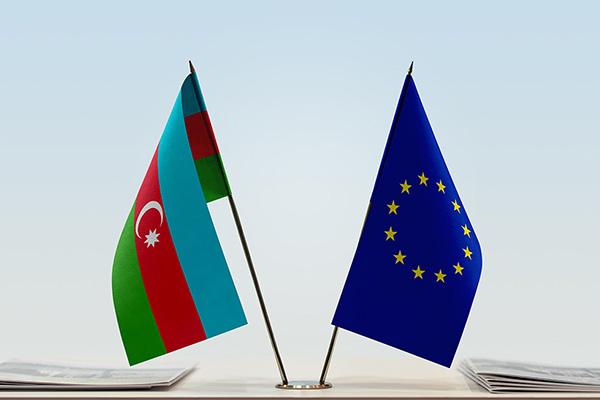

Baku, Azerbaijan, April 26. Azerbaijan and the
European Union are entering a new phase in their relationship, with
both sides showing renewed commitment to building a balanced
dialogue and strengthening their partnership. Against the backdrop
of shifting geopolitical dynamics, the recent visit of EU High
Representative for Foreign Affairs and Security Policy and European
Commission Vice President Kaja Kallas to Baku marked a significant
step forward, signaling the opening of a new chapter in
EU-Azerbaijan ties.
During her talks in Baku, Kallas announced that the EU and
Azerbaijan have agreed to accelerate work on a new Partnership and
Cooperation Agreement. Speaking at a joint press conference,
Azerbaijan’s Foreign Minister Jeyhun Bayramov said the two sides
had reached consensus on nearly 90 percent of the issues covered by
the draft agreement. However, he noted that several areas,
particularly related to trade and the economy, still require
further discussion.
“Azerbaijan is now the EU’s main trading partner in our region,
with trade turnover reaching $20 billion,” Bayramov said. He
acknowledged that negotiations had slowed in recent years but
confirmed that both sides are now committed to taking practical
steps in the coming months to advance the talks. He also indicated
that new provisions could be added to the agreement as discussions
move forward.
Kallas emphasized the longstanding partnership between the EU
and Azerbaijan, noting that the bloc remains Azerbaijan’s largest
trading partner and investor. “The EU also provides significant
support for demining efforts in Azerbaijan, helping to mitigate the
consequences of conflict and save lives. Our cooperation holds
great potential for further growth,” she said.
Kallas’ visit represents a turning point after several years of
strained relations under previous EU leadership. Josep Borrell, the
former High Representative, pursued a policy that fostered distrust
in Baku, with pressure tactics, double standards, and critical
rhetoric from European institutions like the European Parliament
and PACE complicating dialogue. These tensions emerged despite
historically stable and mutually beneficial relations between
Azerbaijan and Europe.
Throughout this period, Azerbaijani officials consistently
voiced their interest in developing a fair and wide-ranging
partnership with the EU. Recent signals from Brussels suggest a
growing recognition of this approach. Kallas’ statements in Baku
reflected a clear intent to reset the dialogue on a more
constructive footing.
Europe’s appreciation of Azerbaijan’s role in enhancing the
region’s energy security has also grown. For nearly five years, the
Southern Gas Corridor has been delivering Azerbaijani gas to ten
European countries, including eight EU member states, positioning
Azerbaijan as one of Europe’s leading gas suppliers.
Beyond energy, Azerbaijan’s strategic role as a transport hub is
increasingly important. Located at the crossroads of major global
trade routes, Azerbaijan is a key player in the development of the
Middle Corridor, which connects Europe to Central Asia and China
via the South Caucasus and the Caspian Sea. With the EU seeking
new, reliable supply routes, Azerbaijan’s position offers direct
access to critical markets in Central Asia and beyond.
In recent months, there has been a noticeable shift among key EU
policymakers away from confrontational rhetoric toward Baku. This
positive trend fuels hopes that future EU policy in the region will
be rooted in mutual respect and pragmatic cooperation.
With political will and a focus on shared interests, Azerbaijan
and the EU have every chance to restore a vibrant and
forward-looking partnership. Europe, in search of stable and
reliable allies, is once again recognizing the value of a strong
relationship with Azerbaijan.