
Baku, Azerbaijan, April 29. Azerbaijan and
Iran share a long and intricate history of relations, united not
just by a common border but also by intertwined religious,
cultural, political, and economic ties. Despite encountering
occasional tensions and challenges, both countries have remained
steadfast in their commitment to dialogue and deepening
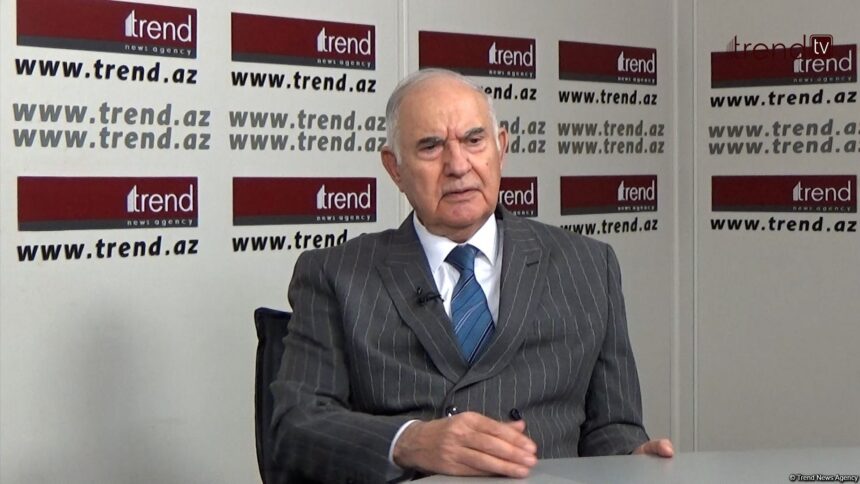
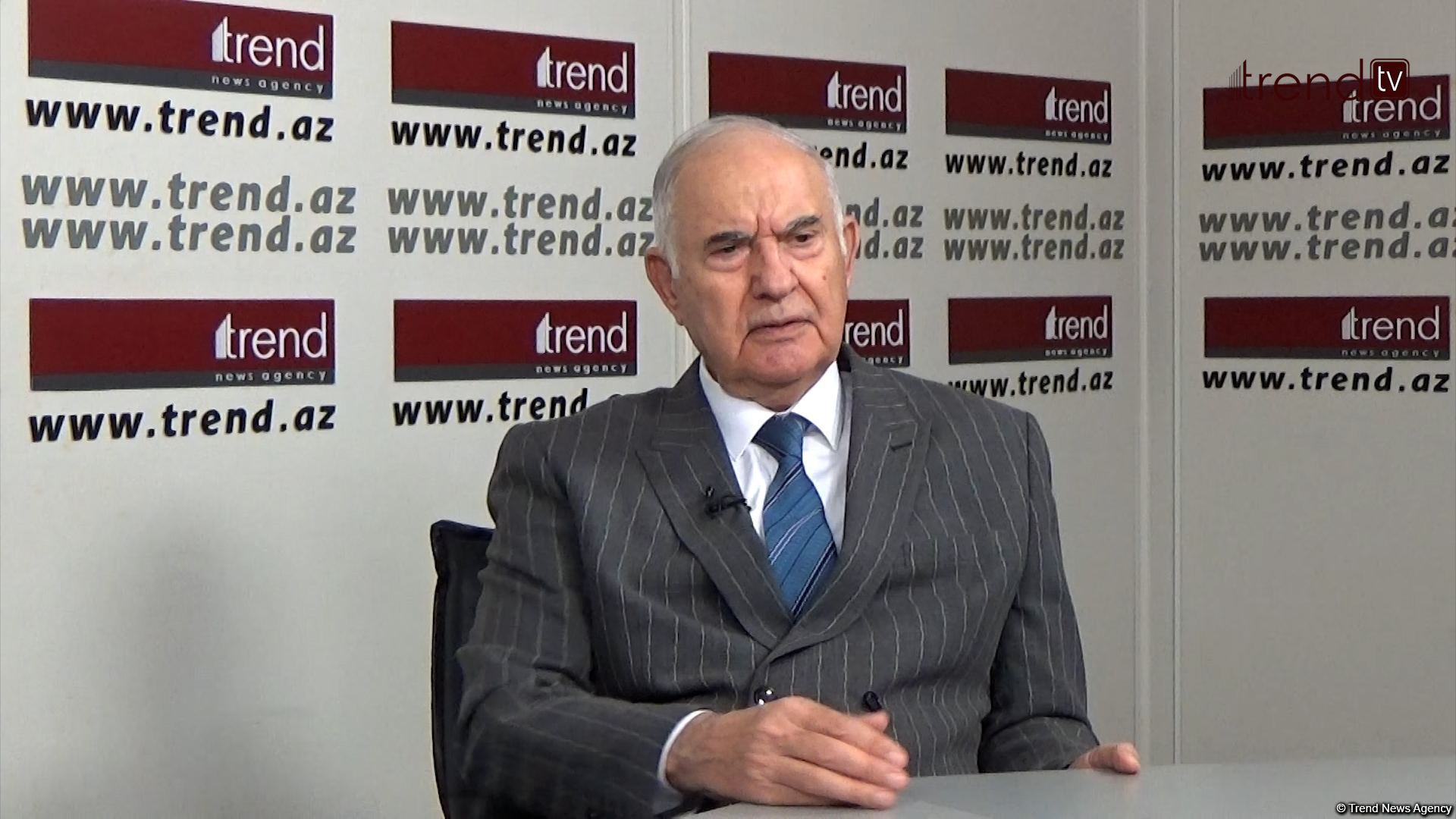
cooperation, Azerbaijani political analyst Azer Garayev told
Trend.
In an interview, Garayev pointed out that the recent visit by
Iran’s newly elected President, Masoud Pezeshkian, to Azerbaijan
really drives home the point about their lasting connection,
shining a light on the strength and steadfastness of their
bilateral relationship.
“The political relationship between Azerbaijan and Iran is
complex and multifaceted. While the two countries share common
positions on numerous regional issues, their ties have at times
been marked by tensions. Border incidents, the influence of
external actors, and broader geopolitical dynamics in the region
have added layers of complexity to their relations. Despite these
challenges, both nations remain committed to the principle of
mutual respect, working to normalize their ties and explore new
areas of cooperation. In this context, Iranian President Masoud
Pezeshkian’s visit to Baku stands as a significant event. During
his meeting with President Ilham Aliyev, both leaders underscored
the importance of strengthening cooperation across political,
economic, and other domains,” he said.
The political analyst highlighted significant opportunities for
economic cooperation between Azerbaijan and Iran.
“In recent years, trade turnover between the two countries has
seen substantial growth. By the end of 2024, trade reached over
$640 million, and this figure is expected to rise further in the
future. Discussions also touched on the involvement of Iranian
companies in the restoration and reconstruction efforts in
Azerbaijan’s liberated territories. President Ilham Aliyev extended
an invitation to Iranian companies to participate in infrastructure
projects in Azerbaijan. Additionally, both sides aim to enhance
industrial cooperation and establish joint production facilities.
This is crucial not only for boosting local production but also for
creating jobs,” he added.
Garayev emphasized that Azerbaijan and Iran’s collaboration in
the transport sector plays a crucial role in advancing logistics
and trade routes across the region.
“Notably, the projects under the North-South International
Transport Corridor enhance the economic potential not only of the
two countries but also of the entire region. Modernizing the border
crossing points in Astara, expanding railway links, and renewing
freight infrastructure are tangible outcomes of this cooperation.
Azerbaijan strengthens its position as a transit hub along the
corridor, while Iran gains expanded access to the European and
Russian markets, as well as enhanced relations with India,
Pakistan, and other South Asian countries. The Astara-Astara and
Astara-Rasht railway projects are particularly significant, as they
allow Azerbaijan to serve as a key connector between Iran and
Russia.
Azerbaijan is also able to facilitate transportation to the
Persian Gulf through Iran. Additionally, a significant project is
underway to establish a seamless connection between mainland
Azerbaijan and Nakhchivan via Iran. This initiative will ensure
uninterrupted communication between the two regions. Moreover, the
road and bridge projects surrounding the Khudaferin and Giz Galası
hydropower stations hold strategic importance for cross-border
cooperation. These bridges not only enhance physical connectivity
but also foster the growth of economic and humanitarian ties
between the countries,” he noted.
Garayev added that Azerbaijan and Iran are making significant
strides in the energy sector as well.
“Specifically, practical efforts are underway to manage
hydroelectric power stations, facilitate mutual electricity
exchanges, and synchronize energy infrastructures. The Khudaferin
and Giz Galası hydroelectric plants serve shared interests in both
water resource management and energy production. Looking ahead,
there is immense potential for projects that could establish energy
bridges between the two nations, connect their electricity
networks, and enable joint energy exports to third countries.
These initiatives are of strategic importance to the region,
particularly in terms of energy security, while also strengthening
technical and financial cooperation between Azerbaijan and Iran.
Given Iran’s substantial gas reserves and Azerbaijan’s advanced
energy infrastructure, there is a solid foundation for
collaborative projects in gas exports, liquefied gas terminals, and
energy storage technologies for both countries,” he said.
The expert highlighted that the visit of Iranian President
Masoud Pezeshkian to Baku marks a new chapter in
Azerbaijani-Iranian relations.
“The agreements reached during the visit will significantly
advance political, economic, and cultural cooperation between the
two nations. The strengthening of ties between Azerbaijan and Iran
is crucial not only for reinforcing bilateral relations but also
for enhancing regional stability and prosperity. Strategic areas of
collaboration, particularly in transport and energy, are
foundational pillars that will shape the region’s future. Both
Azerbaijan and Iran now have new opportunities to deepen their
relationship, rooted in mutual interests, respect for sovereignty,
and good neighborliness. Leveraging these opportunities effectively
could establish a stable and prosperous environment for regional
cooperation, benefitting future generations,” the political analyst
concluded.
Stay up-to-date with more news on Trend News
Agency’s WhatsApp channel