
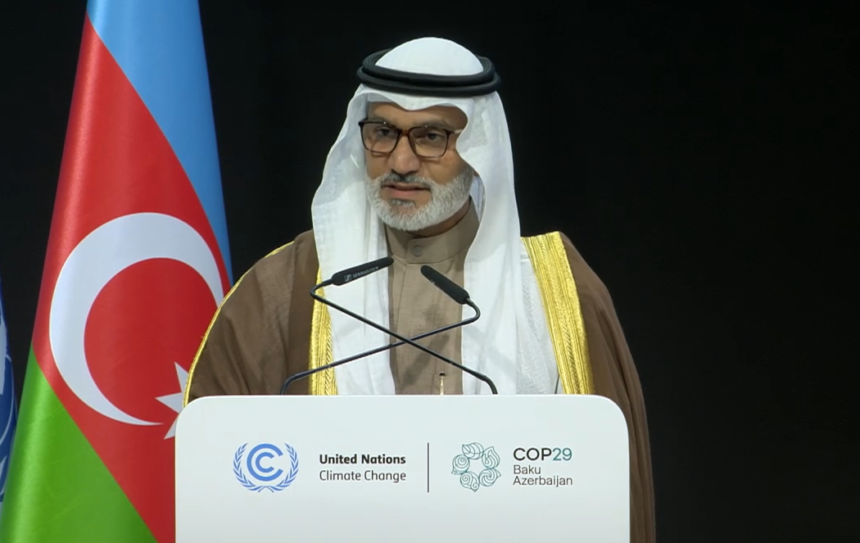
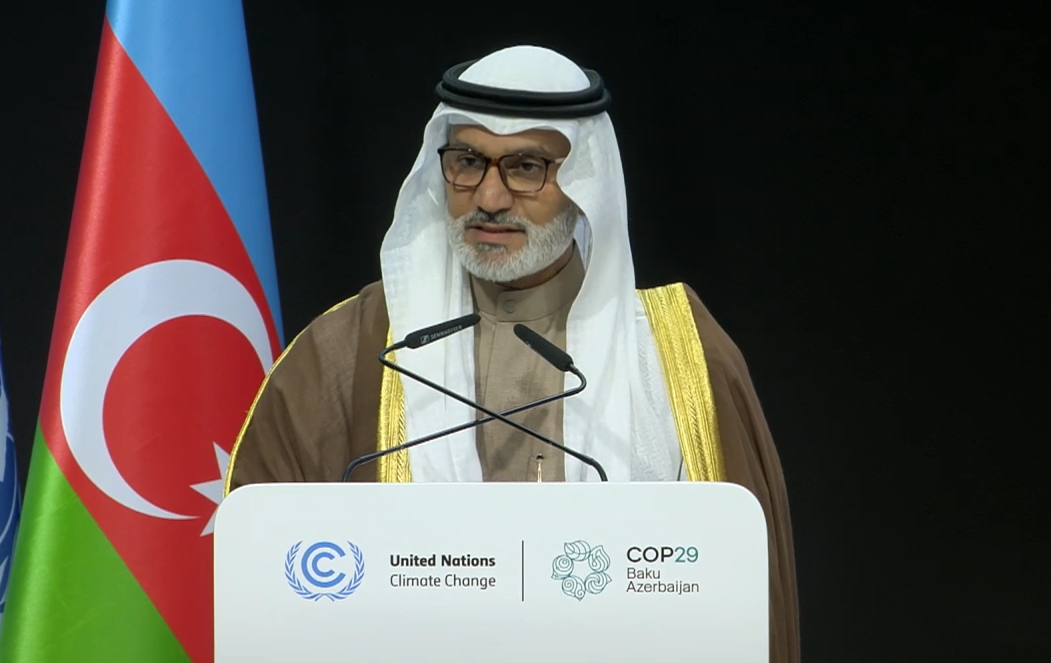
Baku, Azerbaijan, April 30. OPEC does not see a
peak in oil demand on the horizon, Haitham Al Ghais, OPEC Secretary
General, said in an exclusive interview with Trend.
“There are several reasons why. The first relates to demographic
and economic trends. The world population is projected to rise 9.7
billion by 2050. Urbanization trajectories are likely to intensify.
Two-thirds of the population will live in cities by 2050. The
global economy is expected to double in size to 2050. The fifth
billionth person is also expected to join the middle class before
2030, up from over four billion today,” he said.
OPEC secretary general pointed out that this will be accompanied
by a significant increase in energy consumption, and by extension,
oil consumption.
“By 2050, we expect energy demand to rise by 24% and oil demand
to reach over 120 mb/d. In fact, the reality today is that the
world continues to use more from all energies. The world is
consuming more coal, oil, gas, wood and electricity today than ever
before,” Al Ghais explained.
He noted that in many ways growth in one energy source,
stimulates growth in another.
“For example, petroleum-powered machinery and petroleum-derived
products are used in the manufacture and installation of wind
turbines, solar farms and other sources of renewables. They are
used in lithium-ion batteries and throughout the electricity
grid.
In addition, we need to consider the host of petroleum and
petroleum-derived products we all use in daily life. From
transportation powered by gasoline, diesel or jet fuel; to plastics
used in everything from laptops, computers, and tv screens;
petroleum products used in medical supplies and in hospitals; to
packaging that keeps food from rotting; agricultural products; and
household items. It is easy to see why oil demand will continue to
grow,” he said.
Emerging trends influencing OPEC’s
decision-making
The secretary general noted that OPEC continually reviews the
market outlook.
“This is done daily at the OPEC Secretariat. At present, we
remain generally optimistic about the global economic growth
outlook, which stands at 3% for 2025 and 3.1% for 2026, with annual
oil demand growth of 1.3 million barrels a day (mb/d) for both
years. However, we remain cognizant of a variety of
uncertainties.
In the near-term, this includes those concerning the much talked
about tariff-related dynamics and trade disputes, although
expectations are for trade agreements between the US and most of
its trading partners. It is clear we need to be watchful in the
coming months, and OPEC will continue to monitor developments on a
daily basis,” he added.
Al Ghais said it is important to stress that for OPEC and its
partners in the Declaration of Cooperation, the core focus is on
the full global picture.
“We monitor all the various inputs into the global oil market,
such as economic growth, supply and demand, as well as inventories,
and take informed decisions based on sound data and robust
analysis, and grounded in realities. This is vital in helping
ensure that we keep our eyes firmly on the objective of a balanced
market and sustainable market stability,” he said.
Future of OPEC+
The secretary general pointed out that DoC, often referred to as
OPEC+, remains fully focused on achieving a balanced and stable oil
market.
“OPEC+ endeavours to support market stability for the benefit of
all industry stakeholders, including producers, consumers and
investors, as well as the global economy at large. The group’s
voluntary production adjustments have proven very beneficial in
this regard. In fact, oil as a commodity was the least volatile in
2024, largely due to the efforts of the DoC.
Now in its ninth year, the DoC has a proven track record of
helping to overcome market instability, including the downturn that
resulted from COVID-19, and several instances of global economic
uncertainty,” he said.
Al Ghais noted that with numerous achievements to date, and a
strong commitment to unity and cohesion among participating
countries, OPEC+ is well poised to continue stabilizing oil markets
moving forward: “OPEC+ is a vital cog in the global oil and energy
market landscape.”
Bringing oil into the ‘future of energy’
He believes that everyone should be part of the
conversation.
“This has always been our mantra. We are inclusive, not
exclusive. We are not dismissing anyone, or anything. It was
positive that all voices were at the table at COP29 in
Azerbaijan.
As Azerbaijan’s President Ilham Aliyev emphasized at the opening
of COP29, oil and gas are indeed a ‘Gift from God’. They remain
vital to producers and consumers around the world. Moreover,
combined they make up around 55% of the global energy mix.
Conversations on climate and future energy pathways must include
oil and gas,” said OPEC secretary general.
He believes that inclusivity has to be the way forward.
“We need to be clear that building a low emissions future,
alongside achieving energy security and providing full energy
access, has many paths. It is not just one path for all, whether
that be a country or an industry. At OPEC, we believe in an
all-energies approach. No single energy source can meet rising
demand, and the needs of all,” Al Ghais said.
The secretary general pointed out that OPEC believes in an
all-peoples approach, taking into account the capacities, national
circumstances, and development priorities of all countries so that
no one is left behind.
“Billions of people in the developing world are still playing
energy catch-up. For these people, their energy future is not about
debating over the costs and benefits of energy sources or deciding
on the purchase of an electric vehicle. Instead, it is about
achieving the energy basics that the developed world takes for
granted, such as being able to turn on a light, cook on a clean
stove or have motorized transport to move to and from work or
school. The principle of ‘common but differentiated
responsibilities and respective capabilities’ is vital, and
fundamental to the UNFCCC process and all COP meetings.
And we believe in an all-technologies approach, which is why our
Member Countries are investing in carbon capture utilization and
storage, direct air capture, the circular carbon economy, as well
as other energy sources, such as hydrogen, renewables and
nuclear.
We look forward to COP30 later this year in Brazil, a country
that recently joined the OPEC and non-OPEC Charter of Cooperation,”
he concluded.