
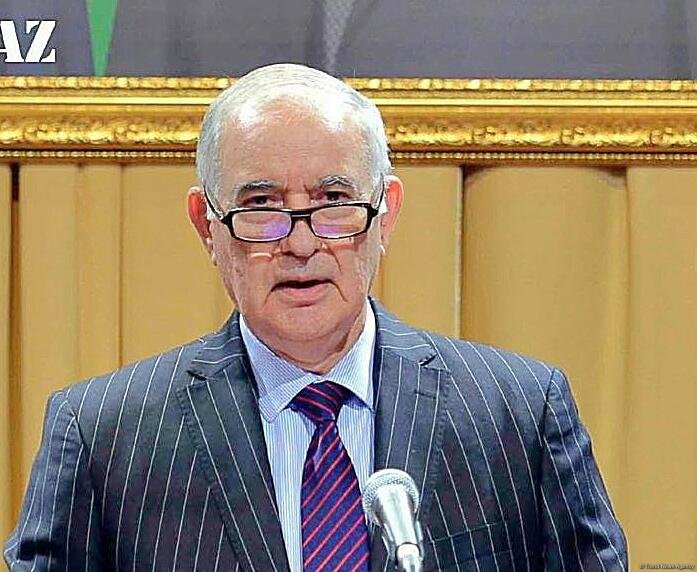
BAKU, Azerbaijan, August 11. Azerbaijan also
won at the diplomatic table under the leadership of President of
Azerbaijan Ilham Aliyev, political analyst Azer Garayev told
Trend.
According to him, a new chapter opened on the political map of
the South Caucasus today.
“The trilateral meeting held on August 8, 2025, in Washington
was a landmark event that shifted the balance not only between two
countries but across the entire region. The meeting, attended by
President of Azerbaijan Ilham Aliyev, Armenia’s Prime Minister
Nikol Pashinyan, and US President Donald Trump, held significant
diplomatic and political importance. The outcome—a Joint Statement
signed between Azerbaijan and Armenia and the initialing of a peace
agreement—was the logical conclusion of years of tension and the
official confirmation of Azerbaijan’s strategic victory. The
agreements reached in Washington demonstrated that under President
Aliyev’s leadership, Azerbaijan won not only on the battlefield but
also at the diplomatic table.
President Ilham Aliyev achieved this success through years of
consistent and principled policy. Without retreating an inch from
national interests, he strengthened Azerbaijan’s position
internationally and became a key player in regional processes. The
Washington meeting was the pinnacle of this process—where the
foundation of peace was laid on terms dictated by the victorious
side. Azerbaijan consistently defended its interests at every stage
and ultimately ensured all its conditions were met,” he added.
According to Garayev, Azerbaijan’s recent history can be viewed
as both a military and political lesson.
“The brilliant victory in the 2020 Second Karabakh War liberated
occupied lands and forced Armenia to sign a surrender act, but this
was not the final goal for President Aliyev. He understood that
true victory must also be achieved at the diplomatic table. After
the war, Azerbaijan took steady steps to consolidate its positions.
The ‘Revenge’ operation and the 24-hour anti-terror measures in
2023 fully restored the country’s sovereignty. This was not just a
military success but a strategic blow, forcing Armenia to accept
realities in negotiations.
Throughout all phases, President Aliyev maintained a consistent
principled line. Azerbaijan will never compromise its national
interests, and peace is possible only after full recognition of the
country’s sovereignty and territorial integrity. The Joint
Statement signed in Washington was the final confirmation of this
principled stance—the conditions of the victorious state were on
the table, and the other side’s signature was under that document,”
he added.
Garayev noted that as the victorious party, President Aliyev
also authored the peace agenda.
“At the beginning of 2022, Azerbaijan presented Armenia with the
‘five basic principles’ forming the foundation of the peace treaty.
Azerbaijan’s peace concept is a profound and strategic vision aimed
not only at normalizing relations between the two countries but
also at ensuring lasting stability in the region. This vision is
based on fundamental values and mutual understanding that serve the
root resolution of the conflict.
The core idea is that both sides must mutually recognize
sovereignty, territorial integrity, and the inviolability of
borders. This is a serious step to prevent any future territorial
claims or threats. Use of force or threats between the two states
must be completely excluded, and mutual trust and a peaceful
environment must be established. Additionally, full delimitation
and demarcation of borders, establishment of diplomatic relations,
and opening of transport and economic ties are necessary. These
steps serve the region’s economic development and the expansion of
people-to-people ties.
However, Armenia long avoided sincere steps, insisting on
including a clause on the status of Armenians living in Karabakh in
the treaty. Azerbaijan firmly stated this is an internal matter and
cannot be part of an interstate document. Meanwhile, the Biden
administration, French President Emmanuel Macron, and other forces
tried to pressure Azerbaijan and spread accusations to push their
own agendas. But these attempts failed thanks to President Aliyev’s
consistent policy,” he explained.
The analyst emphasized that the Joint Statement signed in
Washington in August 2025 was not just a diplomatic document for
Azerbaijan but also an official recognition of the new political
reality in the region. This document was the international
acceptance of Azerbaijan’s long-standing conditions and marked a
turning point toward a peaceful resolution of the prolonged
conflict.
“With the Washington Statement, Armenia accepted several key
demands and was forced to retract its previous stance. The document
included Azerbaijan’s core principles, such as a joint call to end
the Minsk Group’s activities, removal of territorial claims from
Armenia’s Constitution, and establishment of unobstructed transport
links between Azerbaijan’s main territory and the Nakhchivan
Autonomous Republic. This was also a strategic initiative supported
by the US. The opening of the Zangezur corridor, guaranteed by US
President Donald Trump, marks a new phase in the region’s economic
and political development. Through this document, Azerbaijan
solidified its position within international law, while Armenia
accepted to act in accordance with peace and cooperation principles
going forward. The Washington Statement also demonstrated to the
world that military conflicts in the region are now history, and
the parties are focused on the future,” he said.
He added that the initialing of the peace treaty text during the
Washington meeting was a significant historic moment.
“Although initialing is technically different from full signing,
it is regarded as an official and binding document showing that the
parties have agreed on the main principles and demands. This step
is vital for restoring mutual trust and laying the foundation for
future cooperation after years of conflict. By initialing,
Azerbaijan and Armenia demonstrated their readiness to reduce
post-war tensions and take practical steps toward peace and
stability.
The initialing phase is also a necessary procedure for the final
peace treaty signing, which is expected to be completed after a
constitutional referendum in Armenia in 2026. This ensures
independent and democratic procedures for the treaty’s full legal
enactment. Thus, initialing plays a key political and legal role in
strengthening and sustaining the peace process between Azerbaijan
and Armenia in the coming period,” he said.
Additionally, Garayev pointed out that the Joint Statement
signed in Washington strengthened Azerbaijan’s strategic interests
and formalized the post-war status quo.
“The international community, including the US, effectively
accepted the new political reality in the region. President
Aliyev’s visit to the US and the signed documents were not only
diplomatic successes but also a serious political blow to Armenia’s
backers—from the Macron administration to the European Parliament
and Armenian lobby groups. President Aliyev showed that military
victory can be the foundation for stable and favorable peace.
His policy is a synthesis of determination and strategic vision
in defending national interests, turning battlefield superiority
into lasting success at the negotiating table. The Washington
meeting confirmed that Azerbaijan, having strengthened its
positions from bloody battles to the negotiation table, opened a
new chapter in regional history—where peace is built on the
victor’s terms,” Garayev concluded.
Stay up-to-date with more news on Trend News
Agency’s WhatsApp channel