
Baku, Azerbaijan, April 17. The friendly and
strategic partnership between Azerbaijan and Georgia, built on
solid foundations, remains one of the main pillars of stability and
sustainable development in the South Caucasus, Azerbaijani
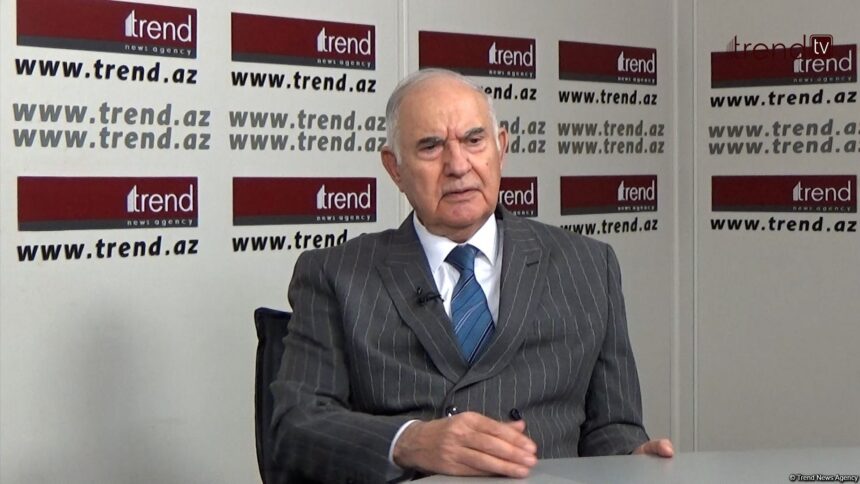
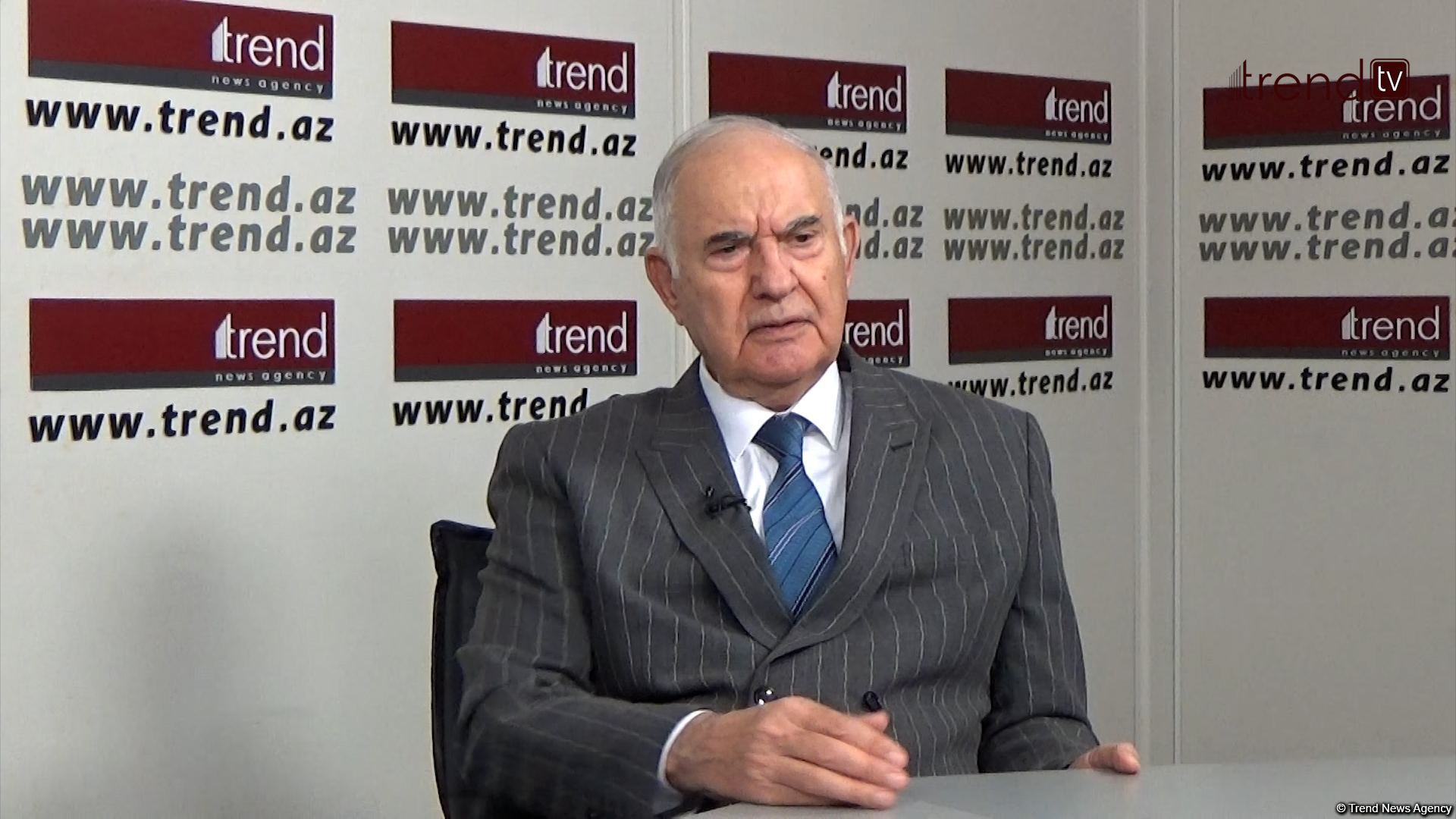
political analyst Azer Garayev told Trend.
According to him, these relations, shaped by historical,
geographical, and cultural proximity, are today yielding
significant results both bilaterally and multilaterally. The broad
spectrum of partnership—from political dialogue to cooperation in
energy, transportation, investment, humanitarian issues, and
security—holds strategic importance for the region’s future.
“Azerbaijan and Georgia present a remarkable example of
cooperation in the energy sector,” he said. The foundation of this
cooperation was laid in the late 1990s and has since deepened,
becoming strategic in nature. Georgia serves as a key transit route
for Azerbaijan’s oil and gas exports to global markets. The
Baku–Tbilisi–Ceyhan oil pipeline plays a vital role in transporting
Azerbaijan’s Caspian oil to the Mediterranean. The
Baku–Tbilisi–Erzurum gas pipeline and the South Caucasus Pipeline
are integral components of the Southern Gas Corridor, contributing
to Europe’s energy security. Azerbaijan also plays a major role in
Georgia’s domestic energy market. For years, SOCAR has been
supplying natural gas to Georgia, ensuring stable energy provision
for Georgia and securing a strategic market for Azerbaijan. SOCAR’s
operations in Georgia also include retail sales of petroleum
products, gas distribution management, and social projects,” he
noted.
The analyst pointed out that President of Azerbaijan Ilham
Aliyev, in a press statement with Mikheil Kavelashvili on April 16,
underlined that the oil and gas projects, the oil and gas
pipelines, and the transport and communication initiatives jointly
implemented by Azerbaijan and Georgia are truly of great
significance and have not only reshaped the transportation and
energy map of the South Caucasus but also that of the entire
Eurasian region.
“The head of our state said that if we are talking about the
energy security of Europe today, it is impossible to imagine it
without Azerbaijan and Georgia. Currently, Azerbaijan exports
natural gas to 12 countries, including Georgia, and these exports
are carried out through Georgia. That is, it can be said that
Azerbaijan and Georgia make essential contributions to Europe’s
energy security,” Garayev explained.
The analyst pointed out that Azerbaijan and Georgia enjoy
extensive cooperation in transportation and transit, which plays a
strategic role in regional economic integration and the development
of international trade relations.
“The Baku–Tbilisi–Kars railway is one of the most important
infrastructure projects in this regard, enabling faster and safer
freight transport between China, Central Asia, and Europe. Within
the Middle Corridor (Trans-Caspian International Transport Route)
framework, the two countries have taken key steps in creating
logistics hubs and simplifying customs and border procedures.
Azerbaijan’s Alat International Sea Trade Port and Georgia’s Poti
and Batumi ports are essential elements of this system. This
cooperation enhances the competitiveness of the China–Europe route
within Eurasia and increases transit revenues for both countries.
As the head of our state also noted, achievements in the field of
transport and communications – the newly built railways and ports –
have created great synergy in both Azerbaijan and Georgia. In fact,
they have become an integral part of the Middle Corridor. He
emphasized that If today we are talking about the Middle Corridor
project in the South Caucasus, it is the corridor that passes
through Azerbaijan and Georgia. Both countries are deeply
interested in developing transport and communication infrastructure
and are working together in this area. As a result, cargo volume
through both countries is increasing, strengthening their positions
within global transportation routes,” he noted.
Garayev pointed out that the political dimension of
Azerbaijan–Georgia relations has always been stable and
exemplary.
“There are regular visits and meetings between heads of state
and other high-level officials. For example, both newly re-elected
Georgian Prime Minister Irakli Kobakhidze and President Mikheil
Kavelashvili made their first official visits to Azerbaijan. This
clearly demonstrates the high level of bilateral relations. This
dialogue facilitates the formation of common positions on regional
developments, the protection of mutual interests, and the
advancement of joint regional initiatives. Georgia has always
unequivocally supported Azerbaijan’s territorial integrity, a
stance reiterated many times on international platforms such as the
UN, OSCE, and the Council of Europe. Meanwhile, Azerbaijan respects
and supports Georgia’s sovereignty and territorial integrity,” he
noted.
According to the analyst, Azerbaijan is one of the largest
foreign investors in Georgia, particularly through SOCAR’s
investments and infrastructure projects, which form the backbone of
economic ties.
“Besides, Azerbaijani entrepreneurs are actively involved in
various sectors in Georgia, including construction, agriculture,
services, and tourism. Trade turnover has also shown increasing
momentum over the years. Georgia is not only one of Azerbaijan’s
largest trade partners but also one of the key pillars of economic
integration in the South Caucasus. The mutual relations between
Azerbaijan and Georgia hold promising prospects not only for the
present and the past but also for the future. Geopolitical shifts
in the region, the need for new energy and transport routes, and
the emergence of alternative links between Europe and Asia create
fresh opportunities for both countries. Furthermore, cooperation in
the field of green energy, the development of renewable energy
projects between the Caspian and Black Seas, and green cable
initiatives are on the agenda for the near future. This strategic
partnership stands as a rare model of regional stability, economic
growth, and multilateral cooperation. Thanks to the joint efforts
of Azerbaijan and Georgia, the South Caucasus is steadily becoming
a stronger and more competitive region,” Garayev added.