
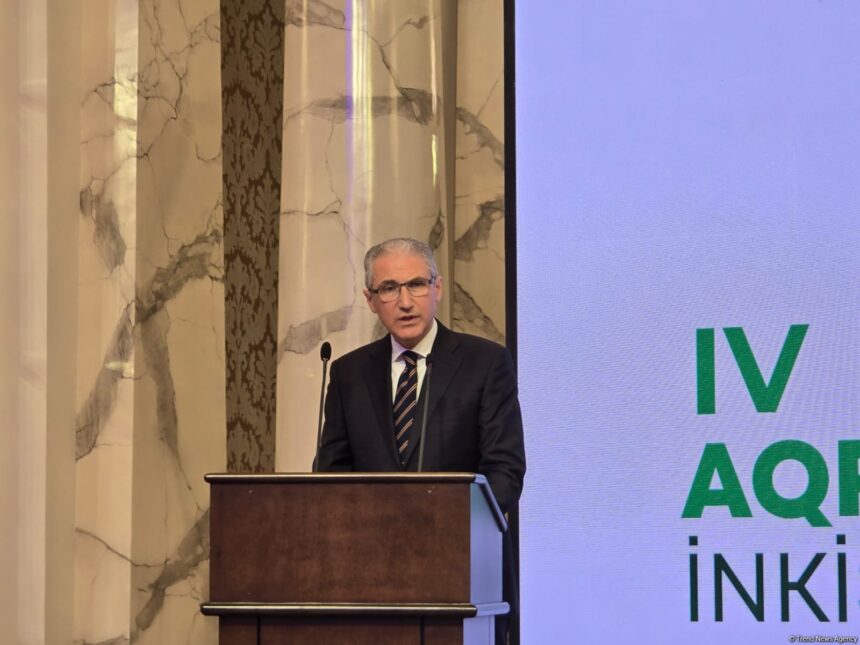
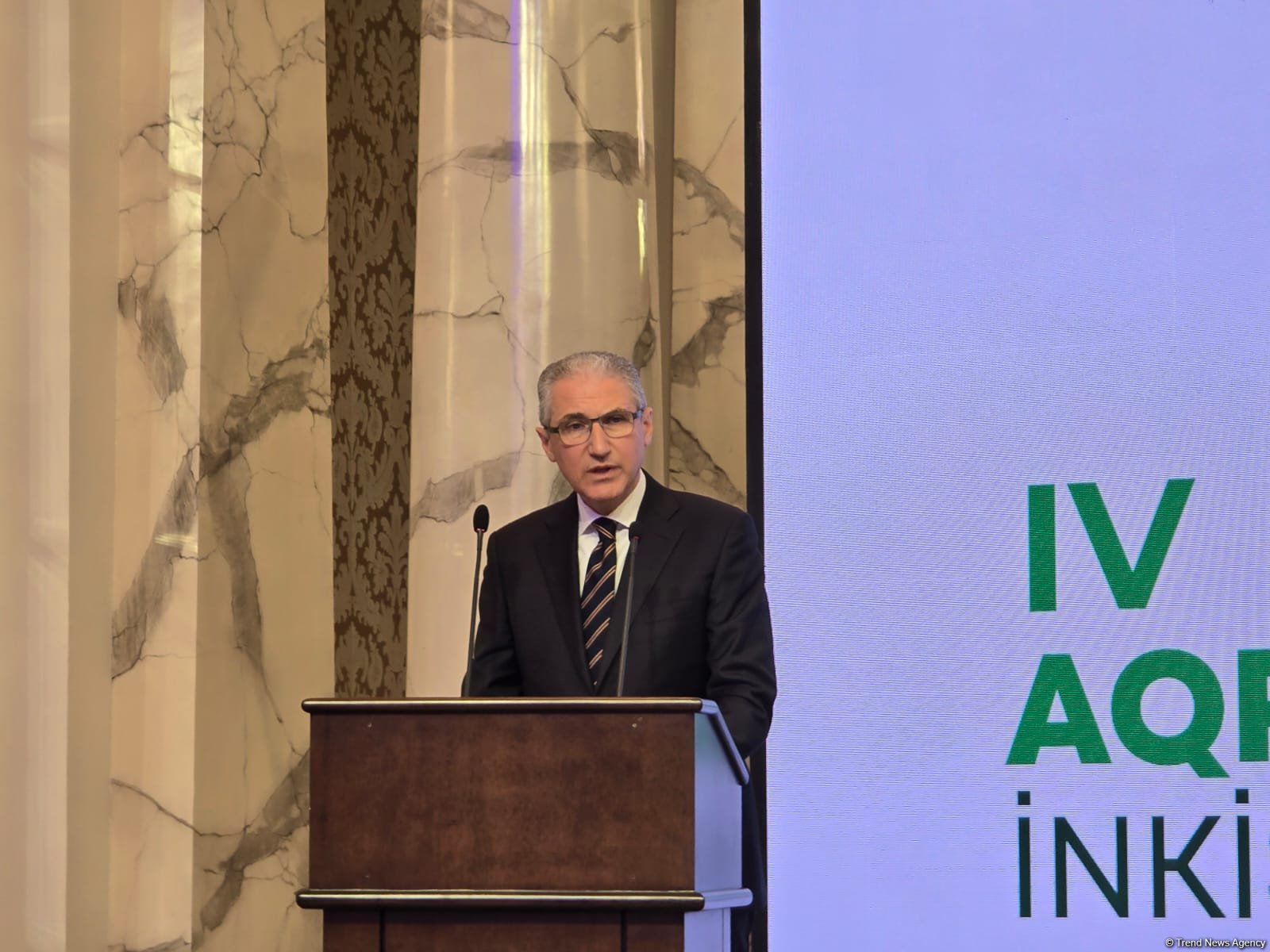
Baku, Azerbaijan, May 2. The development of
agroparks should be supported by the application of innovative and
biological methods, Representative of the President of the Republic
of Azerbaijan on Climate Issues, Mukhtar Babayev said at the 4th
Agribusiness Development Forum, Trend reports.
“According to the World Meteorological Organization (WMO) and
the Food and Agriculture Organization (FAO), disasters over the
past 30 years have caused approximately $3.8 trillion in losses to
agriculture, which averages $123 billion per year—equivalent to
about five percent of the annual global agricultural GDP,” he
mentioned.
The minister emphasized that in the context of climate change,
sustainable development of agriculture relies heavily on research
and the application of new technologies.
“Cost-effective farming and innovative irrigation methods allow
farmers to significantly save both water and time. While climate
change negatively impacts agriculture, agricultural activities are
also among the contributing factors to climate change. Currently,
about 20 percent of global greenhouse gas emissions are attributed
to this sector.
In Azerbaijan, the key steps to adapt agriculture to climate
change include the efficient management of water and soil
resources, modernization of irrigation systems, reduction of water
losses, and protection of soil fertility. Additionally, cultivating
drought-, salinity-, and heat-resistant crop varieties and applying
modern agrotechnical practices are of critical importance for
improving productivity.
At the same time, the development of agro-parks must support not
only ecologically and economically sustainable production but also
the adoption of innovative and biological methods in the use of
water, fertilizers, and pesticides.
Joint action by the public and private sectors is essential in
this area. Within this cooperation, new technologies and digital
solutions must be implemented, and productivity must be
increased.
Combating climate change requires broad, coordinated, and
long-term measures. To mitigate these effects in agriculture, it is
crucial to raise awareness among farmers and help them adapt their
production practices to the changing climate.
Last year, international attention was focused on our country,
particularly on the work done in the field of environmental
protection and combating climate change. The assignment of hosting
rights for the 29th session of the Conference of the Parties
(COP29) to the UN Framework Convention on Climate Change,
recognized as the most prominent global climate forum, is a clear
sign of trust and a testament to successful cooperation with
international organizations.
By hosting COP29, our country has launched global initiatives
across various fields, including energy, urban planning, finance,
agriculture, and human capital development. These initiatives
embrace inclusive approaches to tackling climate change.
The ‘Baku Climate Harmony Initiative for Farmers,’ presented
through a joint initiative of the COP29 Presidency, the Ministry of
Agriculture, and FAO, was created to empower women and young
farmers, build climate-resilient rural communities, and strengthen
knowledge exchange. This initiative brings together more than 90
global and regional programs to support sustainable development in
rural areas and attract investment into the sector,” Babayev
added.
He praised the leadership of the Ministry of Agriculture in
preparing and implementing this initiative.
“The ministry is achieving significant success in the
development of agriculture and climate adaptation, both
domestically and internationally.
Within the framework of the conference, a New Collective
Quantified Goal (NCQG) on climate finance was agreed upon. The Baku
Climate Finance Target, presented during COP29, triples the
previous annual commitment of $100 billion to a new goal of $300
billion annually, to reach $1.3 trillion by 2035.
Ensuring that this financing is accessible to developing
countries, especially least developed countries (LDCs) and small
island developing states (SIDS), has been identified as a top
priority.
As a result of COP29, the Loss and Damage Fund began operating
as a new financial mechanism. This fund creates special support
opportunities for vulnerable regions and farming communities most
affected by climate change.
“Additionally, years-long negotiations on carbon markets were
concluded during COP29, and rules regulating both market and
non-market cooperation under the sixth article of the Paris
Agreement were adopted. This will enable the mobilization of up to
$1 trillion annually through carbon markets and could reduce the
cost of implementing countries’ climate plans by up to $250
billion. These mechanisms can also be used in agriculture to reduce
emissions and protect land and water resources.
Currently, work is underway to establish the necessary legal and
institutional framework to expand our country’s participation in
carbon markets. This will create new opportunities for the
implementation of low-carbon technologies in agriculture and the
attraction of green investments,” Babayev noted.
Stay up-to-date with more news on Trend News
Agency’s WhatsApp channel