
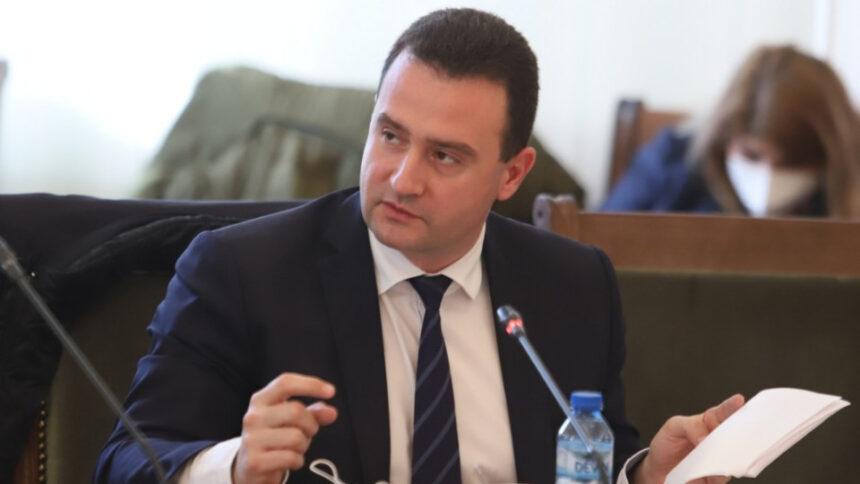
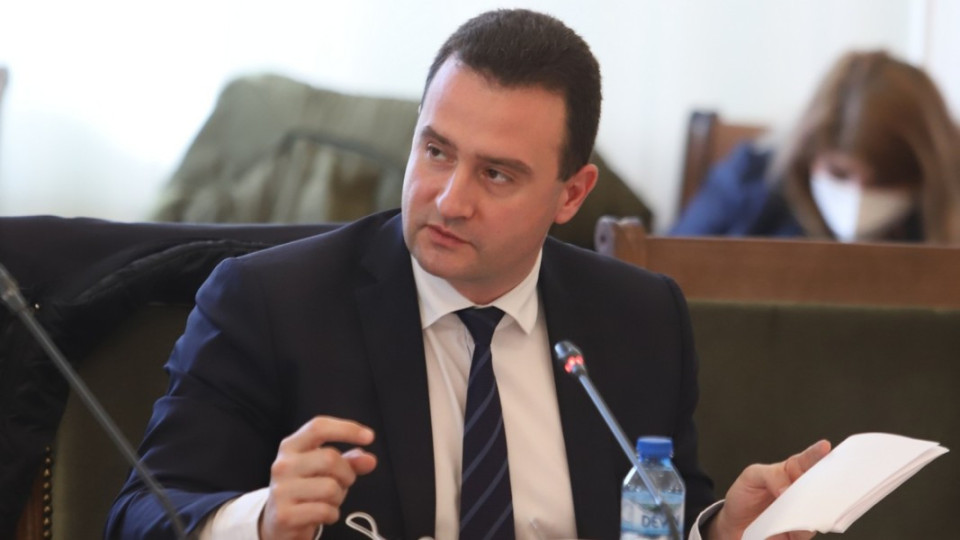
Baku, Azerbaijan, April 4. Bulgaria is actively
working on infrastructure development to get additional gas from
Azerbaijan, Zhecho Stankov, Bulgaria’s Minister of Energy, said in
an exclusive interview with Trend on the occasion of the Southern Gas Corridor
Advisory Council’s meeting in Baku.
“Azerbaijan is a strategic economic partner of Bulgaria. There
is excellent economic cooperation between the two countries and the
energy sector occupies a key place in bilateral relations.
Azerbaijan plays an important role as a source for diversification
of natural gas supplies and enhancing energy security in our
country and the South East Europe region. Energy transition is not
possible without ensuring national, regional and international
energy security. Projects such as the Southern Gas Corridor are a
key factor in deepening regional cooperation, and diversified
natural gas supplies from the Caspian region provide better
conditions for businesses and consumers,” he said.
Stankov pointed out that Bulgaria is an important part of the
development of the strategic Southern Gas Corridor project through
the Greece-Bulgaria interconnector, which ensures the transmission
of the raw material to Europe.
“Our country supports the expansion of the Southern Gas
Corridor, which will provide the opportunity to supply additional
quantities of natural gas to Europe. To carry out these priority
tasks, we are actively working to develop the country’s gas
infrastructure. One of Bulgaria’s main priorities in the energy
sector is the diversification of the sources and routes of energy
resources, which will guarantee security and competitive prices for
Bulgarian consumers. In the context of the European goals of
building an interconnected and unified pan-European gas market and
strengthening energy security, our country is pursuing a consistent
policy of gas infrastructure development – modernization and
expansion of the national gas transmission network and construction
of reverse gas connections with neighbouring countries,” said the
minister.
He recalled that Bulgaria was one of the first countries to sign
a contract with Azerbaijan for natural gas supplies from the Shah
Deniz field.
“We are actively working on the development of the gas
infrastructure, which will allow us to transport additional
quantities from Azerbaijan and other sources – a key condition for
real diversification of sources and routes of natural gas supply.
It is our firm belief that regional cooperation is one of the
leading factors for successfully addressing energy security
challenges,” said Bulgaria’s energy minister.
He pointed out that Bulgaria has repeatedly stated its interest
in increasing the quantities of natural gas supplied from
Azerbaijan.
“This is a leading factor for ensuring energy security not only
in Bulgaria but in the whole region of South-Eastern Europe. In the
context of the hostilities in Ukraine and the volatility of energy
prices, opportunities for new quantities from a strategic partner
like Azerbaijan become even more important. Therefore, we will
continue to work to secure supplies that will guarantee us security
and competitive gas prices,” noted Stankov.
Expanding cooperation with SOCAR
The minister said that last year, SOCAR supplied and traded
approximately 1 billion cubic meters of natural gas annually at the
Balkan Gas Hub, in addition to the 1 billion cubic meters per year
delivered under Bulgargaz EAD’s long-term contract with the Shah
Deniz consortium.
“We expect these gas volumes traded by SOCAR at the Balkan Gas
Hub to be maintained and even increased in the coming years. We
would like to expand cooperation with Baku in promoting
gasification and facilitating SOCAR’s entry into gas distribution
activities in Bulgaria, such as the gasification of the town of
Panagyurishte, along with other cities,” he added.
Stankov recalled that during COP 29 in Baku, in the presence of
President Rumen Radev and President Ilham Aliyev, a binding
agreement was signed for the development of residential and public
gasification in the municipality of Panagyurishte.
“The agreement was concluded between SOCAR and Assarel-Medet, a
Bulgarian company engaged in copper and other ore mining. In July,
a contractor for the municipality’s technical design is expected to
be selected,” he said.
The minister pointed out that as an EU member state, Bulgaria
offers a premium energy market with stable and predictable
legislation.
“We also support SOCAR’s hybrid gasification project in
Bulgaria, which enables industrial and social consumers not
connected to the transmission and distribution network to receive
Azerbaijani gas via CNG deliveries. This project is a tangible
contribution by SOCAR to promoting gasification in Bulgaria.
Additionally, we support SOCAR’s potential expansion into
Bulgaria’s fuel market, including the supply of diesel, gasoline,
aviation fuel, and petrochemical products,” Stankov explained.
Green Energy Corridor project
Bulgaria’s energy minister noted that the Green Energy Corridor
project aims to strengthen national and regional energy security by
diversifying energy supply sources and leveraging the renewable
energy potential of the Caspian region.
“Last year, the Bulgarian government approved the acquisition of
a 20% stake in the joint venture for the project’s implementation
through BEH EAD. We consider this a key decision for Bulgaria’s
full participation in the initiative. Bulgaria has a well-developed
electricity transmission system, interconnections with neighboring
countries, and energy storage infrastructure, making it a strong
and active player in the Green Energy Corridor project,” he
explained.
Stankov pointed out that upcoming large-scale investments in
grid digitalization, along with the plans to develop three new
pumped-storage hydropower plants (PSHPPs)—one of the most
sustainable technologies for producing and storing green
energy—position Bulgaria as a significant partner in the project’s
realization.
“The Green Energy Corridor initiative will enable Southeast
Europe to fully benefit from increased green energy trade
opportunities, which is crucial for the region’s energy security,”
he concluded.
Follow the author on X: @Lyaman_zeyn