
“In the Netherlands, teenagers are independent, they move on their own by bike, while in other countries parents act as ‘taxi drivers’ for years.”
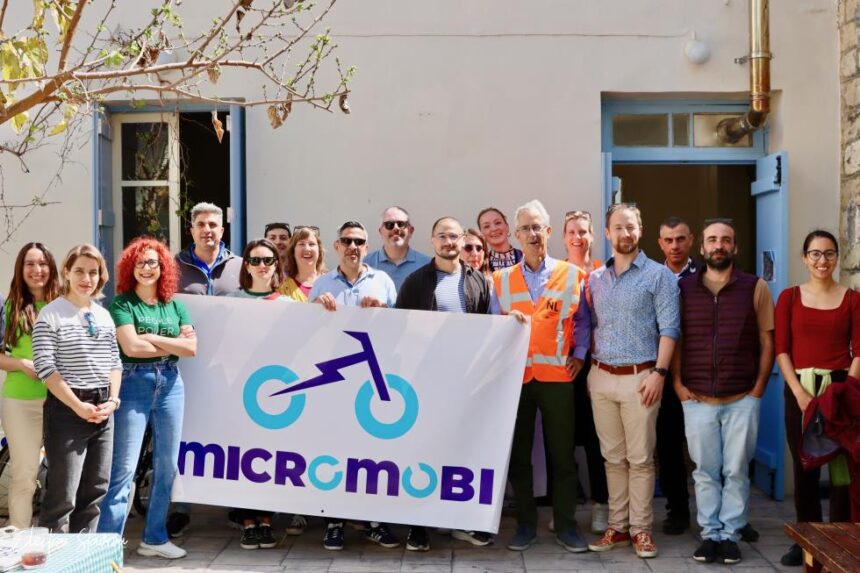
Could a Limassian replace his car with a bike? Is there a way for Limassol to get more cyclists? What are the problems today? After all, is it possible to use the bike at such temperatures and ultimately … Is the bike a means of transport or a means of sports and entertainment? Chris Brandlett, Director of International Relations of the Dutch Cycling Embassy, and a book author on anthropocentric design in cities, was found in Limassol last week, invited by the Environmental Organization of the “Friends of the Land”. He had the opportunity to ride along with a large group of locals (and the Dutch ambassador), on the bike lanes and… the streets of Limassol, conveying his own experience for the changes to be made to the city.
What is the Dutch Embassy of Cycling?
The Dutch Cycling Embassy is a non -profit network of public and private organizations from the Netherlands who wish to share their knowledge and expertise to help cities worldwide become more bike -friendly and experience its many advantages.
You just cycled with others, in Limassol, in the city center and on some bike lanes. How did our infrastructure seem to you? Can we improve them?
The answer is a clear ‘yes’. I would describe the infrastructure as fragmentary and discontinuous. There were comfortable and safe bike lanes, completely separated from the traffic, where we could bike side by side. But these bike lanes suddenly disappeared and we were next to trucks and cars. The challenge is to connect these good infrastructure so that they are safer, so that more people can choose the bike, not just the dedicated or bold cyclists or those who have no choice.

Do the special features of Limassol (distances, topography, climate) allow the bike in the city?
Wherever we go we hear that the city is unique, it is hot or very cold. And to some extent these may apply, but the problem is that cities use these obstacles as excuses to avoid investing in cycling infrastructure. Thus, people are not cycling, not because of the weather, but because they are dangerous, inconvenient and inconvenient, although most cities are relatively flat and many daily routes are close to home. Cities such as Sevilla have developed bicycle networks, proving that geographical or climate barriers are mainly psychological. The key is political will, commitment and the desire to properly distribute public space. Also, the growth of the electric bicycle has changed the data as it is much faster, reduces fatigue and allows for longer routes, supporting both daily travel and out -of -town tourism, as most people can easily travel 40 or 50 kilometers a day with an electric bike.
What kind of benefits arise if people choose the bike instead of the car?
It not only has environmental benefits but improves quality of life. By reducing traffic and parked cars, roads become friendlier for everyone: children, the elderly, people with disabilities. In most cities, travel is designed for those who have the physical and economic ability. In the Netherlands, teenagers are independent, they move on their own by bike, while in other countries parents act as “taxi drivers”. When we moved from Canada to the Netherlands six years ago, our children, 10 and 12 years old, immediately gained autonomy. They went to school alone, to friends, to activities. This not only benefited the same, but also us, releasing time and reducing stress. The bike is not an end in itself but a tool to make our cities better.
How do you carry supermarket shopping and other massive bike objects?
I would like to make it clear that the answer is not “all or nothing”, which means that one can use his car for some tasks if he considers it to be the most appropriate medium, but we should not try to invent justifications to convince us that the bike cannot serve us. Personally, I have a large plastic crate in the front of my bike and easily carry three shopping bags. Also in the Netherlands there are the so -called Cargo bicycles that are usually electric and we can rent them over time to carry everything, from Christmas trees to furniture. Many companies use them for traditions and services (eg plumbers, gardeners, etc.), as they offer comparative advantages in saving time and money. In fact, there are now state subsidies for them as they seem to be able to help address many problems in our cities.
We often hear that Cypriots have no cycling culture. How can we encourage the world by changing this mentality?
Seville is an excellent example of a city without cycling culture, which has created an extensive network of bicycle routes within 18 months. The percentage of bicycle travel was fired from 0.5% to 6%, proving that the right infrastructure invites the world and create what we call cycling culture. Also, during the pandemic, when the roads were emptied by cars, many people started using them differently: with bicycles, skates or just walking. This shows that there is a need for alternative travel, but people simply do not feel comfortable on the streets because of cars. With proper leadership and infrastructure investment, Limassol can quickly develop cycling culture, as has been the case in many other cities worldwide.
Are cycling infrastructure accurate?
Investments in cycling infrastructure is often considered lost money, and car investments are considered necessary. But every time one chooses the bike instead of the car, society saves money, less health costs, less road maintenance, less traffic. It is estimated that for every kilometer of cycling instead of driving the car the society earns about € 1,20. So, instead of seeing cycling infrastructure as an exit we must consider them an investment with long -term benefits.
Do you wear a helmet when you ride in the Netherlands?
In the Netherlands, few choose to wear a helmet as security comes from infrastructure. In some countries, the imposition of the use of cycling helmet is used abusively, targeting vulnerable social groups, and often discourages cycling, sending the message that it is dangerous. But statistics show that the benefits of the bike at society and health are much more than the risk of injury, and the police certainly have to focus on other more serious issues than the cycling helmet, which is doubtful if it can actually protect it effectively.
What can we answer to those who tell us that “here is not the Netherlands, here is Cyprus”?
I do not believe that Cyprus wants and does not need to become the Netherlands, but it can draw inspiration from its strategies. The question is not to copy, but to form a local approach that will provide travel options beyond the car. The problem is not cultural, but the result of decisions that give the car priority. Cities cannot continue to expand their road network unlimited, nor can any person who comes to live in Limassol to add another car to the streets. So, viable and fast alternatives, such as cycling and efficient public transport, must be given, with emphasis on the concept of the network. It takes political will to make this change but it is the only way to create a more viable and human city.