
Trend News
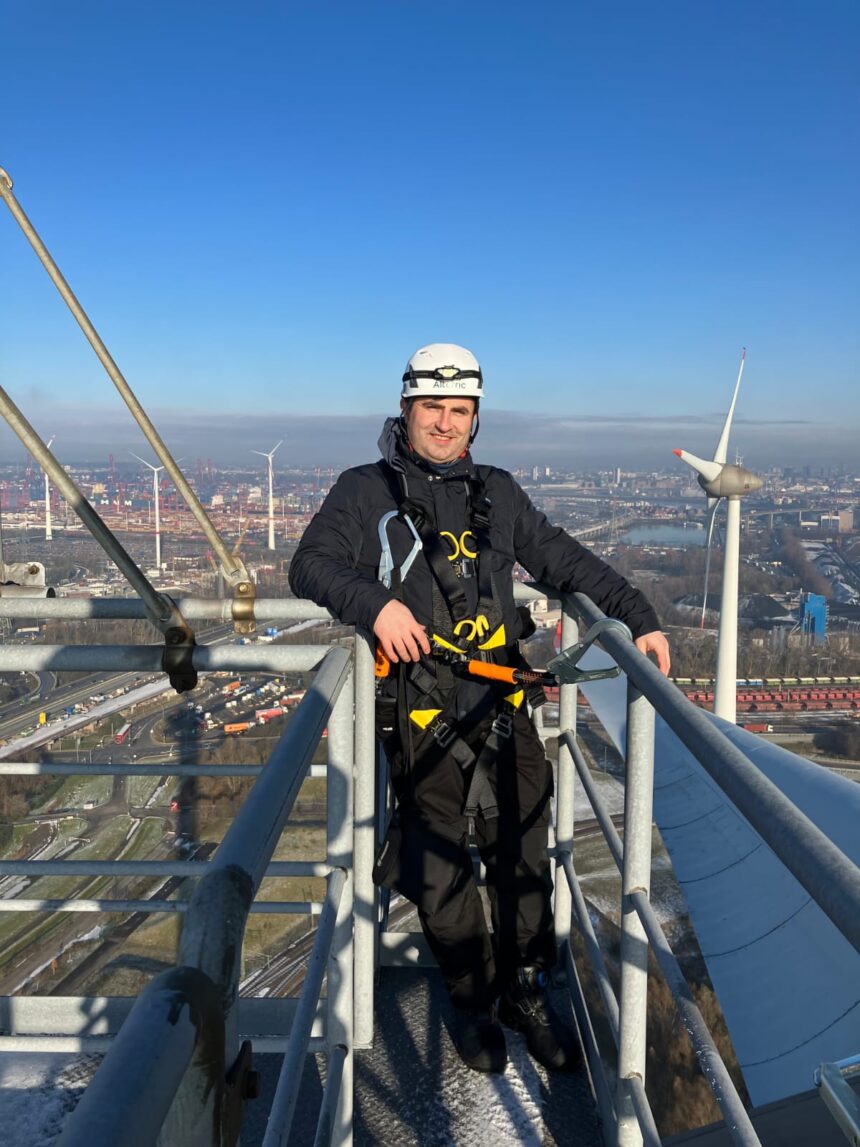
Agency presents an interview with Nurlan Rahimli, an
Azerbaijani living in Germany who works as a Technical Manager for
operational wind farms at Alterric Deutschland GmbH and as a
Project Manager at AGA Renewable Energy Solutions.
Mr. Rahimli, could you tell us about your educational
background? How did your journey toward becoming an engineer
begin?
Even though I’m an engineer today, my academic journey initially
started in economics at the Oil Academy. Back then, career choices
were often influenced by family expectations, and economics was
seen as a stable and promising field. However, my true interest has
always been in the energy sector-especially renewable energy.
At some point, I realized that I wanted a career that was not
just financially viable but also intellectually fulfilling and
future-oriented. That’s when I made the decision to switch to
engineering, focusing on energy technologies.
What led you to continue your education in Germany? Was
it difficult to learn the German language?
Germany’s reputation in engineering and its leadership in
renewable energy made it an obvious choice. However, my application
for a scholarship to pursue a second bachelor’s degree was not
accepted, which meant I had to explore alternative paths. I decided
to complete my mandatory military service first.
I had already started learning german language before my
military service, but after a long break, I had to essentially
relearn it from scratch. Learning German is challenging-it’s not a
language that follows a simple set of rules; rather, it feels like
a language of exceptions. But I was determined to study in Germany,
so I pushed through.
Ultimately, I opted for a more practical and financially
sustainable path: enrolling in an English-taught master’s program
in Germany, which allowed me to enter the field while continuing to
refine my German language skills.
How did your interest in renewable energy first begin?
And what made you focus specifically on wind energy later
on?
My interest in energy started early on. It was a developing
field at the time, and that made it even more exciting. Baku, known
as the “City of Winds,” naturally made wind energy an area of
curiosity for me.
Over time, it became clear that fossil fuels wouldn’t last
forever, and the world would have to shift toward renewables. The
Azerbaijani government had already started discussing green energy
initiatives around 2009, which further strengthened my belief that
this sector had real potential back home.
Among different renewable energy sources, wind energy stood out
because of its rapid advancements and scalability. I saw it as an
area where I could build expertise and contribute meaningfully in
the long run.
If we’re not mistaken, you also started working while
pursuing your master’s degree. Did combining work and study help
you deepen your expertise, or was it a particularly demanding
period for you?
Yes, I worked during my studies-initially out of necessity, to
cover living and education costs. During my first year, I worked on
weekends and non-class days, with some financial support from my
family.
Later on, I focused on student jobs that aligned with my field.
Balancing work and studies wasn’t easy, but it was worth it. The
experience helped me develop practical skills, apply theoretical
knowledge in real-world settings, and understand the industry’s
expectations. It was a demanding period, but one that shaped me
professionally and personally. My mindset at the time was simple:
If it doesn’t challenge you, it doesn’t change you.
We noticed that you’ve studied at three different
institutions in Germany. Would you say that in Germany,
continuously gaining knowledge is more of a lifestyle?
I would answer this questions of yours in a typical German way:
Jein! It means Yes, but also no.
My master’s program was structured as a dual degree, so I was
enrolled at both Kassel University in Germany and Cairo University
in Egypt, spending a semester in Cairo. That’s why I graduated from
both universities.
Later, while working full-time, I enrolled in a part-time
bachelor’s program in industrial engineering, attending classes on
weekends. However, due to a job change and relocation, I had to put
that degree on hold after two years.
As in many other countries, continuous learning is essential in
Germany to stay competitive and high valued. Professional
development through courses, certifications, and further studies is
widely encouraged, and individuals are generally open to lifelong
learning.
In general, when analyzing the state of green energy in
Germany—especially in the wind sector—we see that the country ranks
third globally in wind energy production. But you’ve had a close-up
view of the field. What insights can you share about wind energy
development in Germany, and what are some of the key steps or
innovations being implemented?
Germany has been a global leader in wind energy for decades,
thanks to ambitious policies, technological innovation, and strong
government incentives. The country was one of the pioneers in
large-scale wind deployment, and wind power now plays a crucial
role in Germany’s energy transition, known as the Energiewende.
However, in recent years, onshore wind energy has faced
challenges. Many prime locations are already occupied, and new
installations are increasingly met with regulatory hurdles, public
resistance, and lengthy permitting processes. As a result, the
growth of onshore wind has slowed, shifting the focus toward
optimizing existing turbines through repowering-replacing older,
less efficient turbines with modern, high-performance ones. This
helps increase energy output without requiring entirely new wind
farms.
Meanwhile, offshore wind remains a key area of expansion. The
North Sea and Baltic Sea offer some of the best wind resources in
Europe, and Germany has ambitious plans to scale up offshore
capacity significantly. The challenge, however, lies in efficiently
integrating all this renewable energy into the power grid. Wind
energy production is inherently variable, and ensuring grid
stability requires advanced energy storage solutions, smarter grid
management, and better connectivity between different regions.
One exciting development is the increasing role of hydrogen.
Excess wind energy, instead of being wasted, can be used to produce
green hydrogen through electrolysis. This hydrogen can then be
stored and used later for industrial applications, transportation,
or even reconverted into electricity when needed.
Germany’s wind energy sector is at a turning point—not just
about adding more turbines but making the entire system smarter,
more resilient, and more integrated with future energy solutions.
The focus now is on efficiency, grid expansion, and innovative
storage technologies to ensure that wind energy remains a reliable
pillar of the country’s clean energy future.
Which regions in Germany are best suited for wind
farms?
The strongest wind energy potential is in northern Germany,
particularly:
- Lower Saxony
- Schleswig-Holstein
- Mecklenburg-Vorpommern
Offshore wind farms along the North Sea and Baltic Sea are also
highly productive.
For instance, Schleswig-Holstein frequently generates more
electricity from wind than it consumes-sometimes exceeding 100% of
its demand. Nationwide, wind energy accounts for roughly 30% of
Germany’s total electricity production, and renewables as a whole
contribute around 50%.
Germany and Azerbaijan already cooperate in several
areas. In your opinion, what benefits could both countries gain
from deeper collaboration in the renewable (green) energy
sector?
Azerbaijan has significant potential in renewables, and foreign
partnerships-especially with Germany-could accelerate its
development. Germany brings advanced technology and expertise,
while Azerbaijan offers strong wind and solar resources.
With the Azerbaijani government now prioritizing green energy
projects, there’s an opportunity for German companies to invest,
share knowledge, and support infrastructure development.
Do you think Azerbaijan’s renewable energy potential
could be attractive to major companies from Germany that are
already well-established in this field?
Absolutely. Azerbaijan’s combination of high solar radiation and
strong wind conditions makes it an attractive investment
location.
German companies, particularly those specializing in energy
technology, have a strategic interest in expanding into emerging
markets. With Europe aiming for energy security and
diversification, Azerbaijan could become a key partner-not just for
traditional energy exports but also for renewables.