
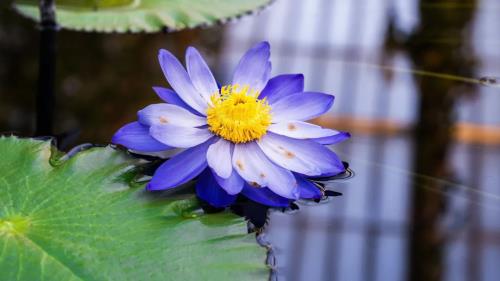

The flower contains two psychoactive alkaloids and is believed to have been consumed during erotic ancient ceremonies, where participants were trying to communicate with the goddess Hathor.
When Howard Carter discovered the Tutankhamen tomb in 1922, in the Valley of the Kings, in the city of Luxor in southern Egypt, he found Pharaoh’s body covered with the petals of a species of brutenery, known as a blue lotus.
The flower contains two psychoactive alkaloids and is believed to have been consumed during erotic ancient ceremonies, where participants were trying to communicate with the goddess Hathor.
As a goddess of love and drunkenness, Hathor is said to have provided a connection to the spiritual kingdom through ecstatic experiences. It was the focus of popular worship ceremonies that lasted weeks during which participants consumed a lot of drink, danced and engaged in erotic situations.
Indeed, some scholars argue that the young followers of the goddess lost their virginity with wooden phallus who were then offered to the goddess at the royal necropolis of Deir El Bahari.
Egyptians believe that these hectic ceremonies were powered by wine soaked with psychedelic blue lotus. Evidence of this practice comes from ancient sources such as the Papyrus of Turin, who depicts the flower over the heads of women who engage in erotic acts.
It is also noteworthy that the ancient Maya loved in a similar way a relative called Nymphaea Ampla. Researchers believe that these two varieties of water lilies may have comparable effects on consciousness and sexual arousal, leading to strikingly similar practices and beliefs in Nubia and Meso -America.
Healing properties
However, the Egyptians did not use the blue lotus only in sex.
Medical papyrus reports the flower as an ingredient in various preparations aimed at treating liver and stomach diseases, and even edema treatment.
The blue lotus also often refers to the Egyptian book of the dead and is believed to have been used in burial ceremonies. For example, some of the spells in this famous necrotomic text emphasize the connection of the flower to the Renaissance and the immortality, while its presence in royal tombs can represent a connection between the Pharaohs and the gods.
In modern medicine
Recent Blue Lotus chemical analyzes (Nymphaea caerulea) have revealed that it contains psychoactive substances that cause hallucinations, according to IFLSCIENCE.
In 2000, the potential of one of the substances as a cure for erectile dysfunction were recognized, suggesting that the ancient Egyptians may have had something in their minds when using the flower to increase their sensuality.
Unfortunately, however, the authentic Egyptian blue lotus is extremely difficult to find nowadays. The construction of the Aswan Dam in the Nile has been thought to have destroyed the endemic environment of the plant, thereby being described as a threatened species.
However, blue lotus products are advertised and widely sold on the internet, often as sleeping aids or sedatives. However, a recent analysis by researchers at the University of California in Berkeley found that these goods usually do not contain a blue lotus, but consist of a similar variety of bruises that have no psychoactive properties.
Source: cnn.gr