
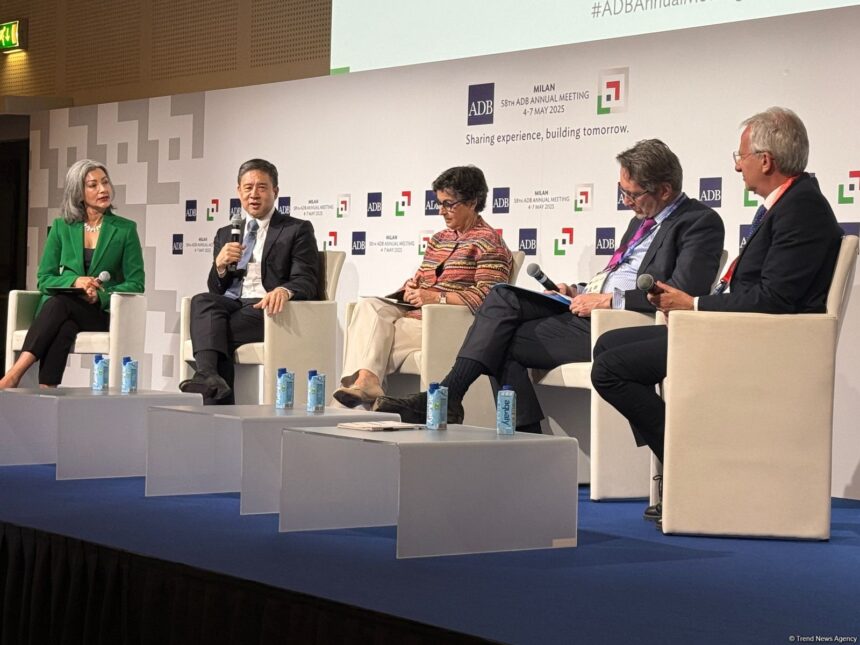
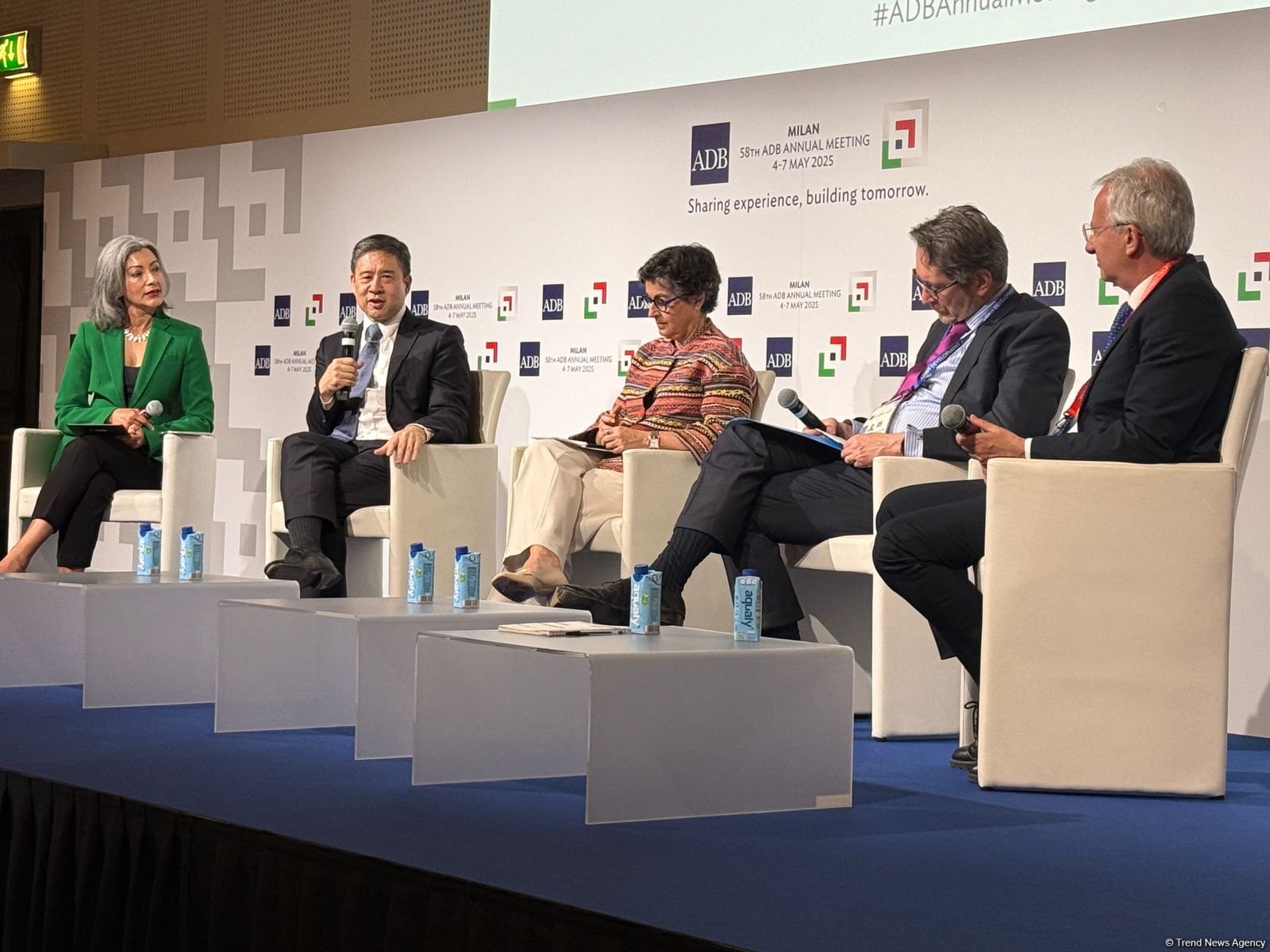
MILAN, Italy, May 4. Globalization remains
powerful engine of development for emerging economies, ADB Chief
Economist and Director General, Economic Research and Development
Impact Department Albert Park said speaking at the session
“Globalization as a Force for Sustainable Development” during the
58th Annual Meeting of ADB in Milan, Trend reports.
Park emphasized the importance of embracing globalization to
ensure long-term economic growth and reduce inequality among
countries.
“You need to work on your own competitiveness to build a
business environment, infrastructure, that can really position you
to be part of globalization,” Park said. He noted that while
globalization faces challenges, it remains a powerful engine of
development, particularly for emerging economies.
Citing research by Paul Collier and David Dollar from the World
Bank, Park pointed out that “in every period of globalization,
you’ve seen the countries that participated grow faster, and you
see convergence among the countries participating, meaning the poor
members actually do even better.”
He highlighted the 1980–2000 period as a turning point: “It was
the first one where lots of developing and emerging economies were
participants in globalization,” noting that this era saw developing
nations shift into manufacturing and export-driven growth. “This
was incredibly powerful for driving global convergence and
improving lives,” he added.
Park warned that as global technology accelerates, countries
risk falling behind if they remain disconnected. “You really get
productivity growth by transferring existing technologies to your
country. And if you’re not part of the globalization game… you’re
going to fall behind.”
He acknowledged that some governments remain hesitant to pursue
deeper integration due to perceived short-term difficulties. “I
sometimes feel there’s a complacency, because there’s some growth
happening. It doesn’t seem so easy to really implement measures for
promoting FDI or trade globalization. There’s pain points,” Park
said. “But if you take a historical view, that’s really where all
the paths are.”
For smaller or lower-income countries, Park argued that global
value chains (GVCs) offer a practical entry point: “A poor country
actually has more opportunity to get into globalization because
they can specialize in a very small part. They don’t have to
produce the whole good.”
He concluded with a message of optimism: “Once you get into a
global value chain, then you have the opportunity to move up… and
by being part of the value chain, you will learn things through
both your suppliers and your customers that will help you get to
the global market.”