
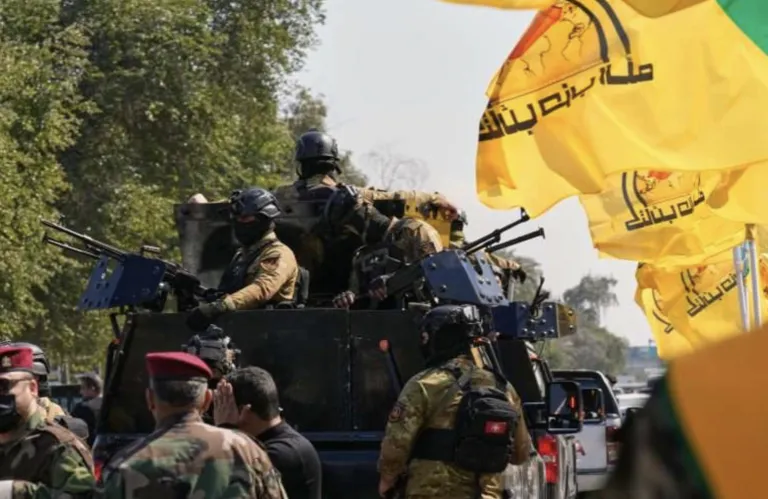
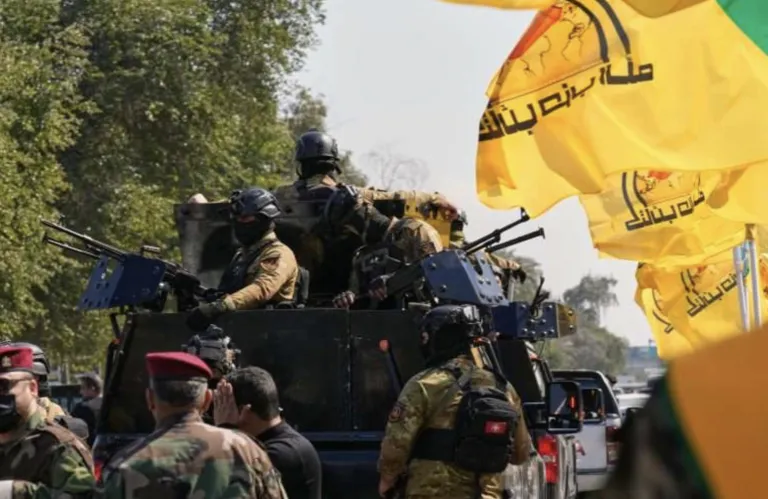
Despite statements from both Israel and Washington, as well as from the Lebanese government itself, which for more than a year have been talking as if Hezbollah has finally collapsed, the Lebanese organization is once again at war with Israel, with attacks in response to the US-Israeli war against Iran.
Its ability to strike deep into Israeli territory suggests that Hezbollah viewed the 15-month ceasefire with Israel not as the end of the war, but as a narrow window of time to reorganize and prepare for what it believed was inevitably to come.
This was despite the fact that many claimed that the Israeli attacks had destroyed 80% of Hezbollah’s military force.
Israeli Prime Minister Benjamin Netanyahu said the campaign had “set back” the Lebanese group “by decades”, destroyed most of its missiles and killed its top leadership. For his part, a high-ranking American official described her as “extremely weak”. US Central Command (CENTCOM) commander Michael Kurila went even further, calling Hezbollah “decimated” while praising the deployment of the Lebanese Armed Forces in areas he described as “strongholds” of the “former organization”. The rhetoric from Beirut was similar, with Lebanese President Joseph Aoun declaring that the state should hold the “exclusive right to bear arms,” while Prime Minister Nawaf Salam said Hezbollah’s military presence south of the Litani River was almost over.
However, after the Lebanese organization’s involvement in the US-Israeli war in Iran, it appears that the narrative of Hezbollah’s collapse is not true.
“Mission Succeeded”
According to four sources familiar with Hezbollah’s rebuilding process, who spoke to Middle East Eyereconstruction began on November 28, one day after the ceasefire.
Within the organization, the admission was not that the war was over, but that a new round of conflict with Israel was only a matter of time. According to the sources, the organization’s perspective was that the ceasefire was not a political settlement but an operational break and every day counted.
The sources also said that Hezbollah believes that Israel stopped its attacks for two reasons. First, he believed that the organization had been damaged enough that international and domestic pressure would complete the work of Hezbollah’s permanent political collapse. Second, Israel assessed that the continuation of the war could lead to heavier losses for itself, at a time when it considered that the strategic benefits it was seeking had already been secured.
However, in the end, according to the sources, the cessation of hostilities was an opportunity for Hezbollah. This meant that although the war had taken a heavy toll on the organization, it had also left a critical void in which to regroup.
In fact, as the sources noted, it followed for an effort not limited to the restoration of its basic military capabilities, but the ambition was broader and aimed at Hezbollah recovering as much as possible of the capabilities that its structure and infrastructure had before October 2023.
By mid-December 2025, according to the sources, military commanders had informed the leadership that everything that could be rebuilt had been rebuilt.
“We told the leaders: mission accomplished,” a source said, citing military commanders.
Some capabilities, particularly those related to air defense and other strategically important systems, had suffered irreversible damage, but despite the difficulties the sources said, the rebuilding effort was described as extensive, methodical and disciplined.
The task before the Lebanese woman was enormous. On September 17, 2024, Israel caused the explosion of hundreds of buzzers used by members of the organization. Later that month, heavy airstrikes in Beirut and other parts of the country killed the group’s top military leadership, as well as its longtime secretary general, Hassan Nasrallah. Israel had hit Hezbollah with a multi-layered campaign aimed at splitting the command, exposing the networks and crippling its operational capacity.
“They didn’t pick up the phone”
One source described Hezbollah’s leadership as “blindsided, scattered and disintegrated” as Israeli forces launched a ground invasion in October 2024 following an intense bombing campaign.
“The resilience of the border militants, fighting to the death, gave the remaining top military leaders of the party room to breathe and regroup. These living witnesses saved the party,” he told Middle East Eye.
When asked why some military commanders survived while others appeared to be exterminated at will by Israeli airstrikes, the source replied: “They didn’t pick up the phone.”
According to the sources, Hezbollah’s communications structure had been penetrated to a much greater extent than initially appreciated.
The organization always believed that its members were under surveillance. However, it became clear that Israel was able to track their location in real time and pinpoint Hezbollah leaders and fighters.
“Basic and primitive” methods
Sources described how the organization largely abandoned all three of its previous communication networks for sensitive matters, returning instead to what one source called “basic and primitive” methods: human messengers, handwritten notes and segregated communication channels between command and field units.
A second source described the change in tactics as a “deliberate act of accommodation” and not a sign that the organization had retreated. In addition, this strategy contributed to a wider structural review.
In the years following Israel’s 2006 war against Lebanon, and especially during Hezbollah’s intervention in Syria in support of Bashar al-Assad, the organization began to look more and more like a conventional army: larger, more centralized, and more dependent on extensive chains of command.
This transformation expanded its capabilities, but the experience of the 2024 war prompted the surviving commanders to reconsider this model. Hezbollah, according to a third source, had turned into “a big cart that could only be moved by a team of stallions”, whereas before it looked like “lighter stray horses”.
After the 2024 war, the sources said, senior military officials returned to what they called the “Mughniyya spirit,” a reference to the late commander Imad Mughniya and an earlier approach based on scattered, semi-autonomous units.
Under this model, modules operate with script-based general instructions rather than continuous direct commands. The connection to the central administration becomes more elastic, slower and less exposed. This change may reduce speed in some areas, but boosts durability. It’s a model built not just to work, but to survive. The same strategy appears to have determined Hezbollah’s return to the south.
The role of the Revolutionary Guards
Publicly, the ceasefire agreement required Hezbollah to have no military presence between the Israeli border and the Litani River, while the Lebanese army took over the deployment of forces in the area for more than 60 days.
By January 8, 2026, the Lebanese Army had announced that it had taken operational control of the area, and that almost all weapons there were now in state hands. However, according to the sources, the reality on the ground was much more complicated.
As the sources told Middle East Eye, Hezbollah did not need large, visible formations to rebuild, but instead relied on smaller groups and individual operatives to repair facilities that were damaged but not completely destroyed, reactivate unexposed sites, and quietly reinforce positions that had not been officially disclosed.
The sources described a situation in which Hezbollah was not withdrawing from southern Lebanon, but instead was gradually re-establishing itself with patience, secrecy and careful moves.
“We were connecting day and night, relying on interpersonal communication to recover and regroup,” the third source said.
According to two people familiar with the situation who spoke to the Reuters news agency, Iran’s Islamic Revolutionary Guard Corps (IRGC) has reshuffled Hezbollah’s military leadership. About 100 Iranian military officers “filled the gaps” before restructuring the Lebanese organization and developing plans for the war it is now waging in support of Tehran.
They reported that IRGC officers also restructured Hezbollah command structures that had been breached by Israeli intelligence.
Andreas Krieg, a lecturer in security studies at King’s College London, said the IRGC “essentially reorganized Hezbollah into a much more horizontal system”, contrasting this with the political hierarchy that had emerged around former leader Hassan Nasrallah before his assassination.
“This decentralized model that they’ve put in place now is also a bit more like the image of Hezbollah in the 1980s – very small groups,” Krieg further explained.
Source: Al Jazeera, Middle East Eye / ertnews.gr