
Trend News
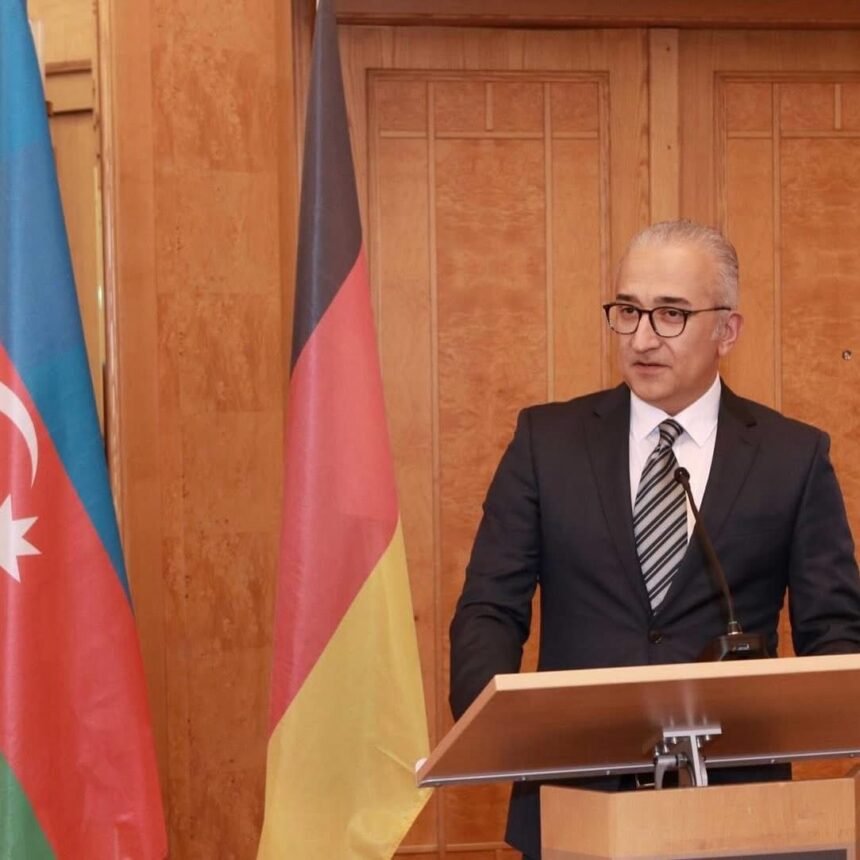
Agency presents an interview with Amir Ali Sardari (Iravani), a
famous Azerbaijani living in Germany, a representative of the
Iravan Khan dynasty, ethnographer and historian, Senior
expert, engineering project manager at Robert Bosch, the world’s
largest automotive supplier:
What brought you to Germany?
My decision to come to Germany in 2003 was driven by both
professional ambition and a deep personal desire for growth. At
that time, I was already a trained electrical engineer with several
years of experience, but I felt a strong urge to advance my
knowledge and challenge myself in a new environment. Germany, with
its globally recognized engineering education and its reputation as
a hub for cutting-edge technology and industrial innovation, was
the natural choice. I was 28 years old when I arrived—full of
energy, curiosity, and a vision for my future. My primary goal was
to continue my education in electrical engineering at a higher
academic level and gain insights that would not only enhance my
technical skills but also broaden my perspective through exposure
to a different academic and industrial culture.
How do you remember your years of studying in
Germany?
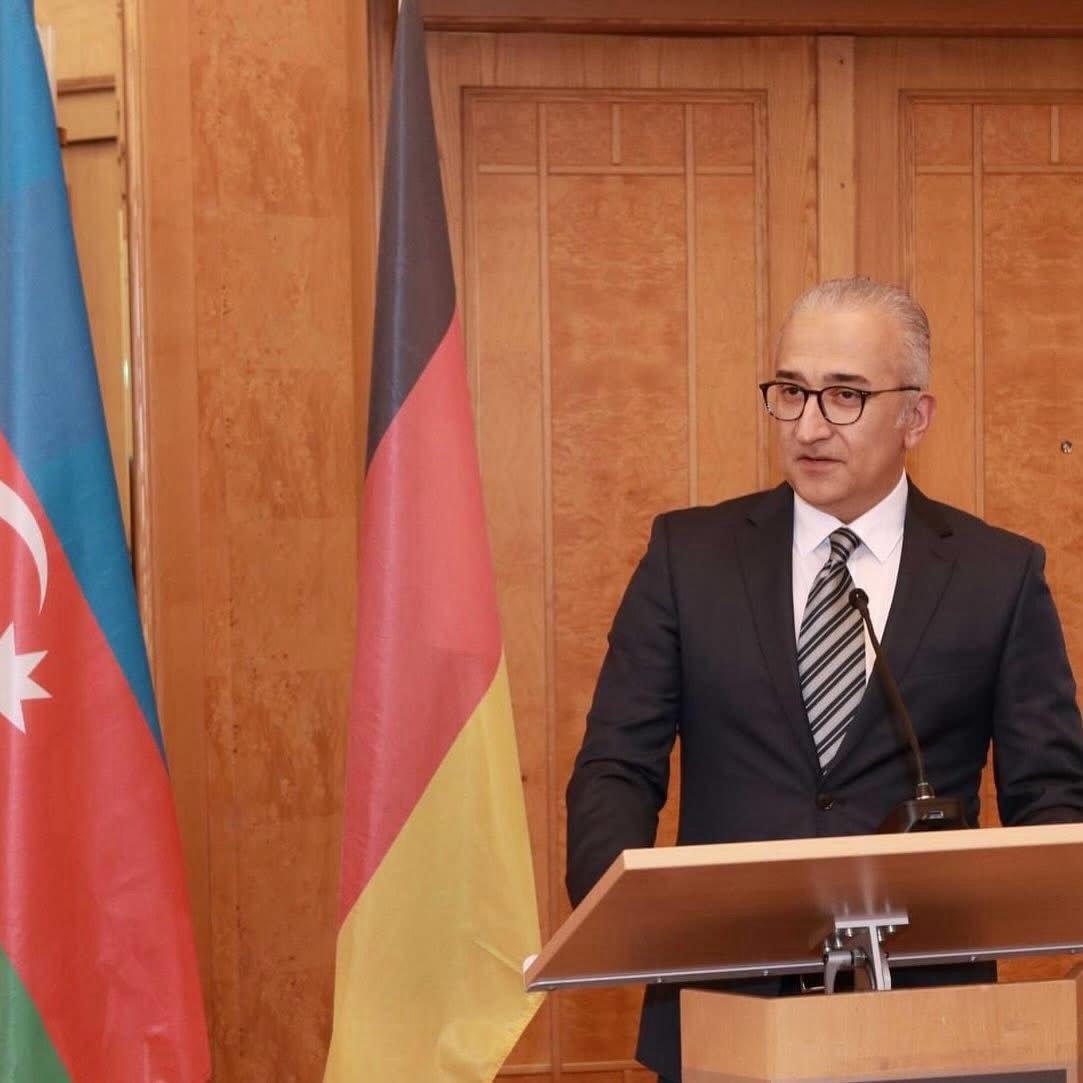
Looking back, my years as a student in Germany were some of the
most formative of my life. They were marked by hard work, personal
growth, and a deep sense of independence. I enrolled in a technical
university and completed my Diplom-Ingenieur degree in 2008. Unlike
many of my peers, I did not have any financial or institutional
support during my studies—I financed my entire education on my own.
This was not always easy, but it taught me resilience, discipline,
and how to prioritize my goals under pressure. I often worked
part-time jobs alongside my studies, and every challenge I faced
made me stronger and more self-reliant. Those years also gave me a
deeper appreciation for the German education system, which, while
rigorous, provided a solid foundation for a successful career.
Tell us about your professional journey and career in
Germany. The German automotive industry has always been an exciting
and advanced field. What steps did you take to enter and succeed in
this sector?
After graduating, I initially considered pursuing a PhD, as
academic research had always interested me. However, I quickly
realized that my passion leaned more toward real-world application
and innovation within industry rather than staying in the academic
realm. The German automotive industry, known for its high
standards, global impact, and dynamic environment, was especially
appealing to me.
I joined a company in the automotive sector shortly after
completing my degree, and I’ve been with the same organization ever
since. Over the years, I’ve worked in a wide range of roles and
projects, gradually building both technical expertise and
leadership experience. My journey has taken me through areas such
as embedded systems, systems engineering, product development, and
now strategic project management. I currently serve as a technical
specialist and project manager for a cross-industry initiative
coordinated by the German Association of the Automotive Industry
(VDA). It’s a role that requires not only technical depth but also
the ability to coordinate across companies and drive collaborative
innovation on an industry-wide scale. I believe my success stems
from a combination of persistence, adaptability, and a continuous
desire to learn and evolve.
Who supported you during your education and later in
your career?
One of the defining aspects of my journey is that I have walked
this path largely on my own. I received no financial support,
scholarships, or mentorship during my education. Every step—from
relocating to Germany, learning the language, navigating the
education system, to finding my place in a highly competitive
industry—was the result of my own initiative and determination.
While this made the journey more difficult at times, it also
instilled in me a strong sense of independence and confidence. I’m
proud of having built everything from the ground up, and I believe
that overcoming these early challenges helped shape the
professional and person I am today.
You are known to support young engineers as well. One
example is your participation in conferences such as MathWorks
2023. How does it feel to share your knowledge and experience? Are
you planning to become a lecturer? How do you see the next
generation in this field?
Contributing to the professional development of the next
generation is something I truly value. I regularly participate in
conferences and technical events where I have the opportunity to
share my expertise and insights, especially in areas like Software
/ Hardware systems engineering, software-in-the-loop (SiL), and
industry standards. I have been actively involved in conferences,
which were excellent platforms to engage with young professionals
and academic researchers alike.
In the past, I received invitations to teach at academic
institutions but due to the demands of my professional role and a
very busy schedule, I had to respectfully decline. At the moment, I
don’t plan to pursue a formal teaching position, but I remain open
to mentoring and guest speaking opportunities when they align with
my field and schedule.
What are your thoughts on the current and future state
of the German automotive industry?
The future of the automotive industry is undoubtedly complex and
full of uncertainty. We are experiencing a period of profound
transformation driven by technological innovation, changing
customer expectations, regulatory shifts, and the global push
toward electrification and sustainability. At the same time,
development costs are rising, and competition from other
regions—particularly Asia and North America—is intensifying.
That said, I remain confident in the German automotive sector.
It has a long history of resilience and innovation and has
continually reinvented itself in response to disruptive change. The
current shift toward software-defined vehicles, digital ecosystems,
and decarbonization presents enormous challenges, but also
tremendous opportunities. I believe Germany will continue to play a
leading role in shaping the future of mobility, and I am proud to
contribute to this ongoing transformation.
Ethnography and history are among your hobbies. We know
that you are researching the history of the Khanate of Iravan.
Isn’t it difficult to pursue this research from Germany, given the
distance?
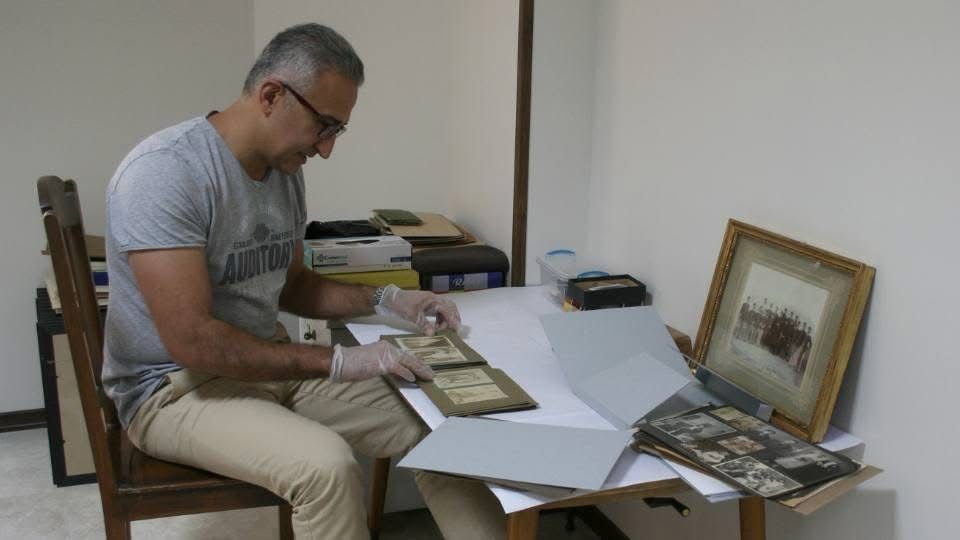
Indeed, one of my deepest personal passions is the exploration
and documentation of the history of my ancestors, especially the
heritage of the Khanate of Iravan and the broader region of Western
Azerbaijan. This is more than a hobby for me—it’s a meaningful
mission to preserve and share a rich cultural history that is often
overlooked or misunderstood.
Despite living in Germany, I maintain an active international
network of historians, scholars, and researchers who collaborate
with me on these topics. I frequently travel to Azerbaijan to
participate in academic events, conferences, and historical site
visits. Additionally, the digital age has made it possible to
conduct a great deal of research online, attend virtual
conferences, and exchange ideas with peers around the world
instantly. Distance is no longer a limitation when you have the
passion and tools to connect globally.
Over the years, my efforts in this field have resulted in a
number of valuable findings, which I continue to share with both
academic circles and the broader public.
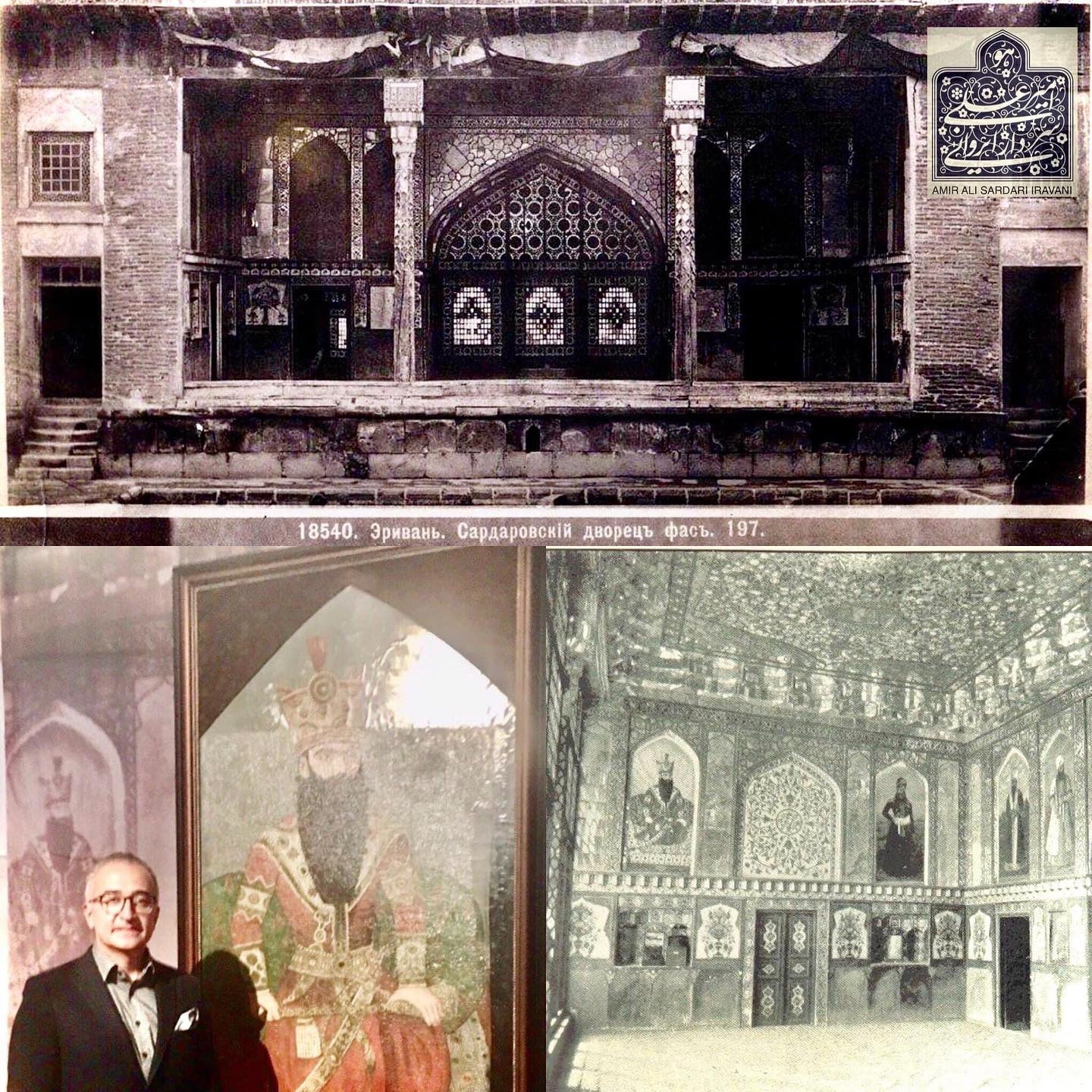
Sardar Palace in Iravan, early 20th
century
Do your friends in Germany know about your aristocratic
background? If so, how do they respond?
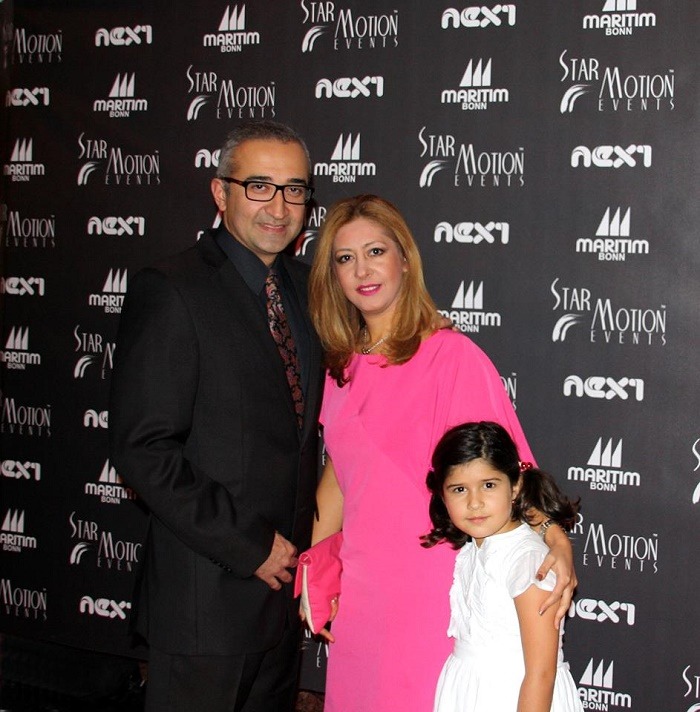
Some of my close friends are aware of my historical background
and the aristocratic lineage of my family. Their reaction is
usually one of curiosity and respect, and I deeply appreciate the
encouragement I receive from them regarding my historical work.
However, I don’t openly share this part of my identity with
everyone—not because I want to hide it, but because I want to avoid
any misunderstanding or the impression that I’m seeking attention
or special treatment.
I believe in humility and substance, and I let my actions speak
for themselves. That said, I do consider it important to raise
awareness, especially when it comes to cultural and historical
heritage. This year, I was elected to the board of the
German-Azerbaijani Alliance in Germany. In this role, I will
actively organize and participate in public events and conferences
aimed at informing international audiences about the cultural and
historical heritage of Western Azerbaijan.
Furthermore, I am an honorary member of the West Azerbaijan
Community and will regularly contribute to initiatives that promote
our historical rights and identity. It is my belief that heritage
and history are not only about the past—they are also tools for
building mutual understanding and creating a more informed and
respectful future.