
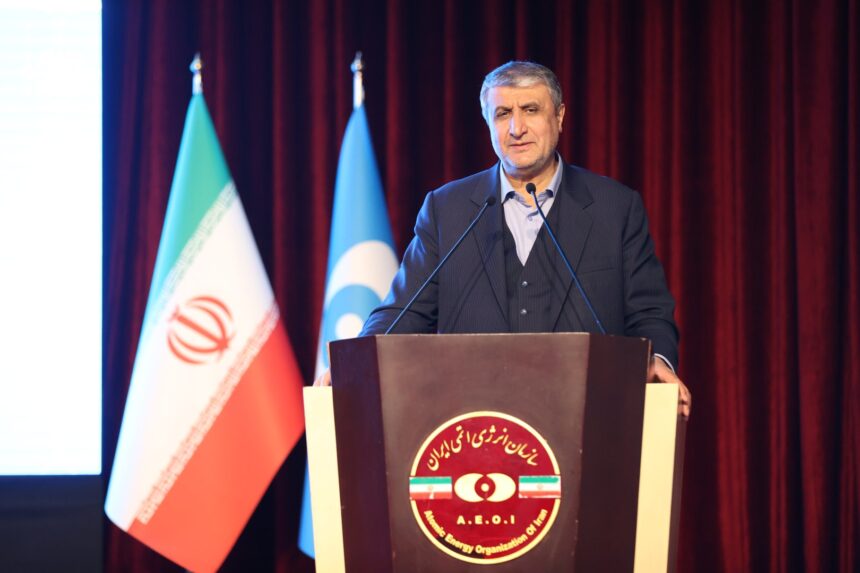
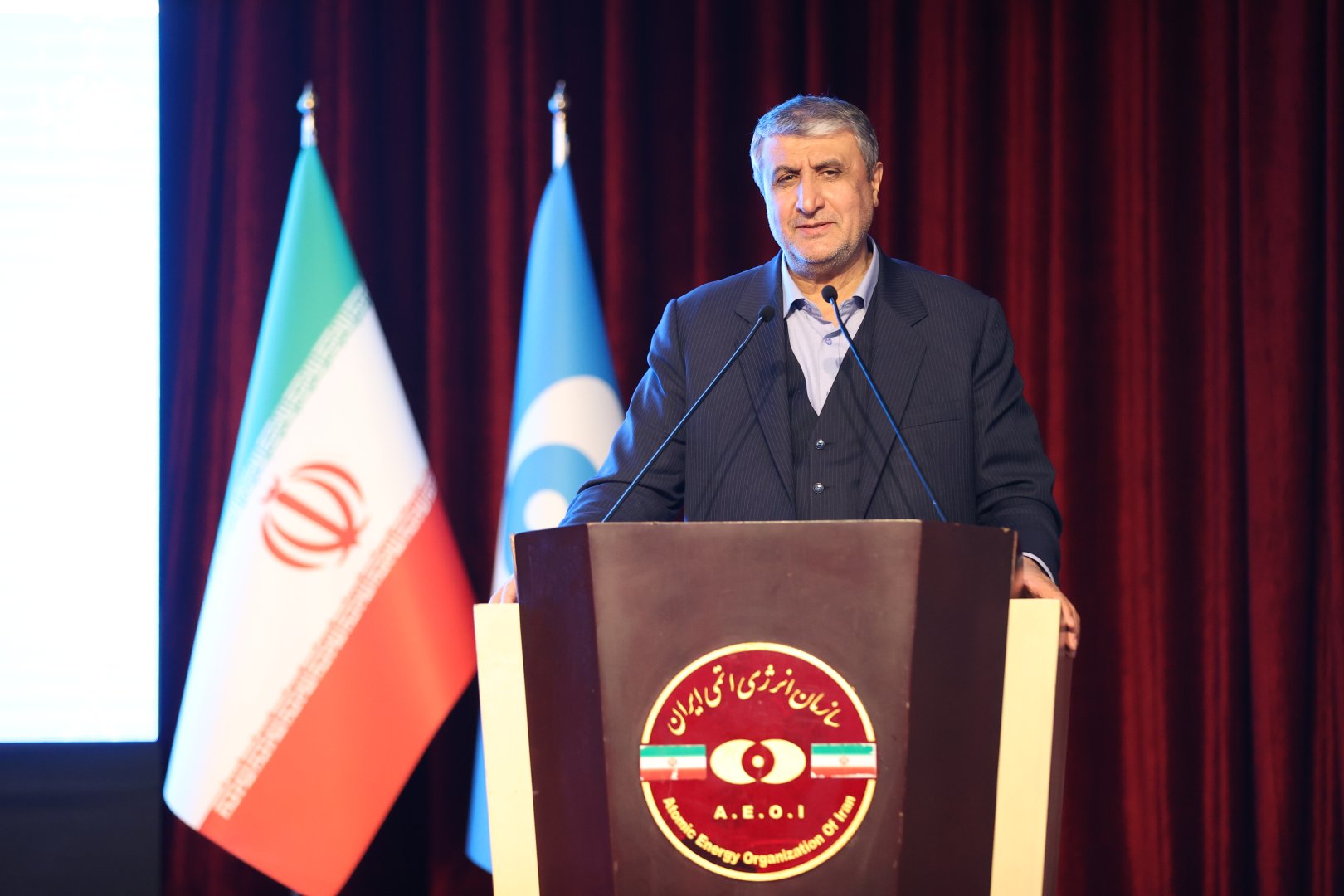
Baku, Azerbaijan, April 22. The export of
enriched uranium from Iran is not on the agenda, said Mohammad
Eslami, Iran’s Vice President and Head of the Atomic Energy
Organization (AEOI), Trend reports.
Speaking today at an event commemorating the anniversary of the
founding of the Islamic Revolutionary Guard Corps (IRGC), Eslami
clarified that despite various speculations, there are no plans to
export enriched uranium from the country.
Regarding the use of plasma technology in the military, Eslami
emphasized that Iran has not ventured into military applications of
nuclear technology. However, he noted the wide-ranging uses of
plasma technology and the importance of focusing on its
potential.
“Iran uses plasma technology in treating diabetes, aiding cancer
treatments, irradiating agricultural products, waste processing,
and more,” he added.
Addressing concerns about foreign threats to Iran’s nuclear
centers and the possibility of incidents similar to the Chernobyl
disaster, Eslami stated that such attacks would violate
international laws and collective commitments between nations. He
assured that such an incident would not occur at Iran’s nuclear
facilities.
He further mentioned that after the Fukushima and Chernobyl
incidents, technical requirements have been imposed on all nuclear
power plants worldwide. These standards have been incorporated into
the design, construction, and equipment of Iran’s Atomic Power
Station.
Recently, there have been discussions concerning ongoing nuclear
negotiations between Iran and the United States. It was suggested
that the possibility of transferring Iran’s enriched uranium to a
third country might be considered.
The second round of indirect negotiations between Iran and the
United States concerning Iran’s nuclear program has commenced in
Rome, Italy, on April 19, led by Iran’s Foreign Minister Seyyed
Abbas Araghchi and the US Special Envoy to Middle East Affairs,
Steve Witkoff. The third round of talks is scheduled for April
26.
On April 12, indirect talks between Iran and the US on Iran’s
nuclear program were held in Muscat, Oman. The discussions, led by
Iranian Foreign Minister Seyyed Abbas Araghchi and the US Special
Representative for Middle East Affairs, Steve Winkoff, were
described as constructive and based on mutual respect.
—
Follow the author on X: @BaghishovElnur