
For more than three decades, Ayatollah Ali Khamenei has been the enigmatic but all-powerful supreme leader of the Islamic Republic of Iran. Unchecked and accountable to nowhere (except to God, as he said), he quietly moved the strings of power in an oil-rich nation of 90 million people. This concentration of power prompted one observer to describe him as “part Pope, part commander-in-chief, and part Chief Justice ― all in one person.”
From the complex of 50 buildings known as Beit-e Rahbari in the heart of Tehran, he masterfully played the game of balance between reformers and hardliners. Although a conservative himself, he consistently favored the latter, using the former as a “relief valve”. He systematically denounced the US and Britain as the “Great and Little Satan”, while funding armed anti-Western Islamic organizations in Iraq, Lebanon and Syria. At the same time, he authorized the development of a secret nuclear program that could threaten Israel’s existence and destabilize the global energy market.
Read also:
Israeli army: Khamenei was found dead – Iran is talking about psychological warfare
LIVE: New Iranian strike against Israel, UAE and Qatar – Explosions in the center of Tel Aviv with 5 injured (video)
A life of obscurity and asceticism
The insightful cleric with the rich white beard kept the world in suspense as to his true intentions, mainly because so little was known about him. He never traveled abroad, rarely received foreign leaders (especially from the West), did not give interviews, and his public appearances were measured.
Even his personal life remained a secret. He was said to live austerely and ascetically, enjoying gardening, while controlling the country’s oil wealth and vast Islamic foundation funds. Although married with six children, few photographs of the women in his family have ever seen the light of day.
Although he was initially considered progressive, his rule gradually became more and more authoritarian. He used the security forces to violently suppress popular uprisings against rigged elections, a collapsing economy and the imposition of draconian Islamic laws. In the end, all pretense of popular legitimacy was gone, with “Death to the Dictator” slogans replacing the older “Death to America.”
From Mashhad to the peak of the Revolution
Born in 1939 in the holy city of Mashhad, Khamenei came from a clerical family. In his youth he loved Persian poetry, played the traditional instrument ‘tar’ and read Western authors such as Tolstoy and Sartre.
His political radicalization came through Ayatollah Khomeini, who strongly opposed the Shah’s modernization. During Khomeini’s exile, Khamenei built a network of militant clerics in Iran, was arrested six times and tortured by the Savak secret police.
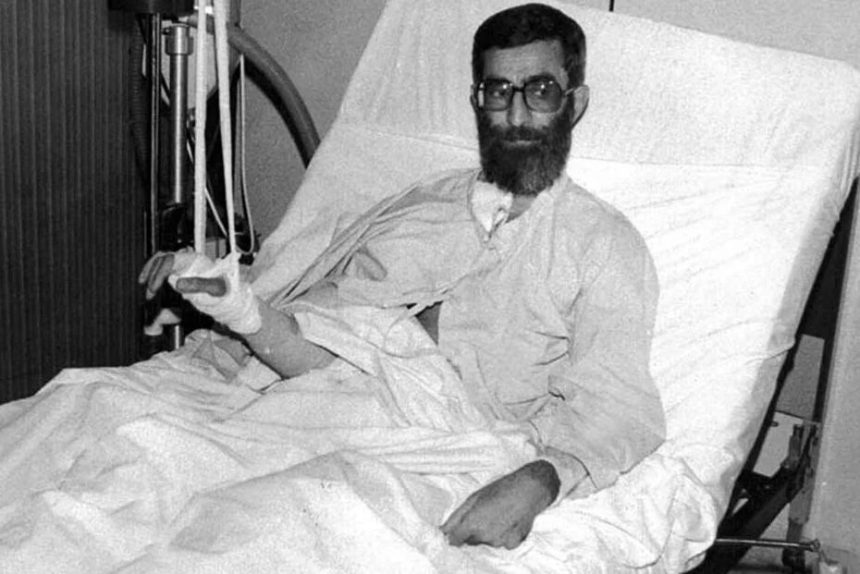
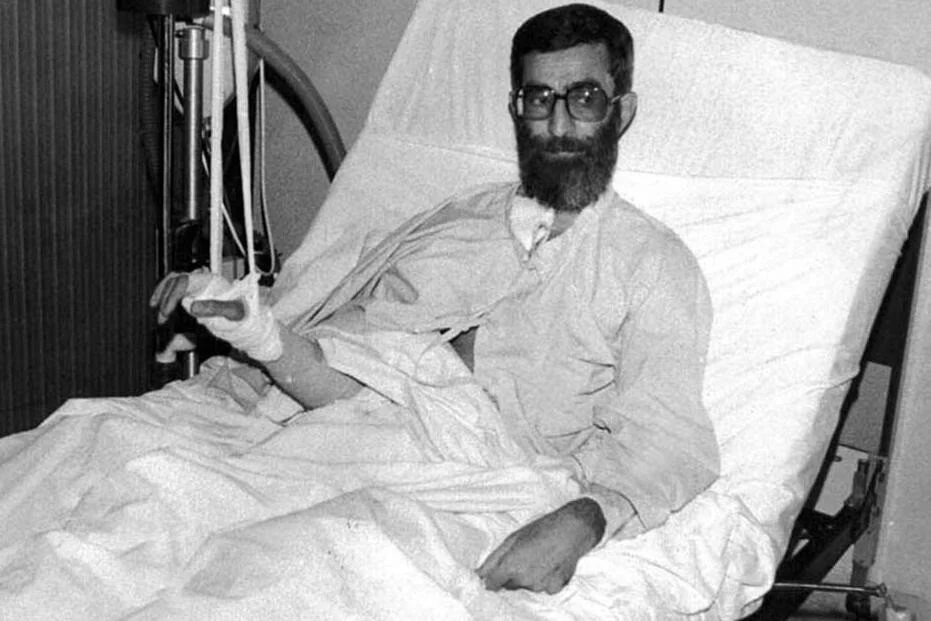
After the Revolution of 1979, its rise was rapid. In 1981, he survived an assassination attempt that left him paralyzed in his right arm. “I don’t need a hand, as long as my mind and tongue work,” he said at the time. Shortly thereafter, he became President of Iran, a position he held throughout the bloody war with Iraq.
The consolidation of absolute power
When Khomeini died in 1989, Khamenei was chosen as his successor, despite lacking the requisite theological weight. To establish himself, he strengthened the Revolutionary Guards (IRGC), giving them control of huge parts of the economy.
In the years that followed, he neutralized any reform efforts, such as that of Mohammad Khatami, and supported the ultra-conservative Mahmoud Ahmadinejad. The latter’s re-election in 2009 led to the “Green Movement”, the biggest challenge to the regime, which Khamenei suppressed in blood.
The end of an era
The last years of his life were marked by severe international sanctions, the pandemic and new mass uprisings, culminating in protests over the death of Mahsha Amini in 2022. Khamenei remained intransigent, aligning Iran with Russia and China on an “axis of subversion”.
His legacy is a nation seething with rage and a youth thirsting for freedom. Sayyed Ali Khamenei died on February 28, 2026, at the age of 86, during US and Israeli airstrikes, leaving behind a country at a critical crossroads.
Source: Lifo.gr