
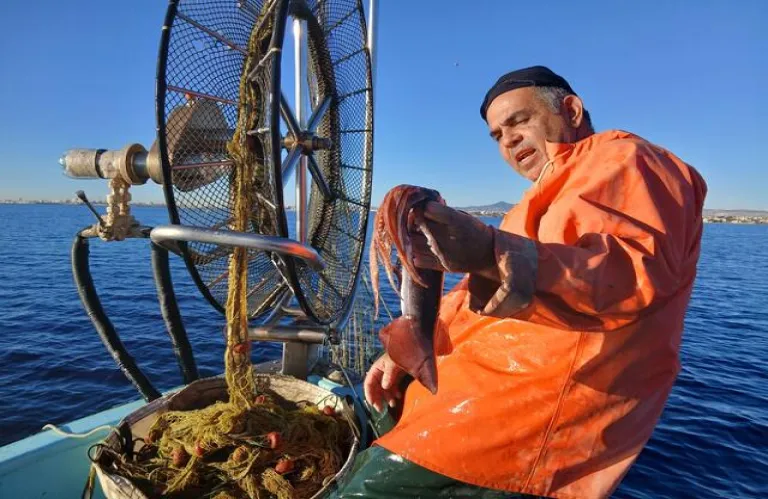
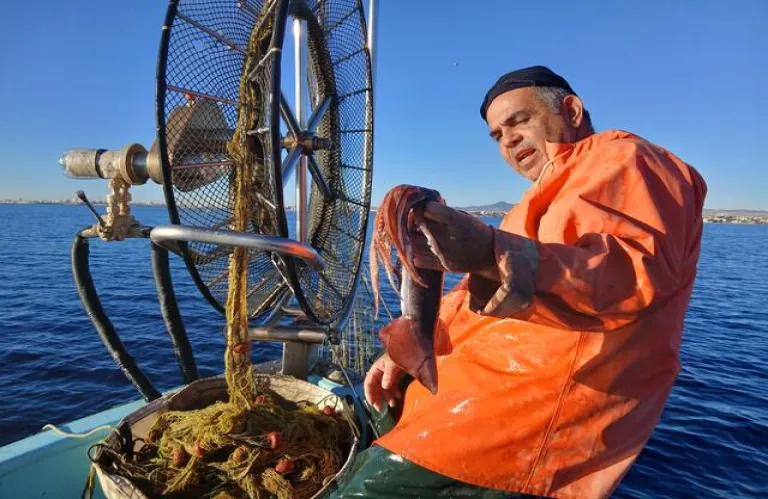
Pproblems that, instead of being solved, swell and weigh more and more on the daily life of the people of the sea. Good fish are getting scarce, expenses are increasing and the daily wage is becoming more and more uncertain, while they themselves feel that they are left without substantial support. In this setting, the question that arises is not only how the next day will turn out but whether the profession can survive in the years to come.
This picture, which fishermen have been describing for a long time in the ports, comes to be recorded with data by the recent research of Oceana. The report is based on field research with 47 professional fishermen in six fishing sanctuaries in Cyprus and was carried out last December. It attempts to capture how the Common Fisheries Policy (CFP) of the European Union is implemented in practice.
The sea is not like before
The first and very important message that emerges from the research concerns the reduction of catches. Fishermen speak of a steady decline in stocks and the disappearance of traditional trade species with around 72% of respondents identifying dwindling stocks or lack of fish as the main challenge. It is a finding that confirms what has been heard for years in fishing shelters, namely that the sea no longer “offers” as it used to. They themselves link this development to the long-term fishing pressure but also to the insufficient protection of the breeding and rearing areas. It is no coincidence that the report itself features the phrase “catch is declining and disappearing because reproduction is not protected”.
At the same time, the disappointment with the government response is almost universal. In all ports, almost all fishermen surveyed, 96%, say that the government’s measures are not enough. They themselves speak of a lack of control and enforcement of existing rules, but also of a lack of effective administrative support in the face of the environmental, social and economic pressures they experience.
They don’t say “no” to measures
One of the most interesting findings of the survey is that, despite their frustration, fishermen do not oppose the conservation measures imposed by the CAP. On the contrary, they largely support them, as long as they are fair, efficient and properly implemented. 94% say they support limiting or even banning fishing gear in sensitive habitats, 98% believe that better protection of habitats can improve stocks over time, while 57% consider it important to reduce unwanted catches. Even on the issue of fishing capacity limits, 62% are positive, although several note that such measures can affect safety and comfort at work. In fact, many appear positive even in seasonal bans, as long as they are accompanied by substantial financial support.
“There must be bans for specific months. For example, in March, April and May, which are the breeding months… And they must clearly say: ‘we will compensate you so that you don’t go out fishing’, so that the fish can breed…” it said.
Climate change and alien species
From there, the research turns to the environmental pressures that further aggravate the situation. Some 68% of respondents cited either climate change or alien species as factors directly affecting fishing conditions, with considerable overlap between the two. Fishermen themselves see these issues as interrelated, as warming waters are believed to facilitate the spread of alien species, exacerbating both ecological and economic pressures. At the same time, about 43% also characterized pollution as a factor that contributes to the degradation of the ecosystem, referring to discharges in coastal areas, leakages from agricultural lands, aquaculture and pollution linked to tourism.
On the topic of alien species, around 85% of fishermen call for government action, noting that inconsistent management of alien species removal programs within marine protected areas weakens the impact of conservation. The report specifically mentions that, apart from the Cape Greco area where sea lions are being removed, most marine protected areas do not have corresponding programs, with the result that the spread of the alien species continues. Simply put, the fishermen say the problem is here, they see it every day but its treatment remains piecemeal.
The industry is aging
Fishing in Cyprus is aging and this is clearly reflected in the data since 64% of respondents are aged 55 and over, while only 2% are in the 25-34 age group. At the same time, around seven in ten express concern about whether there will be continuity in the profession, with the report citing “insufficient generational renewal, despite the fact that there is a large accumulated experience, with more than half of the participants having more than 30 years at sea”.
Administrative burdens
In the financial field, the picture remains pressing, with costs increasing without a corresponding increase in revenues. Fishing gear, especially nets, is expensive, and their maintenance requires time and labor, limiting the days available for fishing.
At the same time, there is dissatisfaction with the limited access to quota items, such as tuna, which could help supplement income.
Particular weight is also attributed to the administrative framework, which is characterized by complexity, as well as by disincentives that affect the accurate recording of catches.
At the same time, it is pointed out that there are certain support measures, mainly for damage to equipment and for the fishing of foreign species, with a typical example being the sea bass, for which a compensation of around three euros per kilogram is provided.
Delays and high costs
The research continues with one more chapter that directly touches the daily life of fishermen, the accumulation of cost pressures. 70% report long delays in receiving compensation, 47% frequent damage to gear by protected megafauna such as dolphins, turtles and seals, while 75% say compensation for such damage is not always available. At the same time, 51% speak of high operational costs, from fuel and bait to fishing gear and VAT.
The recommendations
In the last part, the report moves on to the recommendations to the relevant ministry and the messages are quite clear. As indicated:
What is wanted is to apply the rules that already exist in practice and to have more substantial cooperation with the fishermen themselves, who ask to be treated as collaborators and not just as recipients of decisions.
Emphasis should be placed on the need to restore stocks and better protect critical habitats, but also on managing issues that directly affect income, such as alien species and fishing restrictions. Special mention is also made of the need for a fair and consistent application of the rules in all activities, including recreational fishing.
- Without a reduction in red tape and without more substantial income support, the industry will hardly be able to survive.