
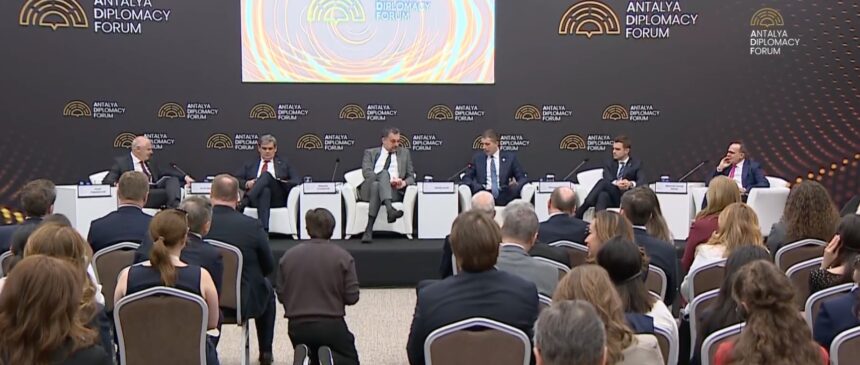
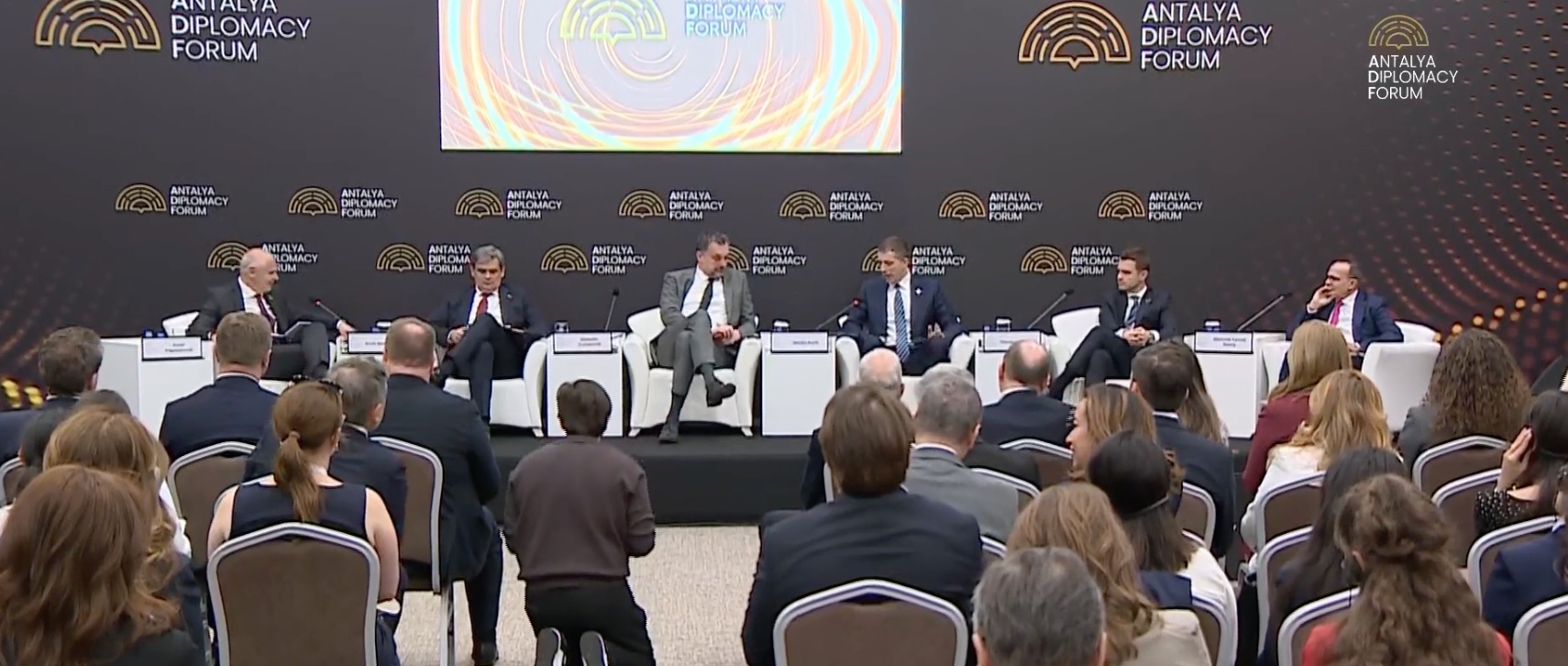
Antalya, Türkiye, April 12. At the 4th Antalya
Diplomacy Forum, Montenegro’s Deputy Prime Minister for
International Relations and Minister of Foreign Affairs, Ervin
Ibrahimović, highlighted the central role of regional cooperation
in fostering stability, economic growth, and European integration
in the Western Balkans, Trend reports.
Speaking on the panel “Regional Ownership for a Prosperous
Future in the Balkans,” Ibrahimović said that “building good
relationships with our neighbors is a key priority for our foreign
policy,” underscoring that regional cooperation remains vital to
Montenegro’s strategic goals.
“As a small and diverse country, Montenegro uses regional
cooperation to support our national interests,” he noted. “Since
gaining independence, we have made significant efforts to use
regional initiatives to benefit our people.”
Ibrahimović reiterated that Montenegro’s primary foreign policy
objective is to join the European Union, and regional platforms
such as the Southeast European Cooperation Process, the Regional
Cooperation Council, and the Berlin Process serve as key tools to
meet European standards. “The EU promotes peace and prosperity, and
we focus on these values to build trust,” he said.
He acknowledged, however, that unresolved bilateral issues and a
lack of political will remain obstacles to faster EU integration.
“Regional organizations can help improve this situation in many
aspects, but only if we use them in the proper manner,” he
stressed.
Infrastructure was also cited as a key enabler of cooperation.
“Good infrastructure is essential for better regional connection
and cooperation. It can attract investment and strengthen our
economy, but it’s conditioned by values such as peace, trust,
confidence, and resilience,” he added.
Reflecting on challenges rooted in the past, Ibrahimović pointed
to the need for greater reconciliation. “Our recent past and lack
of sustainable reconciliation and trust-building measures continue
to burden our progress in many areas,” he said. “This issue
especially affects economic cooperation and better people-to-people
exchange or understanding, ultimately slowing our collective
efforts to build a more integrated and resilient future.”
Concluding his remarks, Ibrahimović called for continued
commitment to EU integration and stronger regional ties. “We must
keep working toward EU integration and use our partnership to
create a more connected and prosperous Southeast Europe,” he
said.