
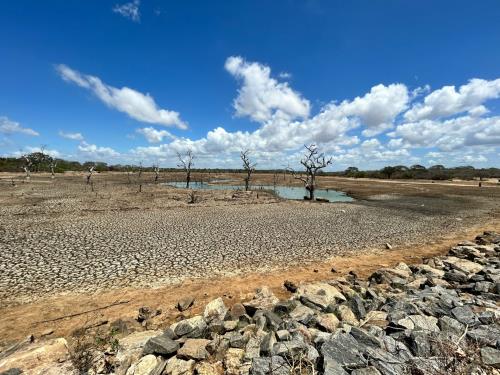

Provisions for supplying water from the Colorado River, which gives hydroelectricity, irrigation and drinking water In seven US states and Mexico, they fall firmly outside 2000 onwards, and the scientists have just found the water disappearing.
An important part of the water on the Colorado River comes from the snow that accumulates during the winter and melts spring. Every year, usually in early April, water administrators evaluate the snowstorm to predict how much water will be available for the following year.
However since 2000, as the SciTechDailythese forecasts have repeatedly overestimated the actual flow of water. Although the levels of the snowstorm seem sufficient, the resulting flow is steadily lacking in forecasts. So where is the missing water?
Who is the ‘culprit’
According to a new study by the University of Washington, published in the magazine Geophysical Research Lettersthe main reason for this phenomenon is the lack of spring rainfall. The study found that the warmest, drier conditions of spring in recent years have been responsible for almost 70% of the gap between the projected and real water flow.
With less rainfall, the vegetation depends more on the melting of the snow for humidity, reducing the amount of water that reaches the rivers and streams. In addition, drier conditions mean clearer skies, which promote both the increased growth of plants and the greater evaporation of water from the ground.
“Fewer spring rains probably mean less clouds. And when it has sunshine, the plants will say, “What good! Snow has just melted and I have plenty of water, so I will grow like crazy,” explains Environmental Engineer Daniel Hogan, lead author of the study.
Hogan and Professor of Civil and Environmental Engineering at the University of Washington, Jessica Ludkvist, studied this phenomenon in the context of a larger project to resolve the “mystery” of disappearing water. Initially, they wondered if the snowstorm was reduced because the snow was simply converted into water vapor – a process called sublimation. But they discovered that only 10% of the missing water was lost due to sublimation, which means that something else was the “culprit”.
“We saw that the changes in spring are much more excessive than in other times. From the thick snow we go to the wildflowers that bloom within a very short time. And without the spring rains, the plants – from wildflowers to the trees – they are like giant straws, all pumping from snowstorms, “says Hogan.
The researchers examined the spring changes in 26 catastrophe basins at various altitudes in the Colorado River basin. They all showed a reduced flow of water without spring rain. But the basins at lower altitudes had an even more intense deficit, because the snow there melts earlier, giving the plants more time to grow and consume the melted snow.
Source: cnn.gr