
People may be confronted with an extremely devastating rise in sea level by several meters – or more – in the following centuries, even if the ambitious goal of limiting global warming to 1.5 ° C is reached, scientists warn.
Although nearly 200 countries are committed to maintaining overheating at 1.5 ° C, researchers point out that this threshold should not be considered “safe” for coastal communities.
Scientists have come to this conclusion by examining the latest studies on the evolution of pags, as well as the geological indications of their behavior in the past. At the same time, they point out that every decimal of the degree of temperature increase that can be prevented, it significantly reduces the risks.
The current course of mankind leads to overheating of almost 3 ° C by the end of the century, compared to the late 19th century – before mass burning of fossil fuels. This provision is based on existing policies to limit greenhouse gas emissions.
Ice melting continues even with a limit to 1.5 ° C
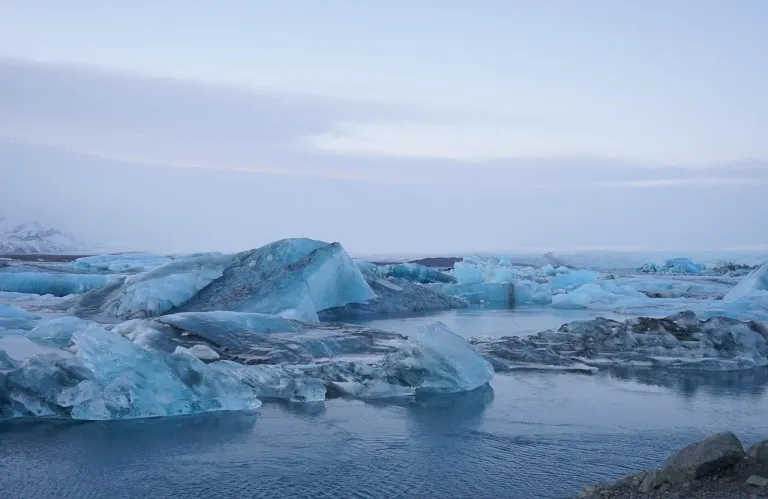
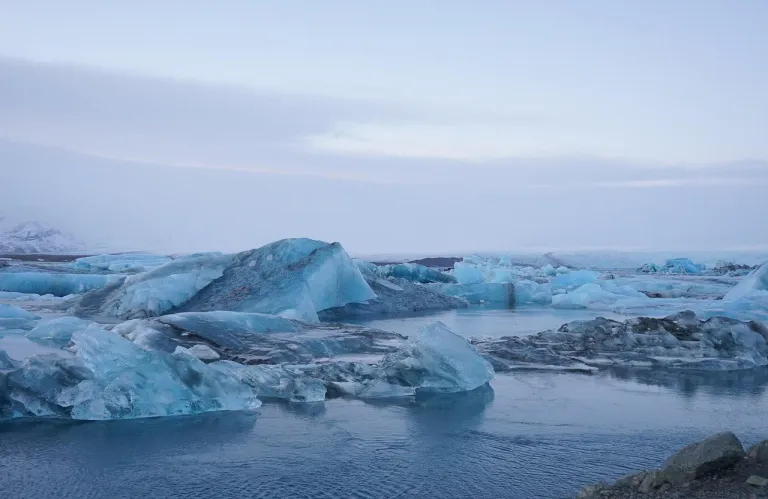
Even if the temperature is reduced to 1.5 ° C, Greenland and Antarctic glaciers will continue to melt. As experts explain, thermal effects on huge volumes of ice need centuries to complete.
“Our main message is that the restriction of heating to 1.5 ° C would be an important achievement – it should definitely be our goal – but in no way will it slow down or stop the rise of sea levels and the melting of the glaciers,” said Chris Stokes.
The Paris Agreement in 2015 binds countries to maintain the global temperature “well below 2 ° C” and, ideally, at 1.5 ° C. However, this has led to misunderstandings, as the price of 1.5 ° C is often, incorrectly, as a “safe limit”, as glaciers warn.
In the new study published in the journal Communications Earth and Environment, the authors gather three sets of evidence to substantiate their claim.
First, historical data shows significant ice melting in the past: 125,000 years ago, during a previous warm period, sea level was several meters higher. 3 million years ago, when there were corresponding carbon dioxide concentrations with today’s, the seas was 10 to 20 meters above.
Second, modern observations confirm that the melting is already accelerating. “A lot of dramatic things happen both in Western Antarctica and in Greenland,” says Professor Jonathan Bamber, co-author and director of the Bristol University Center. On the contrary, Eastern Antarctica appears – at least for the time being – more stable. “We are starting to see some of these worst scenarios almost playing in front of us,” adds Professor Stokes.
Thirdly, computational models used to simulate the behavior of the gaming in the future are outlining an ominous image.
“Very few models actually show a slowdown in sea level rise (if heating is stabilized at 1.5 ° C) and certainly do not show it,” Professor Stokes said.
Catastrophic consequences for coastal communities and geopolitical stability
The biggest concern is that the melting of the ice can be accelerated unforeseen if the climate system’s critical “turning points” – mechanisms that are not yet fully understood are overcome.
“The strong point of this study is that they use multiple lines of evidence to show that our climate is in a similar condition when they melted several ice meters in the past,” said Professor Andy Shepherd, a glacier at Northumbria University, who did not participate in the study.
“This would have a devastating impact on coastal communities,” he added.
Today, about 230 million people live in areas within one meter of maximum tide.
The definition of a “safe” overheating level is complex, as various populations have different levels of vulnerability. However, if the sea level begins to increase by one centimeter per year or more by the end of the century, mainly due to melting of ice and thermal expansion of the oceans, even rich countries will find it difficult to cope with.
“If you reach this level, it becomes extremely difficult for any adaptation strategy and you will see mass migration from land to scales that we have never seen (in modern culture),” notes Professor Bamber.
Despite the gloomy prediction, scientists emphasize that this is no reason for inactivity. “The faster the heating is, the more ice we will lose and the higher the rate of rising sea levels,” Professor Stokes points out. “Every fraction of a degree really matters to ice layers,” he concludes.
With information from BBC / Source: lifo.gr