
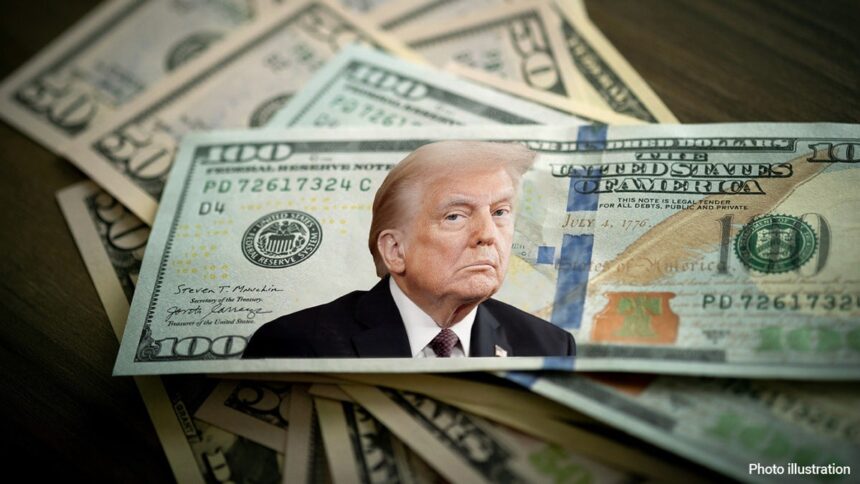
For a hundred years, the dollar was the king of the hill. It
ruled the world’s economy like a boss. But a hundred days into
Donald Trump’s second ride in the White House, that dominance is
looking shakier than ever. When Trump moved back into 1600
Pennsylvania Avenue in January 2025, the world braced for fireworks
— and boy, he didn’t disappoint.
Barely a hundred days into his comeback tour, the global
economic architecture started wobbling. And the biggest symbol of
that system — the almighty U.S. dollar — suddenly found itself
standing on much thinner ice. For the first time in decades, the
greenback, once untouchable at the heart of global trade, reserves,
and lending, started to look… vulnerable.
Why the Dollar Used to Be Bulletproof
The dollar’s top-dog status wasn’t just about America’s economic
muscle. It was the ultimate flex of American exceptionalism —
strongest military, deepest economy, most trustworthy financial
system. The greenback was shorthand for trust in America as the
world’s default security blanket.
Thanks to the dollar, the U.S. could spend like a drunken sailor
— borrowing way more than it earned, running sky-high deficits, and
still keeping interest rates sweet and low. The world practically
begged to hand over its savings to America for next to nothing,
because everybody bought into one big idea: America meant
stability.
Heck, even crises worked in the dollar’s favor. Whenever global
markets freaked out, the herd stampeded straight into U.S. assets —
Treasuries, dollars, you name it. Running for the dollar was the
world’s go-to gut reaction.
How Trump Is Blowing Up the Dollar Myth
But Trump? Trump ripped up that old playbook and threw it out
the window. He’s the first U.S. president in half a century to put
the whole foundation of dollar supremacy up for grabs:
- Torched trade alliances.
- Dissed America’s allies.
- Smashed trust in global institutions.
- Kicked off tariff wars with Canada, Europe, Japan — you name
it. - Questioned America’s sacred commitment to NATO.
- Chipped away at the Fed’s independence.
- Flirted with the idea of U.S. defaults and debt
restructuring.
And here’s the kicker: for the first time in living memory,
investors started realizing that a crisis in America doesn’t
automatically mean a stronger dollar.
When Trump’s trade wars sent the markets into tailspins, the
dollar didn’t do its usual Superman act. It stumbled. The old fairy
tale about the dollar being the world’s “safe haven” got a nasty
crack.
Why the Dollar Hasn’t Crashed Yet
And yet… the greenback is still standing. Why? Simple —
because there’s no real alternative.
Chinese yuan? Please. It’s micromanaged by Beijing’s backroom
boys.
Euro? Europe’s economy is running on fumes and they can’t even get
their act together on fiscal policy.
Yen, pound, Swissie? Too small, too regional.
Bitcoin? A playground for tech geeks, not a serious contender for
world trade.
The hardwired strengths that built the dollar’s empire — rule of
law, market depth, economic scale, dominance in global transactions
— are still breathing. But make no mistake: Trump’s wrecking ball
politics are punching holes right through that armor.
America Without the Kindness of Strangers
The real dollar crisis won’t come from a sudden nosedive in the
exchange rate. Nah. The real nightmare is a shift in the way global
money flows.
If foreigners stop snapping up U.S. debt like they used to,
Uncle Sam’s ability to fund its monster deficits on the cheap goes
up in smoke.
And America is more hooked on that foreign cash now
than ever before: the national debt just blew past a mind-melting
$36 trillion and is still climbing. Trump’s promising massive tax
cuts and a military and infrastructure spending spree — a
double-barreled deficit booster.
If America’s allies — the same ones Trump’s been flipping the
bird to — start dialing down their buying of U.S. assets even by
just 10%, Washington faces a brutal choice:
- Let interest rates spike (and nuke the economy),
- Or crank up the money printers — triggering an avalanche-style
collapse of the dollar’s value.
Could the Dollar Lose Its Crown?
In the near term? Not likely. No other currency is ready for
prime time. But the real threat isn’t a knockout blow — it’s death
by a thousand cuts:
- A slow fade in the dollar’s share of global reserves.
- A shrinking slice of world trade done in dollars.
- A steady rise of alternative payment systems — yuan, euros,
regional currencies.
And here’s the bottom line: the weakening of dollar dominance
won’t just rewrite economics. It’ll flip the entire world order,
leaving America without its golden ticket to set the global
rules.
The greenback’s grip may not snap overnight. But for the first
time in a century, the world is seriously shopping around for a
Plan B.
What’s Next for the Dollar: Scenarios and Consequences
Scenario 1: The Slow Fade
The most likely outcome for the dollar isn’t some sudden
nosedive — it’s a slow, grinding erosion of its dominance.
That’s exactly what we’re watching unfold right now. Despite
Trump’s missteps and his wrecking ball approach to the global
order, the dollar is still king — but its grip is slipping.
According to the latest IMF data, the dollar’s share of global
reserves has drifted down from about 70% in the early 2000s to
around 59–60% today.
Meanwhile, global trade is starting to diversify. More and more
transactions between China and developing nations are happening in
yuan. Countries like India, Brazil, and Saudi Arabia are signing
bilateral deals to use their own currencies for energy
contracts.
What this means:
- Borrowing will get more expensive for the U.S.
- The dollar will lose some of its crisis-proof appeal.
- Washington’s ability to pull levers over the world economy
through dollar dominance will start to weaken.
But here’s the deal: inertia, sheer size, and the lack of a real
alternative mean the dollar will likely hang onto its top spot for
years — maybe even decades.
Scenario 2: The Great Dollar Exodus
A little less likely — but definitely not off the table — is a
coordinated strategic retreat by major powers away from the
dollar.
Take a look:
- China and Russia are already settling more trades in their own
currencies. - The BRICS countries are openly talking about creating a reserve
currency based on a basket of their own currencies and gold. - Saudi Arabia’s been getting louder about pricing oil in yuan or
rupees instead of dollars.
If the world’s big players start deliberately ditching the
greenback in their transactions and reserves, it could put the
pedal to the metal on the dollar’s decline.
Here’s what would come next:
- The U.S. would lose its superpower ability to “export
inflation” through the dollar. - Interest rates at home would shoot up.
- Financing the federal budget deficit would become a helluva lot
harder. - We could see serious dollar crises and wild currency
swings.
Scenario 3: A Financial Meltdown Sparked by U.S. Politics
The nightmare scenario? A homegrown crisis — political chaos,
debt shenanigans, or outright tampering with the Fed’s
independence.
Trump’s already throwing elbows at the Federal Reserve, and his
new budget blueprint is flirting with the idea of blowing past
America’s debt ceiling. If the U.S. were to ever — even once —
stumble into a technical default, even by accident, it would nuke
global trust in the dollar overnight.
The fallout?
- Capital flight, big time.
- A full-on dollar crash.
- A meltdown in the Treasury bond market.
- A global recession — and not just a little blip, but a whopper
that drags down the entire world economy.
It’s still a long shot — but no longer impossible. Right now,
the only thing keeping this doomsday scenario at bay is the simple
fact that there’s still no serious alternative to the dollar.
Who Stands to Gain from a Weaker Dollar?
China — The yuan would get a major bump as a regional currency,
boosting Beijing’s clout in Asia and Africa. Russia — Would
fast-track its ongoing efforts to de-dollarize its economy. Europe
— Could finally try to beef up the euro’s global standing — but
they’d need some heavy-duty reforms first. Developing Countries —
Would get a shot at breaking free from the dollar’s grip in debt
markets.
What It Means for the World
The slow crumble of the dollar would reshape global finance in a
big way, unleashing a new era of currency fragmentation. Instead of
one big, universal dollar-dominated system, we’d see regional
currency zones popping up:
- Asia orbiting around the yuan.
- Europe rallying around the euro.
- The Americas (probably) still anchored by the dollar — but with
a lot less swagger. - Latin America scrambling to find its own groove.
This new world would mean higher transaction costs, messier
trade deals, and a lot more volatility in financial markets.
Bottom line? Globalization would take a hit. The world would get
more regionalized, more balkanized — and in that new landscape, the
United States would no longer be the undisputed shot-caller.
The 3–5 Year Outlook for the Dollar
2025–2026:
- Dollar Volatility Ahead.
Thanks to domestic political turbulence — Trump’s sweeping reforms,
likely showdowns with Congress — and external pressures like trade
wars, the greenback is set to stay under serious strain. - Fed Rate Hikes Could Throw the Dollar a Lifeline.
If the Federal Reserve manages to hang onto even a shred of
independence, hiking interest rates could help put a floor under
the dollar’s slide against a basket of global currencies. - Erosion Will Start at the Edges.
The dollar’s weakening won’t hit everywhere at once. The first
cracks will show up in specific pockets — like trade between BRICS
nations and commodities markets where deals are increasingly
settled outside the greenback.
2027–2028:
- Dollars on the Run in the Developing World.
Expect dedollarization to pick up serious steam across Latin
America, Africa, and parts of Asia. More regional trade deals will
sideline the dollar in favor of the yuan, the euro, or local
currencies. - The Dollar’s Share of Global Reserves Dips Below 55%.
That would be a major historic milestone — and a flashing neon sign
that the shift away from dollar supremacy is no longer theoretical,
but baked into the system. - The Rise of Alternative Payment Systems.
China, India, Russia, and the Gulf states will double down on
building financial pipelines outside of SWIFT, pushing for
independent cross-border payment channels.
2029–2030:
- A New Era of Currency Multipolarity.
We’ll see the dawn of regional currency blocs. The dollar will
still wear the global crown, but it’ll be sharing the throne — no
more unchallenged monopoly. - America’s Debt Hangover Hits Home.
If Washington doesn’t slam the brakes on its deficit spending,
soaring costs to service its ballooning debt will start to bite —
posing a serious long-term threat to U.S. financial stability.
Where Is the Dollar Heading?
- Over the next three to five years, the dollar will stay the
world’s go-to currency — but its once-untouchable status will keep
fading. - The global economy is marching toward a messier, more
multipolar currency landscape. - The dollar isn’t heading for a dramatic collapse. It’s on a
slow, steady path to losing its special privileges. - Ironically, the biggest threat to the dollar isn’t China,
Russia, or BRICS — it’s America’s own internal politics.
Can Trump Tank the Dollar?
Yes… and no.
Trump’s first hundred days back in office have already done a
number on America’s global standing — and chipped away at the myth
of dollar exceptionalism. But here’s the kicker: America’s
fundamental strengths are still there, for now. For the dollar to
truly fall from grace, it would take years of reckless politics
and the emergence of a credible alternative.
Right now, America is living on borrowed trust. If that trust
finally snaps — the dollar’s reign is done.
The ultimate irony? No foreign power — not Russia, not China,
not even a supercharged BRICS — can kill the dollar.
Only America can.
And Donald Trump has already lit the fuse.
Baku Network