
The claims that a huge underground city is hidden under the ancient Egyptian pyramids have sparked a confrontation between the experts.
Italian researchers report that they have discovered giant vertical axes under the Hefrene pyramid, wrapped in spiral stairs. According to them, they also found a limestone platform with two chambers and channels similar to water ducts, more than 2,100 feet below the pyramid, as well as underground paths that lead to the earth.
These claims, which have not been verified independently or published in a scientific journal with peer assessment, were described as “false” and “excessive” by colleagues of Egyptians.
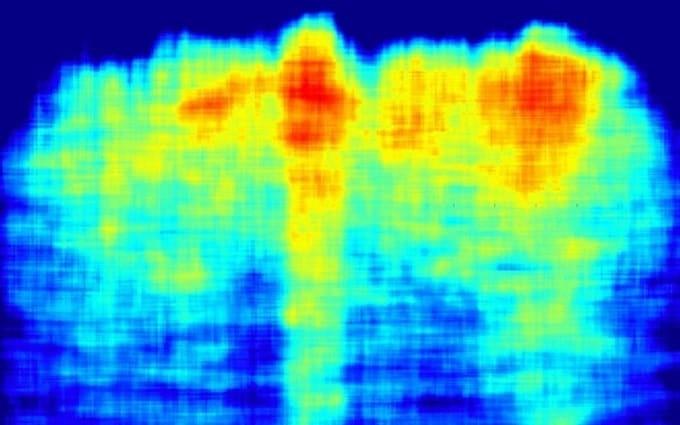
Professor Korranto Malanga and his team from the University of Pisa used radar pulses to create high -resolution images below the ground, similar to how the sonar maps the ocean.
According to the professor, “when we magnify the images, we will reveal what can only be described as a real underground city.”
Scientists argue that the Pyramid of Hefrinos could hide the legendary “Hall of Records”, a mythical library that, according to ancient Egyptian tradition, contains knowledge of ancient culture and is probably hidden under the Great Pyramid or Sphinx.
Professor Lawrence Koniers, a radar specialist in archeology by the University of Denver, told the Daily Mail that it is not technically possible for the radar to penetrate so much deep. He also said that the idea that the discovery proves to be an underground city is a “huge exaggeration”.

Tomographic images could indicate internal artificial structures under the pyramid.
Credit: Khafre Project
However, he said that there were smaller structures under the pyramids, such as wells and chambers, before the pyramids were even built. He also compared the find with the practice of Maya, who often built pyramids over caves of ritual significance.
Malangga’s team, along with researchers Philippe Bionti and Armando May, had presented similar findings during briefing in Italy last week. Project spokesman, Nicole Tsikolo, posted a video where the team discusses the results, which have not yet been officially published.
The team focused on the pyramid of Hefrinos, one of the three main pyramids of the Giza complex (along with the pyramids of Heopa and Mykeric), which were built about 4,500 years ago.
According to the researchers, the vertical axes found beneath the ground have a diameter of 33-39 feet and reach a depth of at least 2,130 feet. They claim that these structures can play a role in the foundations of the pyramid, preventing the possibility of sedimentation.
cnn.gr