

Circularism is not only considered an environmental necessity, but a business strategy with enormous growth potential.
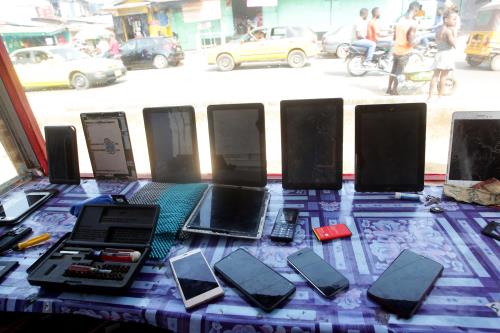
The market for smart phone phones is radically changing as consumers’ increasingly shift to more sustainable practices, such as repairing and reusing devices, leads to an explosive growing market for “circular” mobile and related services.
According to a GSMA report, representing mobile providers worldwide, this market is expected to exceed $ 150 billion by 2027.
With data from 10,000 consumers in 26 countries, the study highlights how changes in consumer preferences, new regulations and the scaling crisis of electronic waste question the traditional model of production and disposal of mobile phones.
More than 70% of consumers say they are willing to pay more money for environmentally friendly devices. This shows that circularity is not only an environmental need, but also a business opportunity.
Companies adopt circular business models
————-
The report includes a survey of 31 mobile carriers from around the world, showing that 90% of providers have already implemented a circular business model. Refurbishment and electronic waste management are the most popular practices.
However, 80% of providers active in mobile renovation say that “much more can be done”. The development of lease, renewal and upgrade models could open new sources of revenue, enhance customer loyalty and ensure the quality of the devices.
Consumers are looking for more durable and sustainable devices
Sales of new mobile phones have been slowed as consumers hold their devices for longer compared to a decade ago.
85% of consumers worldwide consider viability a key market criterion. In France, 1 in 6 mobile phones sold in 2023 was renovated. Over 50% of consumers in India said they would consider a refurbished device on their next market. 2/3 of consumers worldwide have needed their current or previous device repair.
The business benefits of circularity
Circle offers multiple benefits such as economic growth, with new sources of revenue for manufacturers and providers and boosting local economies by reducing import and mineral dependence.
Also, reduction of waste with fewer electronic waste and CO₂ emissions and digital access expansion with more affordable options for consumers.
Utilization of recyclable materials
Inerted mobile devices are a huge source of raw materials. It is estimated that 5-10 billion old phones worldwide contain 100,000 tonnes of copper, 7 million ounces of gold and 1 million ounces of palladium. The value of these materials exceeds $ 20 billion. With the strategic importance of critical minerals increasing, old phones become a key source of recyclable materials.
In 2024, more than 1.2 billion new smartphones were sold, creating 60 million tonnes of CO₂ – a quantity equivalent to annual countries such as Morocco or Romania.
According to the UN, electronic waste is causing $ 78 billion in environmental and financial losses each year.
Renovation and repair of mobile phones reduces carbon emissions by 80-90% compared to the manufacture of new devices.
The circularity as the future of mobile telephony
Top mobile providers, such as Telefonica, Orange, Deutsche Telekom, Vodafone and KDDi, are already investing in circularity. At the same time, manufacturers such as Samsung, Apple and Fairphone develop eco -designed devices and improve their supply chains. Governments around the world are introducing new circular policies, such as EU regulations to recycle, repair and reuse mobile phones.
Circularism is not only considered an environmental necessity, but a business strategy with enormous growth potential.
Source: KYPE