

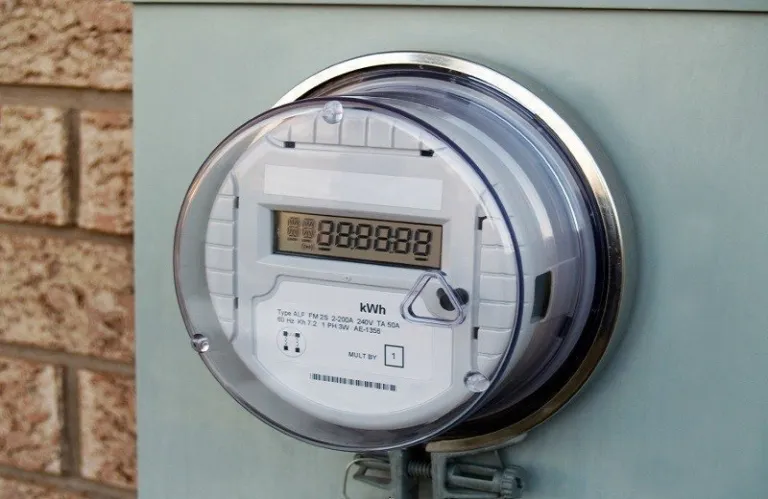
By August 2026, the installation of 400,000 smart meters across Cyprus is expected to be completed, several months ahead of the January 2027 deadline. Around 365,000 meters have already been installed, while the EAC is proceeding with the order of 100,000 more, aiming to cover almost all consumers.
The press representative of EAC, Christina Papadopoulou, speaking on POLITIS radio 107.6 & 97.6 on the show “Second Look” with Yiannis Seitanidis, said that the installation work continues at a fast pace.
“Smart meter installation work is continuing as normal,” he said, adding that the project is already ahead of schedule.
On average, around 16,000 smart meters are installed per month across Cyprus. Around 365,000 have been placed to date, with another 35,000 to go to reach the initial target of 400,000.
“There are 35,000 left to install the total of 400,000 meters, which according to the decision of CERA, 400,000 must be installed by January 2027,” said Mrs. Papadopoulou.
“We expect the installation of 400,000 smart meters to be completed by August 2026,” she noted.
Another 100,000 meters
After completing the installation of the first 400,000 meters, EAC plans to proceed with the installation of another 100,000.
The European directive provides for the coverage of 80% of all consumers with smart meters, a percentage to which the original figure of 400,000 corresponded.
No charge for consumers
The installation of smart meters does not entail any burden for consumers, neither for the first 400,000 nor for the additional 100,000 meters.
“There is absolutely no charge,” the EAC spokeswoman clarified.
As he explained, the aim is to meet the timetables and secure the European grant, part of which has already been disbursed.
“So the consumer under no circumstances has to pay anything”, he emphasized.
Dynamic pricing and cheaper hours
The widespread installation of smart meters paves the way for new pricing systems, with different electricity prices depending on the time of day.
Through dynamic pricing, consumers will be able to shift energy-intensive activities, such as using a washing machine or heating water, from peak hours to times when electricity demand and costs are lower.
“So consumers will be able to save money by moving their electrical loads, for example their water heating washing machine, from peak hours to off-peak hours, where electricity demand is lower, where per-car costs are lower,” he said.
Currently, EAC has the usual residential pricing, with a fixed price throughout the day, as well as pricing with a lower charge in the evening hours and a higher one in the morning.
The aim is to create more dynamic pricing, which will have to be approved by CERA beforehand.
“It is already being processed,” said Ms. Papadopoulou, referring to the preparation of the new tariffs.
Listen to Christina Papadopoulou’s intervention on “POLITIS” radio 107.6 & 97.6 in the show “Second Look”: