
It is no longer a secret, nor do we cut corners in Athens, that the current political situation on the domestic front is full of unstoppable behind-the-scenes mobility, aimed at the next presidential election. Besides, even if the parties wanted to change the existing impression, it is obviously impossible for them to convince through their current political practice that their every step and movement does not include the nexus of mobility to claim power.
To be fair, we should note that the parties entered the ’28 pre-election stream only after the new party balances, as they emerged with the May parliamentary elections. At the juncture of time, the current state of affairs in the Presidential office obviously caught up with the parties, since much earlier Nikos Christodoulidis has entered in every way a pre-election campaign, putting at his service almost all the joints of power on which he is trying to have a catalytic effect.
The 2028 presidential election may still be about 20 full months away, but the first political moves have already begun. The real processes always take place in the background, where balances are formed, alliances are tested and strategies are drawn up. And in this debate there is one party that is once again in the spotlight. And that’s the Democratic Party.
Fourth place but…
The big picture is that despite the fact that DIKO lost strength in the recent elections and was in fourth place, nevertheless, due to the dispersion of forces, it still has a dominant role in terms of its reach in relation to the possibility it has of being dynamically in the game of power.
This is certainly not the first time this has happened. For decades now, DIKO has held a unique position in the Cypriot political system. And this because he is almost always the necessary interlocutor for anyone who aspires to conquer the Presidency of the Republic.
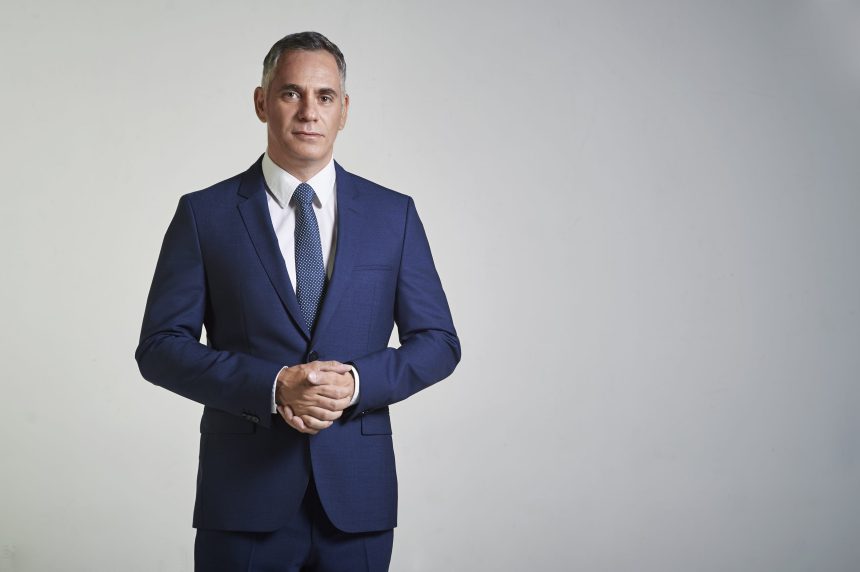
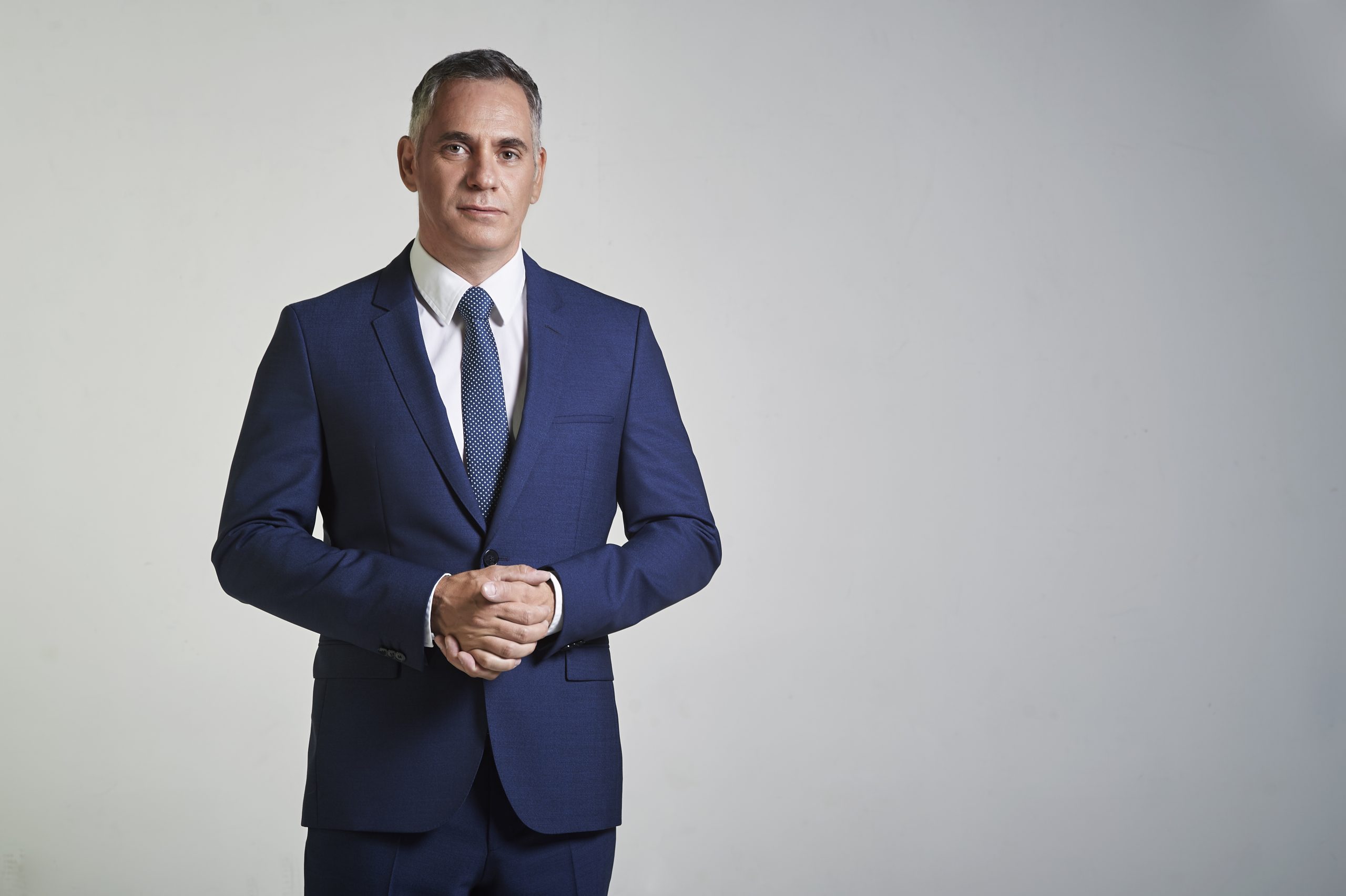
DIKO’s big bet, according to all data, was to maintain a percentage of acceptance which the current leadership under Nikolas Papadopoulos will be able to convey as a frontispiece for a serious discussion on cooperation. Either to continue the current Christodoulidis administration or under other conditions to support, as also a cohesive force, the candidacy of the Democratic Alarm. In short, for both Nikos Christodoulidis and DISY, the privileged interlocutor is once again the Democratic Party.
Scripts and DIKO
The first scenario, therefore, concerns the current President of the Republic. Nikos Christodoulidis, who in the midst of his Presidency wants to appear as a candidate with serious chances of re-election, is logical to seek to maintain the current political alliance. For its part, DIKO will examine whether the continuation of this cooperation serves its own political interests.
But if political affiliations change, if the government recedes into the public consciousness, or if a powerful rival emerges, there is no reason to believe that the current balance will remain the same. DIKO has no tradition of getting caught up in political choices when it considers that the environment has changed. On the contrary, his political practice is characterized by regular movements and adaptation to the evolving conditions.
This is exactly what the Democratic Alarm knows. If he wishes to return to power, he will hardly be able to ignore the importance of DIKO. He will be faced with a dilemma. He will either choose a pure political confrontation or seek, once again, cooperation with the perennial regulator.
AKEL will face the same dilemma. If he pursues the Presidency with claims, he will have to decide whether he will attempt to build a different political majority or whether he will also turn to DIKO. If the latter happens, he will have to explain to citizens how sharp political differences can be reconciled with a possible government cooperation.
Welding advantage
The numbers, but especially the environment, show that whoever welds DIKO in the background of a partnership has an advantage. DIKO and its leadership know that they can negotiate with both Nikos Christodoulidis and DISY and the candidate that will emerge in the party’s internal elections, as the second necessary axis of a collaboration. The interlocutors of the party still realize that they gain an advantage over their opponents if they manage to co-operate with DIKO from the beginning of the pre-election campaign for the ’28 elections.
This condition is strengthened by the fact that neither Nikos Christodoulidis nor DISY would want ELAM as their first interlocutor and partner in the first round of the elections. Under certain circumstances, this will be inevitable in the second round, but in the first phase of the elections, this seems like a wrong tactic for the President and DISY. Besides, to be fair, there are no signs that ELAM will abandon its practice of contesting the presidential elections on the first Sunday, playing in the second match, under different circumstances of course, its own additional element of support for a candidate.
Accompaniment as the first
Under this reasoning, through the practical treatment of the de facto regulatory role of DIKO, there remains a possible discussion of cooperation with AKEL. This possibility, however, has nothing to do mainly with the support of a candidate proposed by AKEL, but the claim of the possibility of a candidate coming from DIKO. In the party of Nikolas Papadopoulos they do not want to rule out such a possibility and of course they would certainly welcome it. Under other circumstances, however, there does not seem to be, at present, certainly, a possibility of supporting a third candidate proposed by AKEL.
The two big ones
The interest, however, is not only DIKO’s strategy. It is the timeless behavior of the two major parties. Both Democratic Alarm and AKEL, regardless of whether this is not implemented most of the time, are almost always looking for the same political interlocutor. The party that until yesterday might have been criticized suddenly turns into a valuable partner.
Within this environment DIKO has every reason to feel politically safe. He knows that no matter who leads in the polls, he will not remain uninvolved in the initial processes. And as long as he knows he will be in demand once again, he has no reason to reveal his intentions early.
Most likely, it will follow the tried and tested recipe of the wait-and-see policy. He will keep open channels of communication with all sides, monitor polls, assess political affiliations and make final decisions when he knows who can offer him the greatest degree of political influence.