
The photo of a turtle was posted earlier this year on X by Jeff Bezos without any comment.
Space industry enthusiasts, however, immediately read between the lines, seeing the Amazon founder emerge as the steadier, if slower, competitor, like Aesop’s tortoise against Elon Musk’s hyperbole hare in a race to the stars.
The “hare,” Elon Musk, who founded and runs SpaceX, has for years been far ahead of Bezos’ companies’ efforts to build rockets, design satellites, and extend human spaceflight.
The current week impressively captures the dynamic return of Bezos to the forefront of the technological and space race notes the Wall Street Journal.
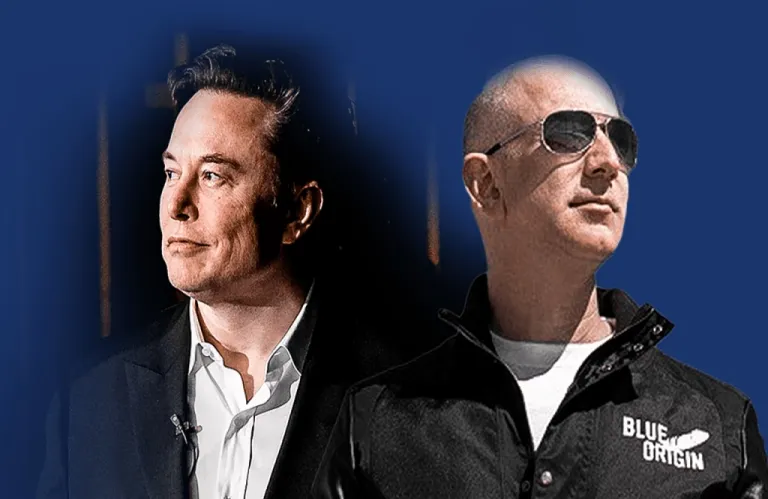
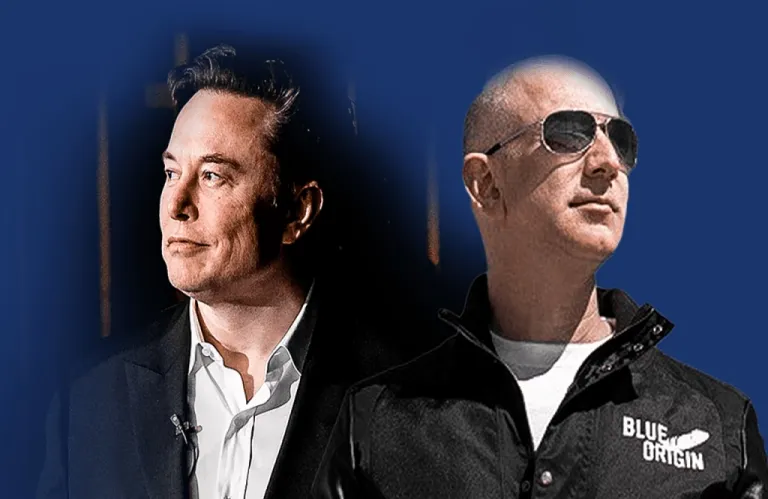
Through concerted moves on multiple fronts—from telecommunications to rocket launches and lunar programs—the Amazon founder is attempting to strengthen his position against archrival Elon Musk and SpaceX.
Satellite constellations
In telecommunications, Amazon struck a mammoth $11 billion deal to acquire Globalstar, bolstering its fledgling satellite business. At the same time, the cooperation with Apple creates important prospects, especially in the field of direct connection of mobile phones to satellites.
Globalstar already provides services that allow iPhone users to send messages or call for help in areas without traditional coverage, which adds immediate practical value to the deal.
At the same time, Bezos’ space company, Blue Origin, is preparing for its next big step: the launch of the New Glenn rocket with a commercial payload. This is a critical turning point as it marks the transition from the testing phase to full operational activity.
Although New Glenn’s first launch last year accomplished its primary goal—putting the upper stage into orbit—the failure to recover the booster (first stage) was a reminder of the technical challenges that remain. However, subsequent missions, including a successful deployment of satellites for NASA, show incremental progress.
Despite this progress, SpaceX still maintains a clear lead. With the Falcon 9 rocket, the company is launching with unprecedented frequency, cementing its dominance in commercial missions. In addition, she develops the giant Starship, which is the focus of her ambitions for interplanetary travel. Although Starship’s tests have been met with both successes and explosions, the company continues to make improvements, aiming for another launch in the coming months.
Starlink’s lead
In the satellite sector, SpaceX has already established a huge advantage through the Starlink network, which numbers about 10,000 satellites and provides broadband access on a global scale.
In contrast, Amazon is still in the early stages of developing its own network, with more than 7,000 satellites under planning. The project, called Leo, is expected to tie in closely with Amazon Web Services, creating synergies between space and cloud computing. The deal “underscores the value of spectrum as a scarce resource, whether terrestrial or satellite,” Mike Crawford, an analyst at B. Riley Securities, told the WSJ.
At the same time, Blue Origin is planning its own constellation of satellites, known as TeraWave, which will be aimed primarily at businesses and government organizations. This strategy suggests a differentiation from SpaceX’s model, with an emphasis on high-value specialized services.
Important developments are also recorded in the Artemis lunar program. The success of the Artemis II mission has boosted expectations for a manned lunar landing planned for 2028. Both SpaceX and Blue Origin are developing landers for NASA, aiming to play a key role in the missions. Blue Origin, in fact, has redirected resources from space tourism to its lunar program, seeking to make up lost ground.
Data centers in space
Finally, one of the most ambitious fields of competition concerns the creation of data centers in space. Both companies are looking at harnessing solar energy to power artificial intelligence infrastructure in orbit. SpaceX has already applied for permission to develop up to a million satellites with computing capabilities, while Blue Origin plans tens of thousands of such units. These perspectives, while still theoretical, could fundamentally transform the way the global digital economy works.
Overall, the Bezos vs. Musk showdown is shaping up to be a multi-layered struggle that stretches from the Earth to the Moon and beyond. Despite SpaceX’s clear lead, recent moves by Amazon and Blue Origin show that the balance of power may shift in the coming years, making the race for space dominance more ambiguous and exciting than ever.
Source: OT