
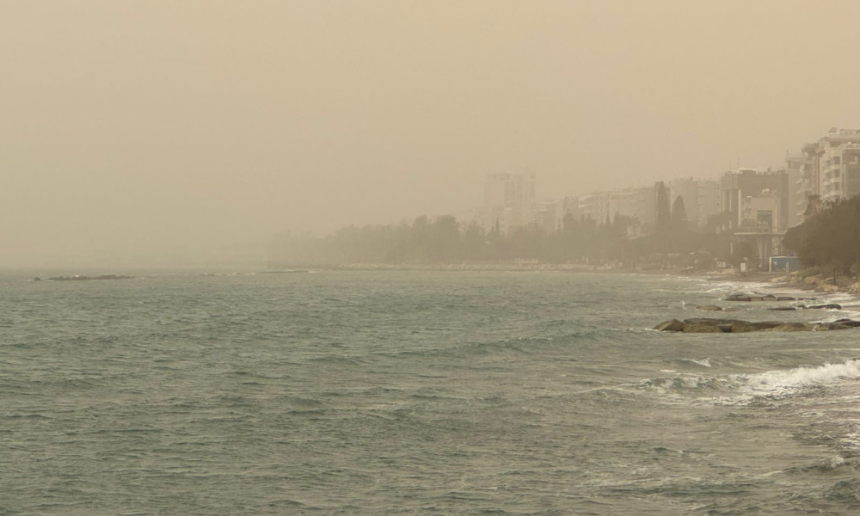
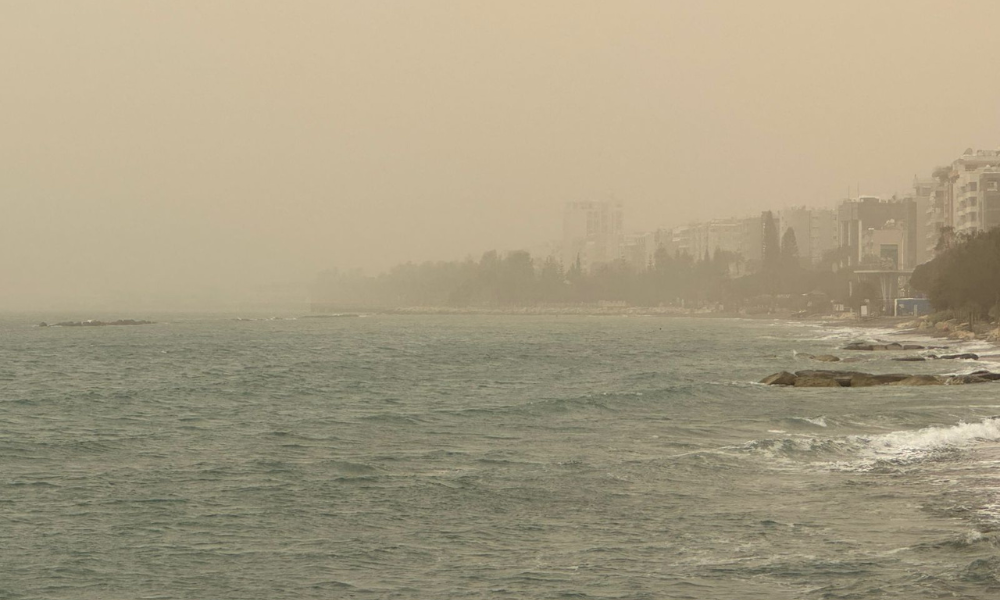
Desert dust episodes affecting Europe are intensifying, particularly in Southern Europe and the Eastern Mediterranean, creating increasing challenges for air quality and public health, according to a new international study involving researchers from the Cyprus Institute.
According to a statement from the Cyprus Institute, the study, which was published in the scientific journal Nature, links the increasing intensity of dust transport episodes from the Sahara and other desert regions to changes related to climate change.
These include intensifying drought and desertification in North Africa, as well as changes in atmospheric systems, which favor the transport of dust to Europe.
As reported, the findings demonstrate that climate change is not only affecting temperature and extreme weather events, but also air quality. In Southern Europe, about 46 episodes of desert dust are recorded annually, which increase concentrations of suspended particles in the atmosphere and degrade air quality.
The dust transported in the area is responsible, according to the study, for about a third of the annual average value of PM10 particulate pollution considered acceptable under World Health Organization guidelines.
High concentrations of desert dust may have adverse health effects, including asthma exacerbations and increased mortality. According to the researchers’ estimates, desert dust episodes in southern Europe were associated in recent years with an increase in daily mortality of about 0.67% and respiratory hospitalizations of children by about 2.5%.
The research documents a gradual increase in transported dust across Europe over the last century, as evidenced by measurements of dust on the glaciers of the Alps.
The findings are of particular importance for Cyprus, as the Eastern Mediterranean is among the European regions most affected by desert dust transport and which has recorded the greatest increase in the intensity of episodes over the last decade.
The study also showed that average desert dust concentrations in Southern Europe are more than double the corresponding concentrations in Central and Northern Europe. The researchers of the Cyprus Institute’s Center of Excellence for Climate and Atmospheric Research (CARE-C), who are co-authors of the study, say that desert dust is a natural phenomenon for the region.
However, they explain, the new study shows that dust events and their impacts are intensifying over time, while the conditions favoring the most intense events are changing in a way linked to climate change.
This means, they note, that desert dust may become an even bigger challenge to air quality and public health in the coming years.
Finally, they stress that better preparation and adaptation to more intense dust events, combined with continued efforts to address climate change, are crucial to protecting public health and improving air quality.
Source: KYPE