
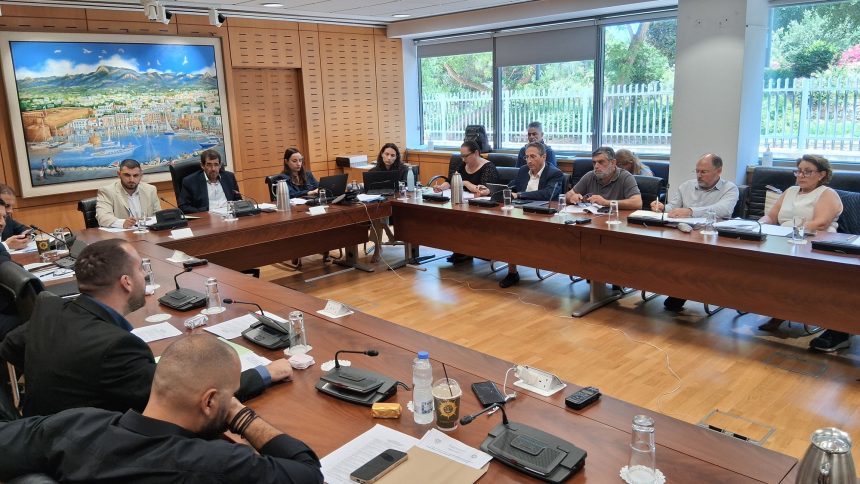
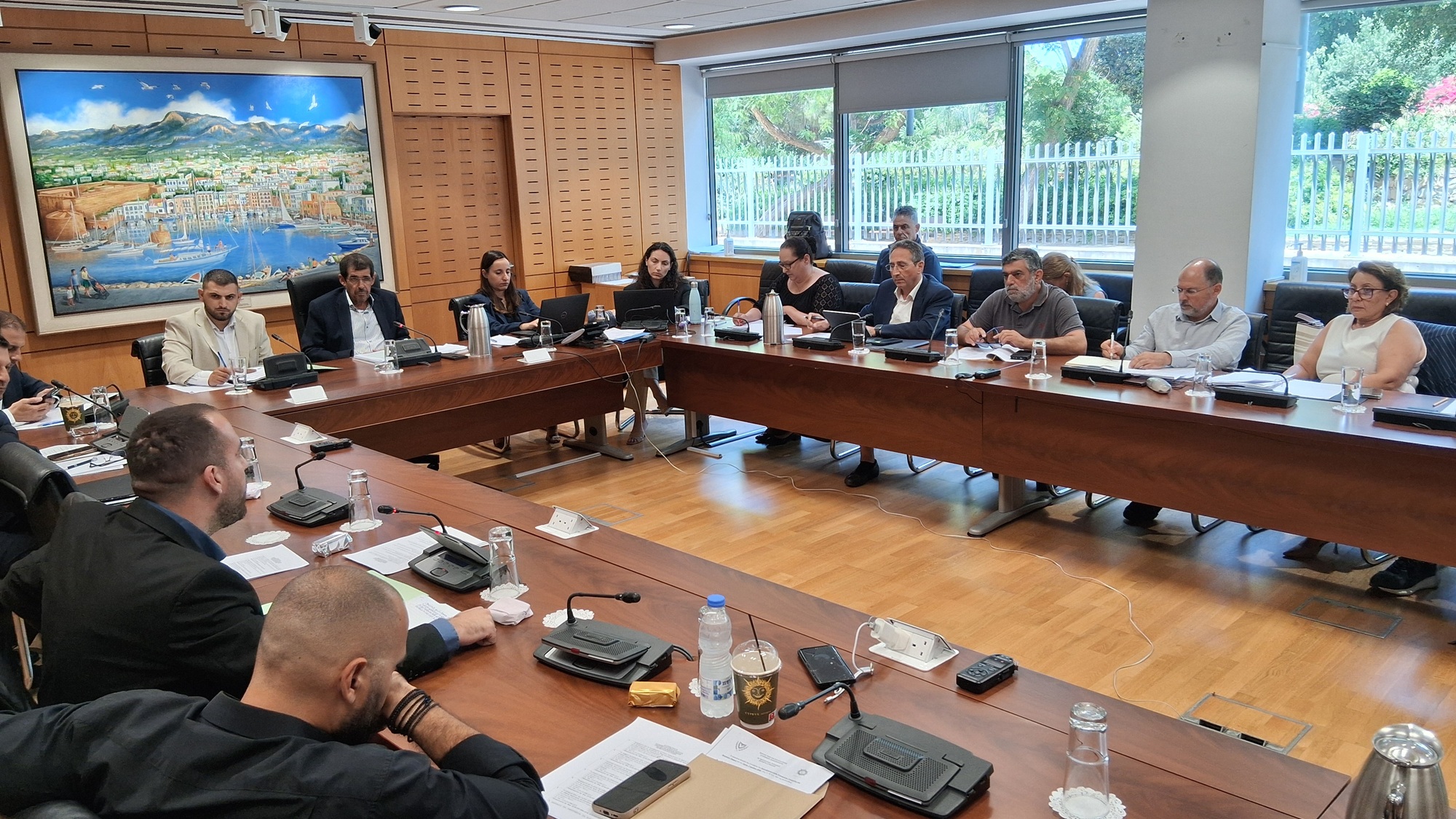
The replenishment of the animal population and the compensations to the dog breeders affected by the foot-and-mouth disease were among the main topics touched on today’s debate in the Parliament’s Agriculture Committee on the veterinary crisis.
On the first issue, the director general of the Ministry of Agriculture, Andreas Grigoriou, said that the government’s initial decision was to bring animals from abroad, but then they saw a problem of delays and also considered replenishment from domestic herds. Here he announced that, after a request for an extension, until the end of July the committee for the reconstruction of livestock under Stavros Malas, will present a study on how to reconstruct the livestock. And if there are additional costs for the breeders, the coverage of new expenses will be considered, he added.
For his part, the president of the “Voice of Livestock Breeders” group, Neophytos Neophytou, said that taking animals from Cyprus is problematic, because samples should first be taken from uninfected units. But, he emphasized, the breeders are negative, for fear that their animals will be found positive for the virus and will be killed. That is why he favors the importation of animals from abroad.
According to the general director of the Ministry of Agriculture, Andreas Grigoriou, 12,755,619 euros have been paid to beneficiaries to date, while the completion of the pending files is expected in the coming days. To date, advances of 429,480 euros have been paid to 40 beneficiaries, 594,969 euros for milk destruction to 54 beneficiaries, 882,415 euros for animal feed to 85 beneficiaries and 10,848,755 euros for killing animals to 90 beneficiaries.
However, at the same time, another 17 cases of beneficiaries, which are pending, are being examined by the Veterinary Services, after a relevant legal opinion, with the aim of paying compensation to those affected within the next few days.
After questions from MPs, a spokesman for the Veterinary Services said that some of these cases were investigated by the Veterinary Services because they believe it is very likely that the farmer was involved in the damage to the unit, resulting in no compensation.
More specifically, the senior veterinary officer, Sotiria Georgiadou, responded, who referred to seven holdings out of the 17 that are pending, which are linked to movements of animals positive for the virus. As he pointed out, this is reprehensible and creates a suspicion of spreading the virus. For his part, Mr. Grigoriou stated that the final decisions have not yet been made.
The virus picture and death toll
“With the last case recorded on June 10, the number of infected farms has reached 121, with animals from 119 farms now killed,” according to Mr. Grigoriou. From the total of the affected units, two cases were excluded from the killings, one with 403 fat sheep and one with 32 red cows of local breed, in which strict conservation conditions are applied by the Veterinary Services based on the foreseen legislative derogation of the European legislation.
“In total, 52,632 sheep and goats were killed, a number corresponding to 11.5% of the total number of registered animals, 3,018 cattle, corresponding to 3.5% of the total number of registered animals and 24,483 pigs, corresponding to 7.8% of their total number in Cyprus,” he added.
At a technical level, the Veterinary Services continue the pan-Cypriot epidemiological investigation in the cattle and sheep populations, both inside and outside the affected areas, based on approved protocols and European Union regulations. At the same time, the completion of the all-Cyprus vaccination campaign is underway, with the completion rate of the first and second vaccination regimens reaching 87% for cattle, 67% for sheep and goats and 41% for pigs, while at the same time the Veterinary Services are taking actions to ensure the adequacy of vaccines for all types of animals.
According to the president of the Pancypriot Veterinary Association, Dimitris Epaminondas, vaccination contributed significantly to the reduction of cases, along with biosecurity targets and travel restrictions.
“We consider that after four months we are on the right track, we should continue the effort to protect 90% of the remaining healthy animal population,” said Mr. Grigoriou.